
Global buyers are choosing more than a metal surface. They are specifying strength, formability, corrosion resistance, finish, and dependable delivery. The Aluminium Coil Sheet market serves construction, transport, packaging, electrical, and consumer-product manufacturers. Each application places different demands on alloy, temper, thickness, and coating. Small specification choices matter.
The U.S. Geological Survey’s Mineral Commodity Summaries 2025 estimates 2024 world primary aluminum production at about 72 million metric tons. That scale highlights the importance of comparing suppliers carefully, not just prices. The International Aluminium Institute’s industry reporting also tracks production and material flows across the global value chain. These sources offer useful context, though they cannot verify an individual mill’s quality or delivery record.
This guide examines common coil and sheet types, including 1xxx-series commercial-purity grades, heat-treatable 6xxx alloys, and coated products. Buyers should match each option to fabrication needs, operating conditions, and inspection requirements. A bright coil can look right under warehouse lights, yet still fail a forming trial. Request mill test certificates, confirm applicable standards, and test samples when specifications are critical. No alloy is universally best. The practical choice depends on the finished part, the production line, and the evidence a supplier can provide.
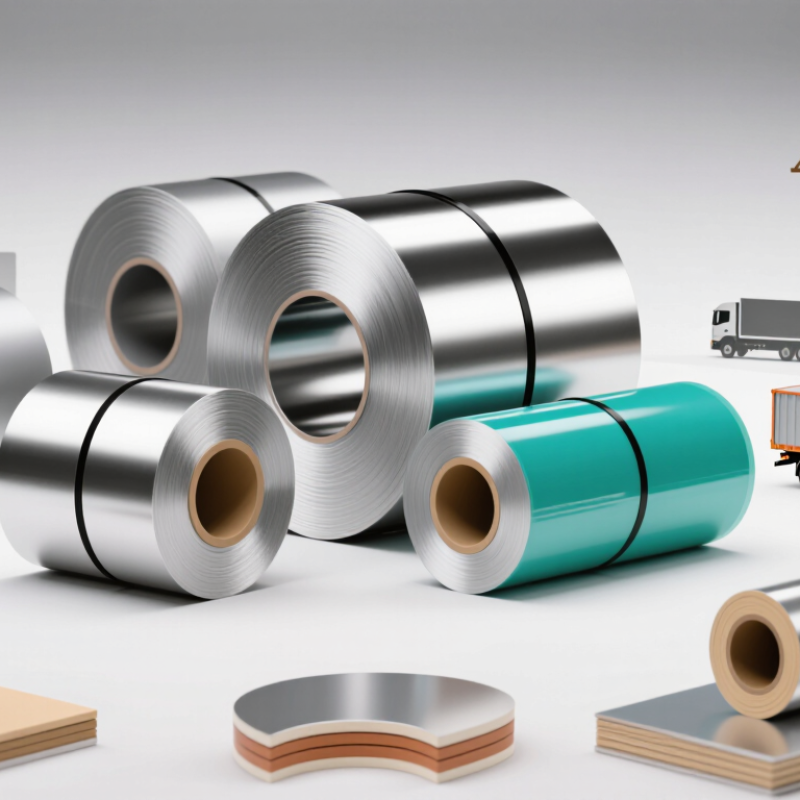
Aluminium coil sheet is flat-rolled aluminium supplied in a continuous, wound strip. A coil can be fed through a slitting line or cut-to-length equipment to produce narrower coils or flat sheets. Buyers usually specify thickness, width, inner diameter, and coil weight, since these affect processing and transport. The edge matters, too. Burrs or uneven edges may cause trouble during stamping or roll forming.
Classification starts with alloy and temper. Alloy series indicate the main alloying elements, while temper describes how the material was processed and its resulting properties. For example, a softer temper may suit deep drawing, while a harder one can offer greater strength for formed panels. Exact performance depends on alloy, thickness, and forming conditions. No single grade fits every line.
Surface and finish provide another useful classification. Mill finish is common for further fabrication; coated or embossed surfaces may be chosen for appearance or specific service needs. Some buyers also sort coils by thickness range or end use, such as roofing, vehicle panels, or packaging. These labels can be practical, but they are not complete specifications. It is easy to overlook temper or surface requirements when comparing quotations, and that mistake can lead to extra trials or scrap. A sample run helps.
Aluminium coil selection often begins with alloy series, but temper can change how the sheet behaves on a forming line. The 1xxx series offers high aluminium content and strong electrical or thermal conductivity. It is often chosen for foil, reflectors, and equipment components. The 3xxx series, including common manganese-based alloys, balances formability and corrosion resistance. It suits roofing, cladding, and heat-exchanger fins. These are practical starting points, not automatic answers.
For more demanding environments, buyers often compare 5xxx alloys. Their magnesium content supports strength and corrosion resistance, including in some marine applications. Forming requirements still matter. The 6xxx series responds to heat treatment and can provide a useful strength-to-weight balance, though coil availability and forming route vary by grade. A sample bend test can expose issues that a specification sheet misses.
Temper describes the material’s condition. O temper is annealed and generally suited to deep forming. H14 and H24 indicate strain-hardened conditions, with H24 also partially annealed; they are common choices for panels and general fabrication. H32 is stabilized after strain hardening and appears in some 5xxx products. T4 and T6 refer to heat-treated conditions used with suitable 6xxx alloys. Check the exact alloy, thickness, and temper together. Small differences matter. A catalog table cannot predict every production line, and that deserves honest review.
Aluminium coil and sheet surfaces do more than change appearance; they affect cleaning, forming, and corrosion resistance. Mill finish retains the surface produced during rolling and suits many concealed or industrial applications. It may show roller marks or slight shade variation, so it is worth checking sample material under the lighting used at installation. Looks matter.
Brushed finishes create directional lines, while embossed patterns can help disguise minor handling marks. Anodized surfaces develop an oxide layer, but color consistency can vary with alloy and processing conditions. Painted or coated stock offers broader color choices; coating type and thickness should match the expected exposure and forming depth. A tight bend can crack an unsuitable coating.
Manufacturing choices matter just as much. Alloy and temper influence strength and formability, while coil slitting, leveling, and tension control affect edge quality and flatness. Ask suppliers to state thickness tolerance, coating details, and protective-film options. Compare the actual finish, not only a catalog image. One detail is often overlooked: a finish that looks uniform on a small sample may appear different across a full-width sheet. Samples help, but they do not remove every uncertainty.
Aluminium coil is not a single grade. Alloy and temper determine how it behaves on a production line. The 1xxx series offers high conductivity and corrosion resistance, making it useful for electrical components and chemical equipment. The 3xxx series, including 3003, is commonly selected for heat exchangers, roofing, and cooking utensils. It forms readily, but it is not the strongest choice for heavily loaded parts. Fit matters. For vehicle panels, marine interiors, and pressure vessels, 5xxx alloys such as 5052 combine useful strength with strong resistance to corrosion. The 6xxx series can suit formed building panels and some transport components where added strength is needed.
Thickness, temper, coating, and forming method matter as much as the alloy number. A coil that looks suitable on a specification sheet may crack at a tight bend or spring back after forming. Buyers should test the actual profile and surface finish, not just request a generic grade. In practice, teams sometimes over-specify strength and make forming harder than necessary. That trade-off deserves a close review.
Recycling also affects material choices. The International Aluminium Institute reports that recycling aluminium uses about 5% of the energy required for primary production. This makes scrap recovery valuable, though clean separation and traceable alloy streams still matter. For global buyers, matching coil type to its application can reduce waste, avoid processing issues, and support more efficient material recovery.
Leading aluminium alloy families, typical product thickness ranges, and common applications
The bars show approximate commonly available thickness ranges: 1xxx for general-purpose and electrical products, 3xxx for heat exchangers and packaging, 5xxx for marine and transport uses, 6xxx for formed and structural components, and 8xxx for foil applications. These are indicative market ranges, not specification limits; availability depends on alloy, temper, product form, and supplier.
Aluminium coil sheet is not one uniform product. In 2026, global buyers should compare alloy, temper, thickness, width, and intended forming method before comparing prices. For general forming, 3003 is commonly selected for its balance of formability and corrosion resistance. Alloys such as 5052 can offer higher strength and good corrosion resistance, while softer 1xxx-series grades suit applications prioritizing conductivity or easy forming. These are starting points, not guarantees. Small differences matter.
Ask suppliers for written tolerances, mechanical-property data, surface-finish details, and inspection records. Check whether the stated thickness applies across the coil, not just at one measurement point. A sample can reveal scratches, edge quality, and how the sheet behaves during bending, but it cannot prove consistency throughout a full shipment. Confirm packaging protects the edges and surface during handling and transport. Compare quotations using the same alloy, temper, dimensions, and delivery terms; otherwise, a lower price may reflect a different specification. I have seen buyers focus on unit cost and overlook processing losses. That is an easy mistake, and specifications can still leave room for interpretation.
| Alloy / Common Temper | Typical Characteristics | Common Applications | Indicative Tensile Strength | Typical Buyer Considerations | Best Suited For |
|---|---|---|---|---|---|
| 1050 / 1060 O, H14, H24 | Commercially pure aluminium; high electrical and thermal conductivity, strong corrosion resistance, and good formability. Lower strength than alloyed grades. | Electrical components, heat-exchanger parts, lighting, reflectors, and general sheet-metal work. | About 60–145 MPa, depending on alloy and temper | Confirm conductivity, surface finish, and temper. Not the first choice where high structural strength is required. | Applications prioritizing conductivity, corrosion resistance, or easy forming. |
| 3003 O, H14, H24 | Manganese-alloyed grade with good formability, weldability, and corrosion resistance; stronger than common 1xxx grades. | General-purpose sheet, tanks, cookware, HVAC components, and heat-exchanger parts. | About 95–200 MPa, depending on temper | Check the specified temper and forming requirements. A widely used option for general fabrication, but not intended for high-strength structural duty. | Everyday applications requiring a balance of formability, corrosion resistance, and moderate strength. |
| 3105 H14, H24 | Al-Mn alloy with good formability and corrosion resistance, commonly supplied as coated or prepainted stock. | Building products, roofing and siding, rainware, and painted architectural components. | About 130–210 MPa, depending on temper | For prepainted material, specify coating system, color tolerance, gloss, protective film, and paint-side orientation. | Architectural and building applications where painted appearance and consistent forming matter. |
| 5052 O, H32, H34 | Magnesium-alloyed grade with strong corrosion resistance, good fatigue performance, and good formability in suitable tempers. | Marine components, fuel tanks, enclosures, transport equipment, and general fabrication. | About 175–285 MPa, depending on temper | Match temper to bend radius and forming process. For marine or chemical exposure, confirm the service environment and applicable specification. | Sheet applications needing a useful combination of strength, corrosion resistance, and formability. |
| 5754 O, H22, H32 | Al-Mg alloy with good corrosion resistance, weldability, and moderate-to-high strength for a non-heat-treatable grade. | Vehicle panels, flooring, pressure-related components where permitted by specification, and welded fabrications. | About 190–280 MPa, depending on temper | Verify the required product standard, temper, weld procedure, and forming performance for the finished part. | Transport and fabrication uses requiring a balance of weldability and strength. |
| 5083 O, H111, H116 | High-strength Al-Mg alloy with excellent marine corrosion resistance in appropriate product forms and tempers. | Marine structures, shipbuilding, transport equipment, and heavy-duty welded fabrications. | About 275–385 MPa, depending on temper and product specification | For marine service, specify the required temper, certification, and corrosion-performance requirements. Check forming limits before selecting a harder temper. | Welded, corrosion-resistant applications where strength is more important than deep formability. |
| 6061 O, T4, T6 | Heat-treatable alloy offering high strength in T6 condition; formability and bendability depend strongly on temper and processing route. | Machined components, structural parts, equipment panels, and fabricated products. | About 125–310 MPa, depending on temper and product form | Confirm that coil availability, thickness, temper, and flatness meet the application. T6 material may require larger bend radii than softer tempers. | Applications requiring higher strength and where the manufacturing process can accommodate the selected temper. |
| 8011 O, H14, H18 | Common foil and thin-gauge packaging alloy; good processability and barrier performance when used in suitable foil constructions. | Packaging foil, household foil, closures, and selected thin-gauge applications. | About 80–180 MPa, depending on temper and product form | Specify foil or sheet gauge, pinhole and surface requirements, temper, and any food-contact or packaging compliance requirements. | Thin-gauge packaging and foil applications rather than high-load structural parts. |
Note: Strength ranges are indicative typical values, not guaranteed acceptance limits. Actual properties depend on alloy composition, temper, thickness, product form, and the applicable standard. Before ordering, confirm the required specification, thickness and width tolerances, coil inner and outer diameters, surface condition, edge quality, certificates, packaging, and destination-market compliance.