
2026 Top Fluorinated Rubber Types for Global Buyers

The 2026 fluorinated rubber market is becoming more specialized, not simply larger. Global buyers now compare chemical resistance, temperature limits, compression set, processing needs, and total service life. Fluorinated Rubber remains essential in fuel systems, semiconductor equipment, aerospace seals, chemical pumps, and demanding industrial assemblies.

Dr. John S. Dick, a respected rubber technologist and author, has stated, “Rubber selection must begin with the service environment, not the catalog.” This principle matters when choosing between FKM, FFKM, FEPM, and specialized tetrafluoroethylene-based compounds. A black FKM O-ring beside a fuel injector may look ordinary. Its formulation is not. Small differences in cure chemistry, fluorine content, filler design, and hardness can change leakage performance at 200°C.

Real conditions are rarely perfect. Temperature cycles occur. Surfaces may be imperfect. Cleaning fluids can attack unsuitable compounds. Some buyers still choose by unit price alone, and that approach deserves reconsideration. A lower-cost seal can create replacement labor, downtime, and rejected batches.

This guide examines the leading Fluorinated Rubber types for global buyers in 2026. It considers performance data, application fit, supplier consistency, certification expectations, and practical purchasing risks. Material names can be confusing. Marketing claims can be broader than test results. Buyers should request compound-specific data, not generic promises.

The strongest choice is not always the most chemically resistant grade. It is the grade that remains reliable under the actual pressure, temperature, media, and maintenance conditions. That distinction can protect both equipment and budgets.
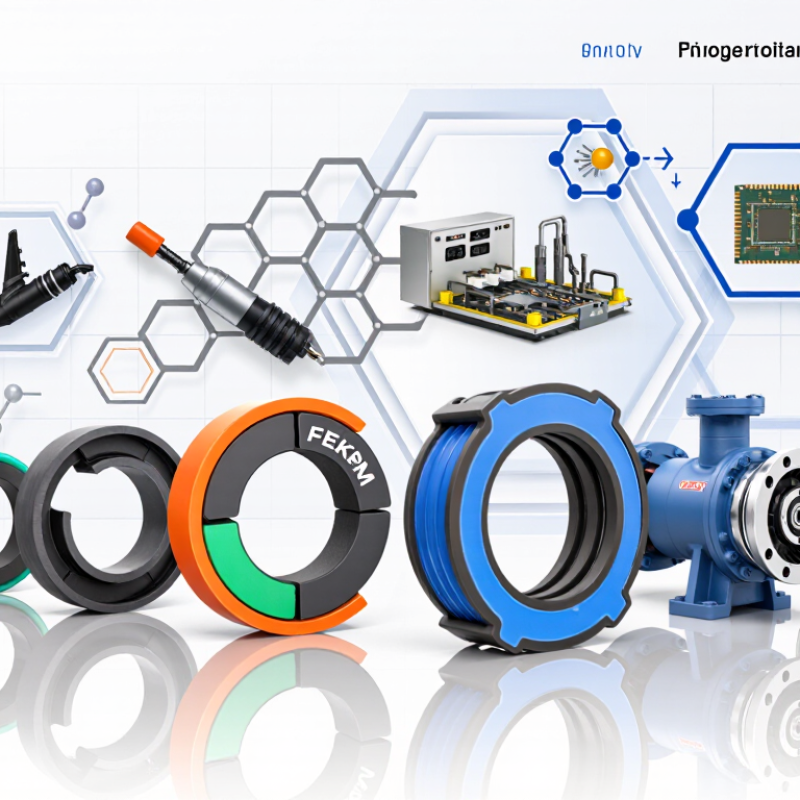
2026 Top Fluorinated Rubber Types for Global Buyers

What Is Fluorinated Rubber and Why Does It Matter?

2026 Top Fluorinated Rubber Types for Global Buyers

What Is Fluorinated Rubber and Why Does It Matter?

Fluorinated rubber is an elastomer designed to resist heat, oils, fuels, and aggressive chemicals. Its fluorine-rich structure helps limit swelling and hardening in demanding environments. It is commonly used in seals, gaskets, hoses, and molded components. In practical inspections, the right compound often remains flexible after repeated exposure to heat and fluid contact. That reliability can reduce leakage risks and unplanned maintenance.

Different types serve different conditions. FKM is widely selected for high-temperature sealing and chemical resistance. FVMQ can offer better flexibility across changing temperatures, but it may have lower resistance to some fuels. Specialty grades may improve performance against acids, steam, or low temperatures. No material is perfect. A seal that performs well in a laboratory may behave differently after installation, compression, or storage.

Tips: Check temperature, pressure, fluid type, and movement before choosing a grade. Ask for test data, batch traceability, and clear compound specifications. Confirm dimensions under actual compression, not only at room temperature. Buyers should also review storage conditions and expected service life. Small details matter. A common mistake is choosing by polymer name alone. Real performance depends on formulation, curing quality, surface finish, and application design. When evidence is limited, request samples and conduct controlled testing before placing a large order.

Main Types of Fluorinated Rubber Available in 2026

Fluorinated Rubber Types for Global Buyers in 2026

Fluorinated rubber is not one uniform material. In 2026, buyers commonly compare FKM, FFKM, FEPM, and fluorosilicone rubber. Each type answers a different service problem.

FKM remains a practical choice for seals exposed to fuels, oils, and elevated temperatures. Its performance changes with fluorine content, curing system, and low-temperature formulation. Standard FKM can work near 200°C, while specialized grades may offer broader temperature resistance. Check compression set data, not only headline temperature claims.

FFKM provides stronger resistance to aggressive chemicals and extreme heat. It suits demanding process equipment, but its higher cost requires careful justification. FEPM performs well against steam, hot water, and certain amines. It may be more suitable than FKM in selected industrial systems. Fluorosilicone rubber offers useful flexibility in cold environments and resistance to fuels. However, it generally needs more protection against abrasion and harsh chemicals.

Material selection should begin with the actual fluid, pressure, temperature cycle, and seal movement. A gasket facing short heat spikes may need a different compound from one exposed continuously. Ask suppliers for batch records, test methods, and property data at operating temperatures. Regional standards and storage conditions also deserve attention. A simple type ranking sounds convenient, but it can mislead. Real equipment conditions are often less tidy than laboratory tables. Some early specifications may need revision after field testing.

2026 Top Fluorinated Rubber Types for Global Buyers - Main Types of Fluorinated Rubber Available in 2026

Material type Chemical structure / standard designation Typical fluorine content Typical continuous service temperature Main strengths Common limitations Typical applications
FKM copolymer Fluorocarbon elastomer based mainly on vinylidene fluoride and hexafluoropropylene; ASTM D1418: FKM; ISO 1629: FPM Approximately 66–68% by mass Approximately −20°C to +200°C; short-term exposure may be higher depending on compound design Strong resistance to mineral oils, fuels, hydraulic fluids, many hydrocarbons, ozone and weathering Limited resistance to hot steam, hot water, strong alkalis, certain polar solvents and low-temperature flexibility O-rings, seals, gaskets, fuel-system components, hydraulic seals and automotive powertrain parts
FKM terpolymer Fluorocarbon elastomer incorporating tetrafluoroethylene in addition to the principal FKM monomers Typically about 68–70% by mass Approximately −20°C to +200°C, with grade-specific variation Higher chemical resistance and improved resistance to fuels and aggressive fluids compared with many standard copolymers Still not a universal solution for concentrated bases, hot steam or some amines; low-temperature performance varies by formulation Advanced fuel seals, chemical-process seals, aerospace components and high-performance industrial gaskets
FKM tetrapolymer Four-monomer fluorocarbon elastomer designed to increase resistance to fuels, chemicals and certain low-temperature conditions Commonly around 67–70% by mass, depending on formulation Approximately −30°C to +200°C for selected compounds Balanced fuel resistance, chemical resistance, sealing reliability and improved flexibility versus some conventional FKM grades Performance is highly compound-dependent; not inherently suitable for every steam, amine or caustic-service application Automotive fuel systems, aerospace seals, oil and gas equipment, pumps and valves
FEPM Tetrafluoroethylene–propylene elastomer; ASTM D1418 designation: FEPM Typically approximately 55–65% by mass, depending on polymer composition Approximately −10°C to +200°C; specialized compounds may extend the range Excellent resistance to hot water, steam, amines, acids, bases and sour-gas environments Generally less resistant than FKM to some fuels and hydrocarbons; low-temperature flexibility may be limited Steam systems, chemical processing, oil and gas equipment, downhole tools and high-temperature fluid sealing
FFKM / FFPM Perfluoroelastomer; ASTM D1418: FFKM; ISO 1629: FFPM Usually greater than 70% by mass; exact content varies by polymer architecture Approximately −15°C to +300°C; selected compounds can reach about +325°C for limited service Very broad chemical resistance, extremely low permeability and excellent performance in aggressive high-temperature media High material cost, higher compression-set risk in some conditions and limited resistance to certain molten alkali metals or fluorinating agents Semiconductor processing, pharmaceutical equipment, chemical plants, vacuum systems, aerospace and high-temperature instrumentation
FVMQ Fluorosilicone rubber; ASTM D1418: FVMQ Fluorine content varies widely by formulation; commonly lower than FKM Approximately −60°C to +175°C Excellent low-temperature flexibility, good resistance to aviation fuels and mineral oils, and good weathering and ozone resistance Lower mechanical strength and abrasion resistance than many FKM compounds; limited resistance to ketones, acids, alkalis and superheated steam Aerospace seals, fuel-system gaskets, low-temperature hoses, diaphragms and sensor protection
Fluorinated thermoplastic elastomer blends Fluorinated elastomeric materials combined with thermoplastic processing or compatible thermoplastic phases; designation depends on the specific material system Composition-specific; no single standard fluorine-content range applies Commonly approximately −30°C to +150°C, depending on polymer combination Injection-molding capability, repeatable dimensions, potential recyclability of processing scrap and efficient high-volume production Chemical and temperature resistance can be lower than fully cured FKM or FFKM; compatibility must be tested for each application Automotive seals, electrical protection, molded components and applications requiring thermoplastic processing

Note: Temperature limits, fluorine-content values and chemical resistance are typical industry ranges rather than universal specifications. Actual performance depends on polymer grade, cure system, compound formulation, pressure, media concentration, exposure time and seal design. Always verify the manufacturer’s technical data and conduct application-specific testing before purchase.

Key Properties and Performance Differences by Rubber Type

Fluorinated rubber selection depends on more than temperature ratings. Each rubber type balances chemical resistance, flexibility, sealing force, and service life differently. FKM remains a practical choice for oils, fuels, and many high-temperature sealing applications. Standard grades often work continuously near 200°C, although the exact limit depends on formulation and exposure time.

FFKM offers broader chemical resistance and better performance at extreme temperatures. It suits aggressive fluids, hot gases, and demanding process equipment. However, its higher cost requires careful justification. FEPM can resist steam, amines, and certain chemicals where conventional FKM may swell or lose strength. Its mechanical performance can vary noticeably between compounds. Fluorosilicone keeps better low-temperature flexibility than many FKM grades. It is useful in fuel systems exposed to cold starts, but its abrasion resistance may be less impressive.

Testing should match the real sealing environment. Check compression set after heat aging, volume change after fluid immersion, and hardness before and after exposure. A seal that survives a laboratory fluid may fail when pressure cycles and surface movement are added. Small details matter, including gland clearance, surface finish, and installation damage.

A neat datasheet comparison can mislead. One FKM compound may outperform another under the same family name. FEPM can appear suitable, yet steam cycling may reveal weaknesses. Buyers should request compound-specific data, not only generic rubber classifications. Short trials with actual fluids often expose problems earlier than a long specification review.

How to Select Fluorinated Rubber for Specific Applications

Selecting fluorinated rubber starts with the fluid, temperature, and pressure—not the product label. ASTM D1418 classifies fluorinated elastomers by polymer family, while ASTM D395 measures compression set after heat exposure. These tests reveal useful limits. They do not predict every field failure.

For fuel, mineral oil, or hydraulic fluid, standard FKM often suits seals operating around -20°C to 200°C, depending on formulation. For aggressive acids, amines, or high-temperature vacuum service, FFKM may offer stronger resistance. Its performance can exceed 300°C in selected grades, but cost and compression behavior require careful review. FEPM can be practical where steam, hot water, and certain chemicals dominate.

Check the real duty cycle. A valve seal beside a 180°C pipe may see cold starts, pressure spikes, and chemical swelling. ISO 23936-2 emphasizes evaluating elastomers under application-specific oil, gas, pressure, and temperature conditions. Ask for immersion data, compression-set results, hardness change, and volume change. A neat hardness number can mislead.

Test the exact compound.

Do not rely on generic charts alone. We once treated temperature rating as the main filter; pressure cycling exposed the weakness. That assumption needs challenging. Request samples, machine the actual groove geometry, and validate after thermal cycling. A small seal may decide whether the whole system stays reliable.

2026 Top Fluorinated Rubber Types for Global Buyers

How to Select Fluorinated Rubber for Specific Applications

Selection guidance: FKM is a general-purpose choice for fuels, oils, hydraulic fluids and elevated-temperature sealing. FFKM is selected when maximum chemical resistance and very high-temperature performance justify its higher cost. FEPM is suitable for hot amines, steam and aggressive alkaline environments, while FVMQ is preferred when low-temperature flexibility and resistance to fuels or oils are important. The chart shows representative upper continuous service-temperature values; actual limits depend on compound formulation, pressure, exposure time and seal design.

Data basis: typical industry temperature ranges for generic elastomer families; values are indicative rather than product specifications.

Global Buyer Checklist for Quality, Compliance, and Supply

2026 Top Fluorinated Rubber Types for Global Buyers

Global buyers need more than a material name. They need evidence. Grand View Research estimates the global fluoroelastomers market will expand steadily through 2030, driven by demanding sealing applications. That growth increases pressure on quality control and supply planning. Compare FKM, FFKM, and specialty grades by temperature range, chemical resistance, compression set, and process method. ASTM D1418 and ISO 1629 help verify polymer classification. Small differences matter.

Request a current technical data sheet, safety data sheet, certificate of analysis, and lot traceability record.

Check hardness, tensile strength, elongation, compression set, and volume swell under realistic media. Ask for test temperatures and aging times. Do not accept unexplained averages. A certificate is not proof of every claim. Independent laboratory testing is useful for critical seals, especially when formulations or colors change.

Compliance checks should cover REACH, RoHS, applicable PFAS reporting duties, and destination-country requirements. Requirements can change. Review them before each contract renewal.

For supply reliability, examine production capacity, minimum order quantities, lead times, packaging, and customs documentation.

MarketsandMarkets identifies automotive, aerospace, and chemical processing as important demand sectors for high-performance elastomers. Build a second-source plan, but verify equivalent performance first. Cheap substitution can create leakage, downtime, and expensive requalification.

My practical concern is often overlooked: buyers measure material price, but not the cost of delayed validation.