What is Auto Mechanical Engineering and How Does it Impact the Industry
Auto mechanical engineering is a dynamic and essential branch of engineering that focuses on the design, development, production, and maintenance of vehicles and their components. As the automotive industry continues to evolve with technological advancements, the role of auto mechanical engineering becomes increasingly significant. This field encompasses a wide range of applications, including the integration of electric and hybrid technologies, improvements in fuel efficiency, and advancements in safety features, all of which contribute to the modern driving experience.

The impact of auto mechanical engineering on the industry cannot be overstated. It drives innovations that enhance vehicle performance, reduce environmental impact, and meet consumer demands for smarter, safer, and more efficient transportation options. As engineers work collaboratively with manufacturers, they harness cutting-edge techniques, such as computer-aided design (CAD) and simulation tools, to refine vehicle designs and systems. Furthermore, the increasing trend towards automation and connectivity in vehicles highlights the importance of auto mechanical engineering in shaping the future of mobility.
In summary, auto mechanical engineering is at the forefront of automotive advancements, influencing various aspects of the industry from production processes to end-user experiences. As we explore the intricacies of this engineering discipline, it becomes clear that its contributions are vital for addressing the challenges and opportunities that lie ahead in the rapidly changing automotive landscape.
What Is Auto Mechanical Engineering? An Overview of Its Definition
Auto Mechanical Engineering is a specialized field that focuses on the design, development, production, and maintenance of automobiles and automotive systems. This discipline blends principles from mechanical engineering with automotive technology to enhance vehicle performance, safety, and sustainability.
According to the Society of Automotive Engineers (SAE), the automotive industry is projected to grow by 4% annually until 2025, driven by advancements in electric vehicles and autonomous driving technologies. This growth emphasizes the crucial role that auto mechanical engineering plays in shaping the future of transportation.
In this context, professionals in auto mechanical engineering engage in various tasks, such as researching new materials, improving energy efficiency, and integrating sophisticated software systems into vehicles. The U.S. Bureau of Labor Statistics reports that employment for automotive engineers is expected to see a steady increase, reflecting a demand for innovations in fuel economy and the reduction of carbon emissions.
Tips: For those aspiring to enter the field of auto mechanical engineering, it’s important to stay updated on industry trends and advancements. Participating in workshops and obtaining certifications in emerging technologies can provide a competitive edge in the job market. Networking with professionals through industry conferences can also lead to valuable opportunities and insights.
Key Components of Auto Mechanical Engineering: Tools and Technologies
Auto Mechanical Engineering integrates advanced tools and technologies that significantly enhance the automotive industry. One of the key components driving innovation is automatic control technology based on microelectronic sensor signals. This technology provides a new methodology for the development of automatic control systems in mechanical equipment, thereby optimizing performance and efficiency. For example, precision in control not only improves machine reliability but also reduces energy consumption—a critical factor in today’s environmentally aware market.
Moreover, the rise of generative AI in automotive engineering showcases how technology transforms design processes. AI systems can generate intricate designs and simulations that enable faster development cycles while personalizing user experiences. As the automotive sector pivots towards electric and autonomous vehicles, the integration of AI alongside traditional engineering practices is crucial. According to market analysts, this trend is expected to push investment in AI-based technologies in automotive engineering to over $25 billion by 2025. Such advancements highlight how auto mechanical engineering is not only reshaping vehicle performance but also redefining the industry's future landscape.
Impact of Auto Mechanical Engineering on Vehicle Design and Performance
Auto Mechanical Engineering plays a pivotal role in reshaping vehicle design and performance, especially through the integration of cutting-edge technologies. The advent of artificial intelligence (AI) in the automotive sector is one of the most significant advancements, allowing for the development of advanced driver assistance systems and predictive maintenance solutions. These innovations not only enhance safety but also improve the overall driving experience by personalizing in-car technologies. Moreover, AI is streamlining the design process, enabling engineers to create vehicles that are smarter, faster, and more efficient.
In addition to AI, the use of digital twins in automotive engineering has transformed vehicle design by simulating real-world environments and testing conditions. This approach allows for more effective optimization of critical components, such as the rim structures of aluminum alloy wheels, which must withstand significant radial bending loads. As companies increasingly adopt generative AI, they can accelerate the development process, resulting in innovative designs that cater to active consumer demands while maintaining high levels of performance and safety. Through these advancements, Auto Mechanical Engineering is not only improving vehicle capabilities but also driving the entire industry toward a more sustainable and efficient future.
What is Auto Mechanical Engineering and How Does it Impact the Industry - Impact of Auto Mechanical Engineering on Vehicle Design and Performance
| Aspect |
Description |
Impact on Vehicle |
Example Technologies |
| Powertrain Development |
Engineering of motors, transmissions, and drivetrains |
Enhances acceleration, fuel efficiency, and overall performance |
Hybrid and Electric Vehicle Systems |
| Chassis Design |
Framework for supporting the vehicle's body and systems |
Improves handling, stability, and safety |
Space Frame and Monocoque Structures |
| Aerodynamics |
Study of vehicle shapes that reduce air resistance |
Minimizes drag, enhances fuel efficiency and performance |
Wind Tunnel Testing and Computational Fluid Dynamics |
| Safety Features |
Integration of systems that protect occupants during accidents |
Reduces injuries and fatalities on the road |
Airbags, Anti-lock Braking Systems (ABS) |
| Material Engineering |
Development of advanced materials for vehicle components |
Enhances durability, weight reduction, and cost efficiency |
Carbon Fiber, Advanced Alloys |
Current Trends in Auto Mechanical Engineering and Their Industry Effects
The field of auto mechanical engineering is rapidly evolving, embracing innovative technologies that significantly impact the automotive industry. Current trends include the integration of electric and hybrid vehicles, which are reshaping traditional engineering practices. Engineers are now focusing on optimizing powertrains by enhancing battery efficiency and reducing weight, contributing to the production of vehicles that are not only more sustainable but also high-performing. The shift toward automation and advanced manufacturing processes, such as 3D printing, allows for more intricate designs and faster prototyping, which accelerates the development cycle of new vehicles.
Another major trend is the increasing relevance of computer-aided engineering (CAE) tools, which facilitate the simulation and analysis of vehicle performance under various conditions. This technology enables engineers to identify potential issues early in the design phase, reducing costs and development time. Additionally, the rise of autonomous driving technologies is altering the landscape of vehicle design and safety standards, prompting engineers to enhance systems integration while focusing on cybersecurity to safeguard against potential risks. Together, these innovations are not just reshaping vehicles but also redefining the skills required for future engineers in the automotive sector.
Future Prospects: How Auto Mechanical Engineering Shapes Automotive Innovation
Auto Mechanical Engineering is at the forefront of automotive innovation, shaping the future of the industry through advanced technologies and sustainable practices.
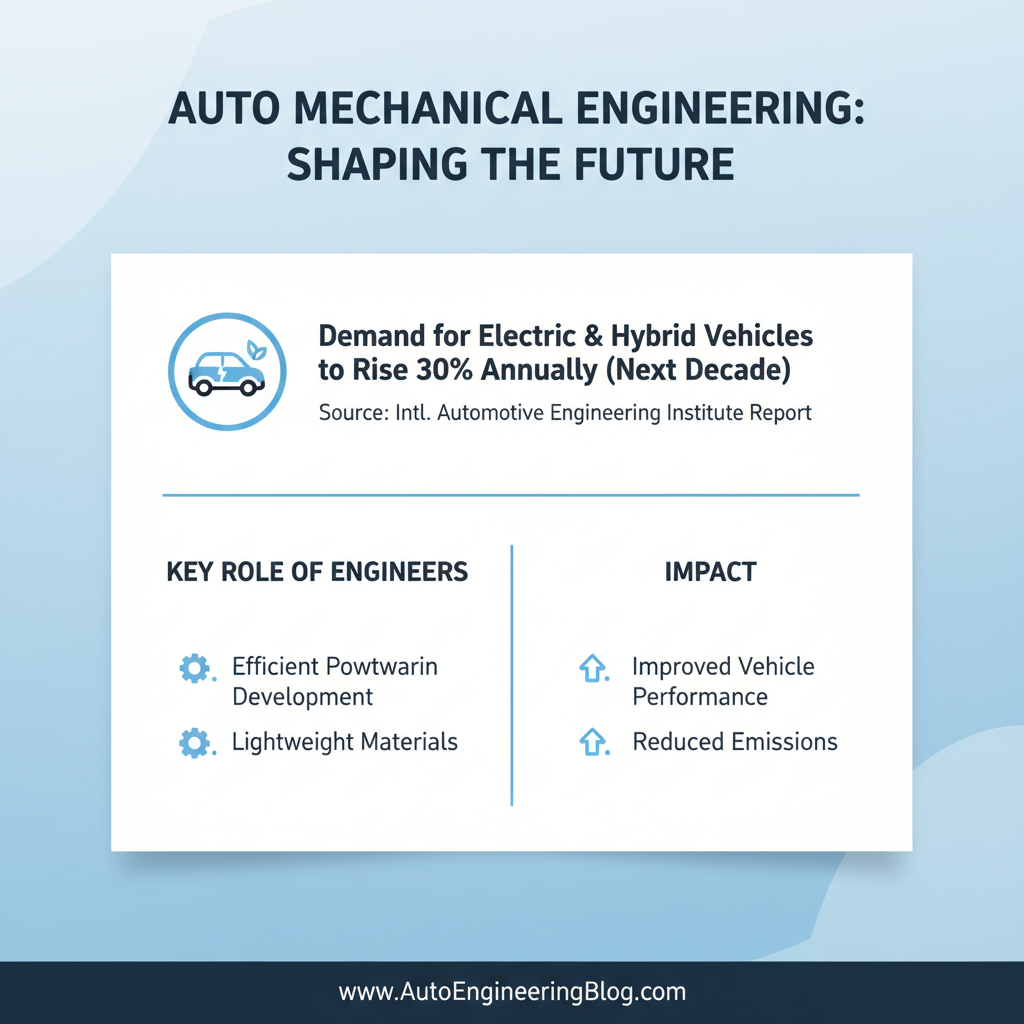
According to a recent report by the International Automotive Engineering Institute, the demand for electric and hybrid vehicles is expected to rise by 30% annually over the next decade.
This surge underscores the critical role that auto mechanical engineers play in the development of efficient powertrains and lightweight materials, leading to improved vehicle performance and reduced emissions.
As companies pivot towards smarter and greener solutions, the integration of automation and robotics in automotive manufacturing has accelerated.
A study by the Automotive News Research & Data revealed that 70% of manufacturers are investing heavily in automation technologies to enhance production efficiency.
The focus on autonomous driving systems is also a major area of growth, with projections indicating that by 2030, the market for autonomous vehicles could reach $500 billion.
Tips: Collaborating across disciplines can drive innovation forward. Engineers should engage with software developers and environmental scientists to create holistic solutions that address both performance and sustainability. Additionally, staying updated on emerging technologies and continuous learning are crucial for engineers to remain competitive in a rapidly evolving landscape.