What is Auto Mechanical Engineering and Its Importance?
Auto mechanical engineering is a crucial field that combines mechanics and automotive technology. It involves the study and application of various engineering principles. This discipline focuses on designing, manufacturing, and maintaining vehicles and their components.
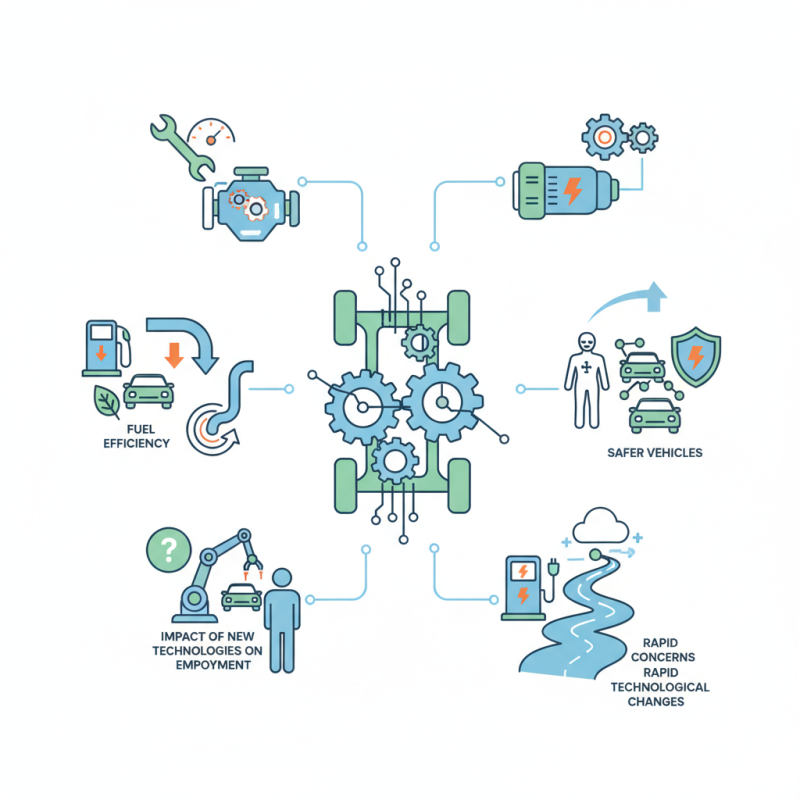
The importance of auto mechanical engineering cannot be overstated. It drives innovation in the automotive industry and enhances performance. Engineers in this field develop safer and more efficient vehicles. They tackle challenges like fuel efficiency and emission reductions. However, issues often arise, such as the impact of new technologies on employment.
In a world increasingly reliant on vehicles, auto mechanical engineering is vital. It shapes how we travel and interact with our environment. Still, the field faces obstacles, including rapid technological changes and sustainability concerns. Reflecting on these challenges can foster growth and adaptation in the industry.
Definition of Auto Mechanical Engineering
Auto Mechanical Engineering is a branch that focuses on the design, development, and maintenance of vehicles. It combines principles from mechanical engineering with automotive technology. This field is crucial as it ensures vehicles operate efficiently and safely. According to a report by the Society of Automotive Engineers, the need for skilled auto engineers is rising. The market is expected to grow by 20% in the next five years.
The definition of auto mechanical engineering also includes working on engine systems, transmissions, and braking systems. Engineers in this field must address environmental concerns. Electric and hybrid vehicle technologies are significant trends. The International Energy Agency indicates that electric vehicle sales doubled in 2021, highlighting the shift in automotive engineering.
Data suggests that many engineering students lack hands-on experience. This gap can affect their employment opportunities. Training programs must adapt to modern technology. Recent studies show that only 25% of graduates feel ready for the industry. It’s essential to bridge this divide for better professional outcomes.
Key Areas of Study in Auto Mechanical Engineering
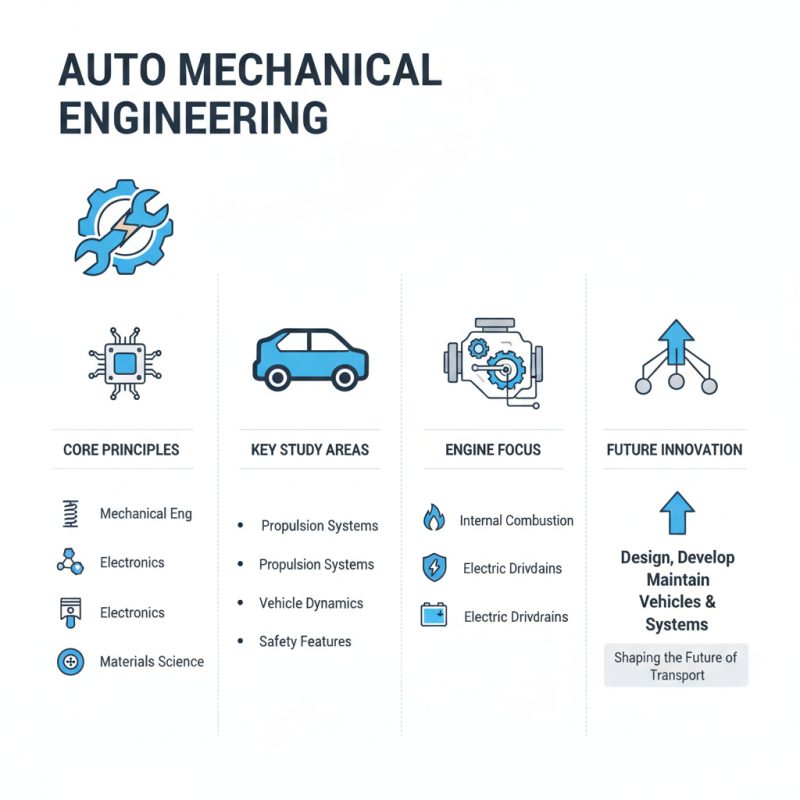
Auto Mechanical Engineering is a vast field that encompasses various key areas of study. It primarily focuses on the design, development, and maintenance of vehicles and their systems. This discipline combines principles from mechanical engineering, electronics, and materials science. Students explore topics like automotive propulsion systems, vehicle dynamics, and safety features. The understanding of internal combustion engines and electric drivetrains shapes the foundation for future innovations.
Another significant area in Auto Mechanical Engineering is vehicle design and aerodynamics. Designers prioritize fuel efficiency and performance. They analyze airflow and use simulations to refine shapes. However, challenges often arise in balancing aesthetics and functionality. This requires constant adjustments and iterations. Furthermore, deeper studies into sustainable materials highlight the urgency for eco-friendly practices in vehicle production. While the intention is clear, the implementation can be flawed, which prompts discussions around ethics in engineering.
Hands-on experience is crucial in this field. Practical knowledge through internships or projects can significantly enhance understanding. Students often face the pressure of applying theories in real-world scenarios. Mistakes happen, leading to valuable lessons. No one expects perfection. Learning from failures cultivates resilience and innovation, essential traits for future engineers.
Importance of Auto Mechanical Engineering in Modern Automotive Industry
The automotive industry is evolving rapidly. Auto mechanical engineering plays a crucial role in this transformation. According to a report by the International Organization of Motor Vehicle Manufacturers, over 1.4 billion vehicles were produced globally in 2020. This highlights the immense demand for skilled professionals. These engineers focus on designing and improving vehicle systems, ensuring safety and efficiency.
Electric vehicles (EVs) are gaining traction. Mechanical engineers are at the forefront of this shift. They work on innovations like lightweight materials and optimized energy management systems. A study by the U.S. Department of Energy indicates that improving vehicle energy efficiency by just 10% can save over 3 billion gallons of fuel annually. Yet, the transition to EVs poses challenges. Not all engineers are trained in new technologies. This gap can hinder progress.
Tips: Stay updated with industry trends. Engage in continuous learning through webinars or workshops. Networking with other professionals can also open new doors. Auto mechanical engineering is not just about technical skills; it's about adapting to change and solving real-world problems. Embrace the challenge and invest in your growth.
Emerging Technologies Impacting Auto Mechanical Engineering
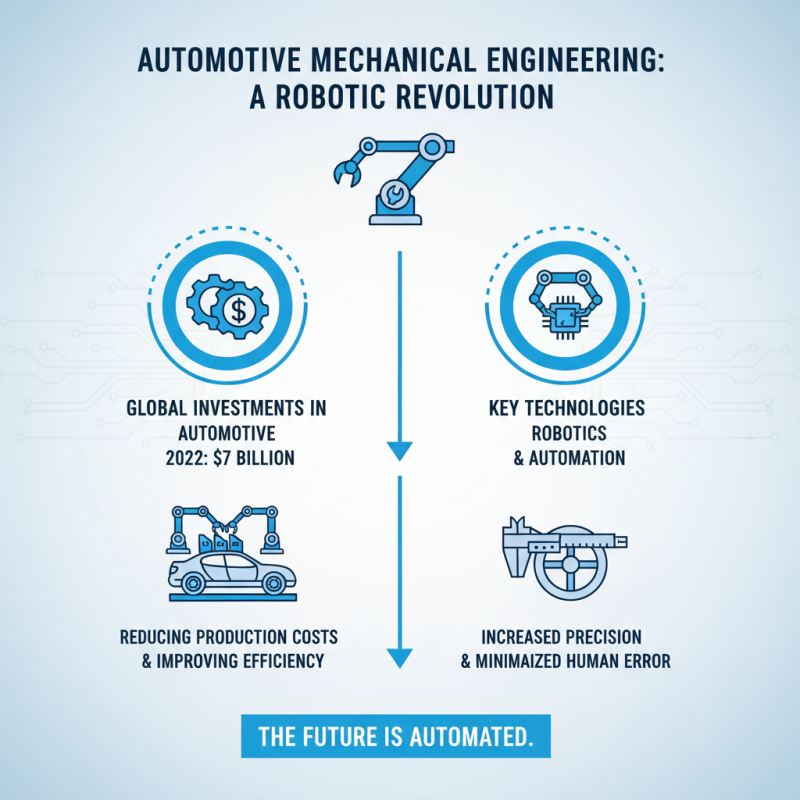
Emerging technologies are transforming auto mechanical engineering rapidly. Robotics and automation are at the forefront of this shift. In 2022, a report indicated that global investments in automotive robotics reached $7 billion. This reflects a significant trend in reducing production costs and improving efficiency. By integrating advanced robotics, manufacturers can increase precision while minimizing human error.
Electric vehicles (EVs) are also reshaping the industry. According to a recent study, the EV market is expected to grow at a compound annual growth rate of 22% from 2021 to 2030. This shift requires engineers to adapt to new powertrains and battery technologies. The demand for lightweight materials is rising. Engineers are exploring alternatives that balance strength and weight, impacting overall vehicle performance.
However, challenges persist. Not all engineers are equipped with the needed digital skills. Many professionals still rely on outdated methods. A survey from an industry conference revealed that over 30% of auto engineers feel unprepared for upcoming technological changes. This gap highlights the need for continuous education and training in the field. The reliance on legacy systems could hinder progress if not addressed promptly.
Career Opportunities in Auto Mechanical Engineering
Auto mechanical engineering focuses on designing, developing, and maintaining automotive systems. The demand for skilled professionals in this field is rapidly increasing. Career opportunities abound in various sectors, including manufacturing, research, and development.
Graduates can find roles as automotive engineers, systems designers, or quality control experts. Many also specialize in electric vehicles, which are becoming more popular. This shift opens new job avenues, reflecting the industry's evolution. The journey can be challenging, but the rewards are significant.
**Tip:** Stay updated on industry trends. Follow relevant publications and attend seminars. Networking can provide insights and help you find job openings.
Some positions require a strong understanding of emerging technologies. Skills in software and data analysis are increasingly valuable. However, not everyone excels in every area. Adapting and learning continuously is crucial for long-term success.
**Tip:** Consider internships or workshops. Hands-on experience can make a difference. It will also help bridge gaps in your knowledge. Embrace mistakes as learning opportunities.
Importance of Auto Mechanical Engineering and Career Opportunities
Auto Mechanical Engineering plays a crucial role in shaping the future of automotive technology. As shown in the chart, there are numerous job opportunities, significant industry growth, competitive salaries, and a high demand for skilled professionals in this field.