Top Automation Tips for Mechanical Engineering Success?

Automation in mechanical engineering is transforming the industry. Recent reports indicate that automation can improve productivity by up to 40%. Companies are increasingly adopting advanced technologies. This shift is not just about efficiency; it’s about enhancing precision and reducing human error.

The Global Automation Market report predicts significant growth in automation mechanical engineering. It is expected to reach USD 200 billion by 2026. Many engineers are now faced with challenges in integrating these technologies effectively. They often encounter gaps in training or lack a clear strategy for implementation. Simply adopting automation tools isn’t a guarantee of success.

To thrive in this evolving landscape, engineers must embrace continuous learning. Understanding the interplay between automation and engineering principles is crucial. Organizations need to focus on a tailored approach. This expertise will help navigate the complex transition to automation. As the industry evolves, reflecting on current practices is essential for sustainable growth.

Top Automation Tips for Mechanical Engineering Success?

Understanding Automation in Mechanical Engineering

Automation is transforming mechanical engineering in profound ways. It streamlines processes, enhances precision, and ultimately boosts productivity. Companies are adopting automated systems to perform repetitive tasks, allowing engineers to focus on complex challenges. For instance, robotic arms can replace manual assembly, significantly reducing error rates. This also shortens production cycles, leading to faster time-to-market.

However, embracing automation isn't without its hurdles. Engineers may feel overwhelmed by new technologies and tools. Training becomes essential to ensure teams can adapt. Additionally, there is the risk of relying too heavily on automation, which might stifle creativity. Striking a balance between automation and human input is crucial. Collaboration between advanced systems and human insight can drive innovation while maintaining quality. As industries evolve, it’s vital for engineers to remain flexible and open to change.

Top Automation Tips for Mechanical Engineering Success

Automation Tip Description Benefits Implementation Tools
Use CAD Automation Employ software to automate drafting and design processes. Reduces design time and errors. AutoCAD, SolidWorks
Implement Robotics Integrate robots for tasks like assembly and material handling. Increases productivity and safety. ABB, KUKA
Adopt IoT Solutions Utilize IoT for real-time monitoring and data analytics. Optimizes maintenance and reduces costs. Siemens MindSphere, PTC ThingWorx
Enhance Workflow with Software Use software tools to streamline project management and collaboration. Improves team efficiency and communication. Asana, Trello
Simulation and Testing Automation Implement automated testing to validate designs and prototypes. Saves time and enhances product quality. MATLAB, ANSYS

Key Technologies Driving Automation Success

Automation is a game-changer in mechanical engineering. Key technologies are driving this transformation. One significant technology is robotics. According to the International Federation of Robotics (IFR), by 2025, global robot sales are expected to exceed 500,000 units annually. This surge indicates a growing trust in automation. Robotics streamlines assembly lines, reducing cycle times and enhancing product quality.

Another crucial technology is artificial intelligence (AI). A McKinsey report highlights that AI could potentially create $13 trillion in additional economic activity by 2030. In mechanical engineering, AI improves predictive maintenance. This leads to less downtime and greater operational efficiency. However, implementing AI comes with challenges. Many engineers report difficulties in integrating AI with existing systems.

Data analytics also plays a vital role in automation. According to Deloitte, organizations using data-driven decisions are 5 times more likely to make faster decisions. Yet, many stakeholders struggle with data quality. As a result, engineers must focus on refining data collection processes. This is essential for gaining actionable insights. Emphasizing these technologies can enhance success in an increasingly automated landscape.

Top Automation Tips for Mechanical Engineering Success

Essential Tools for Streamlining Mechanical Processes

In the world of mechanical engineering, automation plays a pivotal role in enhancing efficiency. Essential tools like computer-aided design (CAD) software streamline design processes. According to a report by the National Institute of Standards and Technology, adopting CAD can reduce design time by up to 50%. This is a significant advantage for engineers striving for faster project completion.

Additionally, simulation software allows engineers to test designs virtually. Instead of physical prototypes, simulations provide immediate feedback on performance. A study published in the Journal of Mechanical Engineering found that companies using simulation tools reduce material costs by approximately 30%. This impact emphasizes the importance of integrating technology into mechanical workflows.

However, not all automation tools yield positive results. Some firms have reported inadequate training for staff, leading to errors. Reliance on technology without understanding its capabilities can hinder progress. Reflecting on these challenges can benefit organizations as they navigate their automation journey in mechanical engineering. Balancing technology use with human expertise is crucial for sustained success.

Best Practices for Implementing Automation Systems

Top Automation Tips for Mechanical Engineering Success?

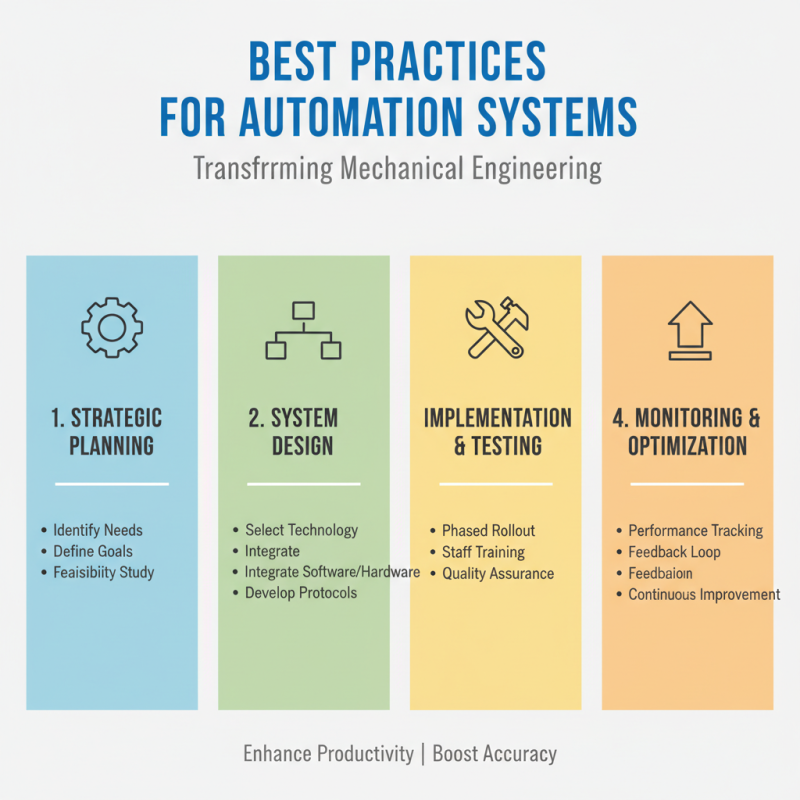
Automation is transforming mechanical engineering. Implementing automation systems can enhance productivity and accuracy. However, success requires careful planning and execution.

Start by assessing your current processes. Identify repetitive tasks that could benefit from automation. This could involve data collection or routine assembly. Automation can free up human resources to focus on more complex problems. But, it's crucial to involve your team in this decision-making process. Their insights can pinpoint areas needing improvement.

Next, consider scalability. Choose automation solutions that can evolve with your business. Technology changes fast. Systems must adapt to new challenges. This way, growth isn’t a bottleneck. Regular feedback will help in fine-tuning the systems. Employees should feel comfortable sharing their experiences. Implementation is often not perfect; adjustments will be necessary.

Training your workforce is also vital. A tool is only as good as the person using it. Provide thorough training on new systems. Staff should understand the technology's capabilities and limitations. Involve them in troubleshooting and improvements for a successful transition. Each step taken towards automation will have its hurdles. Embrace these challenges; they are part of the journey.

Evaluating the Impact of Automation on Engineering Projects

Top Automation Tips for Mechanical Engineering Success?

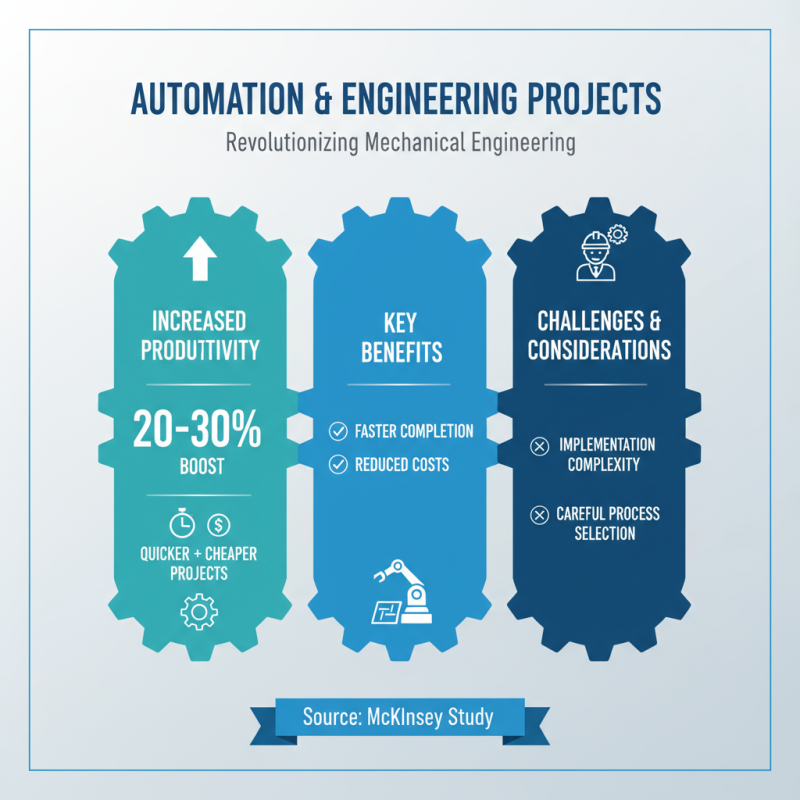
Automation has revolutionized mechanical engineering, significantly impacting project outcomes. A recent study by McKinsey indicates that automation can boost productivity by 20% to 30%. This efficiency can lead to quicker project completion and reduced costs. However, the implementation of automation is not without its challenges. Engineers must carefully assess which processes to automate to avoid disruption and maintain quality.

The integration of automation in engineering projects also requires a skilled workforce. According to the World Economic Forum, over 85 million jobs may be displaced by automation in the next few years. In contrast, 97 million new roles may emerge. Engineers need to upskill and adapt to new technologies. The focus should not solely be on efficiency but on enhancing creativity and innovation in design.

While automation offers clear advantages, it raises questions about dependency and reliability. Engineers should remain vigilant. Over-reliance on automated systems could lead to failures if proper checks are not in place. A well-balanced approach that combines human insight with advanced technology is essential for sustainable progress in mechanical engineering.