10 Best Pick Place Machines for Global Buyers
Choosing the right Pick Place Machine can shape production speed, product quality, and long-term operating costs. Global buyers often compare placement speed first, yet that number tells only part of the story. A machine placing 40,000 components per hour may struggle with tiny 0201 parts, mixed boards, or frequent product changes.
This guide reviews ten leading Pick Place Machine options for international production environments. The comparison considers placement accuracy, feeder capacity, component range, software usability, maintenance access, and supplier support. It also examines practical details, such as nozzle changes, feeder loading time, board alignment, and error recovery. These factors matter on a busy factory floor, where a five-minute delay can interrupt an entire line.
Real-world suitability varies. A compact machine may fit a small workshop better than a faster model built for continuous production. Service networks, spare-part availability, training, and voltage compatibility deserve equal attention. Buyers should request sample placement tests and verify performance with their actual components. Marketing figures can look impressive.
No ranking is perfect.
Some evaluations may change after installation, operator training, or software updates. That limitation deserves honest attention. Reliable purchasing decisions should combine technical data, supplier references, total ownership costs, and hands-on demonstrations. The machines featured here are assessed from a practical buyer’s perspective, helping electronics manufacturers identify equipment that matches their board designs, production volume, workforce, and growth plans.
What Are Pick and Place Machines and How Do They Work?
10 Best Pick and Place Machines for Global Buyers
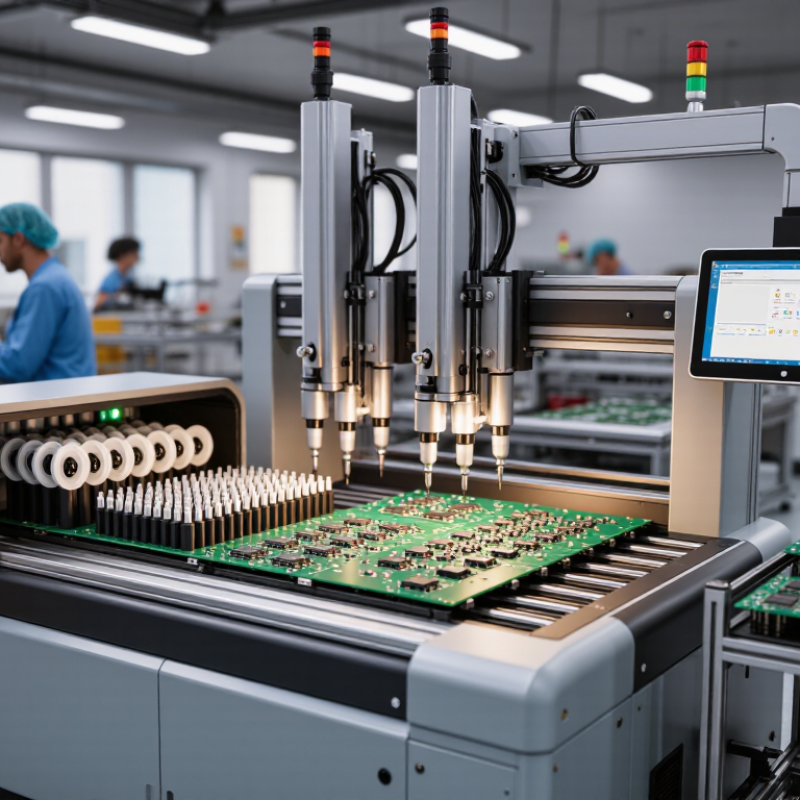
A pick and place machine automatically mounts electronic components onto a printed circuit board. It reads placement coordinates from a programmed design file. Feeders present components in controlled positions. A placement head then collects them with vacuum nozzles. Cameras verify alignment before each component reaches the board.
The process is fast, but not careless. Conveyor rails position the board, while software controls placement order and movement. Vision systems detect rotation, missing parts, and incorrect locations. High-speed models handle resistors and capacitors efficiently. Flexible machines manage connectors, integrated circuits, and irregular components. According to the International Federation of Robotics’ World Robotics 2024 report, manufacturers installed 541,302 industrial robots worldwide in 2023. Pick and place equipment belongs to this broader automation shift, especially in electronics production.
Accuracy depends on more than the machine itself. Feeder calibration, nozzle condition, component packaging, and board cleanliness all matter. In production settings, I have seen a small feeder offset create repeated placement defects. That assumption fails. Buyers should examine placement accuracy, changeover time, software compatibility, maintenance access, and local technical support. A 2024 report from the United Nations Industrial Development Organization also links industrial automation with productivity gains, but real results vary by workforce skills and process discipline. Perfect throughput is rarely achieved immediately. Careful setup still matters.
Key Criteria for Evaluating Pick and Place Machines
Selecting among the 10 best pick and place machines requires more than comparing advertised placement speeds. Throughput should match real production conditions, including feeder changes, board handling, and inspection pauses. Ask for verified placements per hour, not only laboratory figures. Placement accuracy matters greatly for fine-pitch components and densely packed boards. Request sample results using your actual board designs and component mix.
Component flexibility is another practical measure. A machine should handle small passives, larger connectors, and irregular packages without excessive setup work. Check feeder capacity, changeover time, nozzle availability, and board size limits. A clear software interface reduces training errors. It also helps operators diagnose misfeeds, vision faults, and nozzle wear quickly. Small details matter.
Maintenance can decide long-term value. Review access to service areas, preventive maintenance schedules, spare-part availability, and remote technical support. Ask whether local technicians can receive documented training. Energy use, compressed-air demand, and floor space should enter the cost calculation. The cheapest purchase may become expensive later. It happens.
Reliable suppliers should provide traceable performance data, safety documentation, and realistic installation timelines. A factory acceptance test can reveal vibration, feeder alignment, or software issues before shipment. Do not rely on polished demonstrations alone. Independent references from similar production environments are useful, although they are not perfect evidence. Keep a written scoring sheet, and record every assumption before making the final decision.
Ten Leading Pick and Place Machines for Global Buyers
Ten leading pick and place machines serve different production goals for global buyers. High-speed turret machines suit large runs with standard components. Flexible modular machines handle mixed boards and frequent changeovers. Multi-gantry systems improve output when several heads work together. Chip shooters place tiny components rapidly. Fine-pitch machines support dense circuit layouts. Odd-form machines manage connectors, coils, and larger parts. Wafer handlers serve specialized semiconductor assembly. LED placement systems support long boards and lighting products. Benchtop machines fit prototypes and small workshops. Robotic cells combine placement with inspection or feeding.
Real production experience shows that speed alone can mislead. A machine rated for 60,000 components per hour may slow sharply during feeder changes. Accuracy, feeder stability, software learning time, and local technical support matter more than impressive figures. Buyers should check placement tolerance, component range, board size, power requirements, and available training. Request sample runs using real components. Small tests often reveal vibration, nozzle wear, or software gaps.
Tips: Compare complete ownership costs, not only the purchase price. Ask for documented test results and maintenance schedules. Confirm spare-part access in your region. Review electrical and safety compliance before shipment. I would also leave space for operator learning; production plans often underestimate it. A cheaper machine can become expensive when setup knowledge is limited. The best choice depends on product mix, staffing, floor space, and realistic monthly volume.
Comparing Speed, Accuracy, Flexibility, and Total Cost
For global buyers, comparing ten pick-and-place machines requires more than reading headline placement rates. Speed is not everything. A machine rated at 60,000 components per hour may slow sharply with tall parts, fine-pitch packages, or frequent feeder changes. Ask suppliers for cycle data from a mixed board, not an idealized demo. Accuracy should be checked at the nozzle and solder joint. Use repeated placements, inspect offset, and record failures across several shifts. Small errors grow.
Flexibility covers feeder capacity, component range, software learning, and changeover time. One extra hour between jobs can erase impressive speed gains. Check whether the machine handles small batches without complicated setup. Test odd-shaped parts, narrow boards, and common package sizes during a sample run. A clear interface also reduces training time, especially when operators speak different languages. That matters.
Total cost includes tooling, feeders, spare parts, software updates, energy, maintenance, and technician travel. A lower purchase price can become expensive when support is slow or parts arrive from far away. Request service response times and a written maintenance schedule. Compare warranty conditions carefully. I would not trust a spreadsheet built only from supplier claims. Add measured output, downtime, labor, and expected repair costs. Then score each machine against your actual production mix, not a perfect factory scenario. Some assumptions will be wrong. Record them anyway.
10 Best Pick and Place Machine Categories for Global Buyers
Benchmark comparison of representative machine categories by speed, placement accuracy, production flexibility, and relative total cost. Scores are normalized to a 0–100 scale from typical industry specifications; a higher score is better except for total cost.
Typical reference ranges include approximately 5,000–120,000 placements per hour and placement accuracy of about ±25–100 micrometers. Actual performance depends on component mix, feeder configuration, board design, changeover time, and operating conditions.
How to Select the Right Machine for Your Production Needs
Selecting a pick-and-place machine starts with your production mix, not a brochure’s highest speed. During line evaluations, I check component sizes, package types, board dimensions, and daily changeovers. A machine must handle tiny resistors, larger connectors, and uneven boards without constant intervention. Placement accuracy matters, but repeatability matters more over long shifts. Measure feeder capacity, nozzle availability, conveyor width, and software compatibility. A perfect specification sheet can still fail on a crowded factory floor.
Tips: Request a sample run using your own boards and components. Record placement accuracy, cycle time, feeder loading, and operator adjustments. Ask how quickly programs change between small batches. Check maintenance access around nozzles, cameras, and conveyors. Review training, spare-part availability, remote assistance, and local service coverage. These details affect uptime more than impressive headline speed. Do not ignore noise, lighting, ergonomics, or dust control. Operators notice them every day.
Budget for the complete system, including feeders, tooling, installation, software, maintenance, and future upgrades. Compare useful output, not advertised placements per hour. A slower machine may deliver steadier production with fewer stoppages. I have seen teams choose maximum speed, then struggle with changeovers and unsupported component packages. That decision looked efficient on paper. It was not. Verify electrical requirements and applicable safety certifications for the destination market. Ask for documented test results, clear warranty terms, and measurable acceptance criteria before purchase.
10 Best Pick-and-Place Machines for Global Buyers – How to Select the Right Machine for Your Production Needs
Comparison of representative machine configurations and typical industry specifications
| Rank | Machine Configuration | Typical Placement Speed | Component Range | Maximum PCB Size | Typical Placement Accuracy | Feeder Capacity | Best Application | Indicative Investment Level |
| 1 | High-Speed Modular Mounter | 45,000–80,000 CPH | 0201 to 18 mm components | 460 × 460 mm | ±35–50 µm | 80–120 feeders | High-volume consumer electronics and repetitive PCB assemblies | High |
| 2 | Flexible Modular Placement System | 25,000–55,000 CPH | 0201 to 55 × 55 mm ICs | 510 × 460 mm | ±40–60 µm | 60–100 feeders | Mixed production with frequent product changeovers | Medium–High |
| 3 | High-Accuracy Fine-Pitch Mounter | 15,000–35,000 CPH | 01005 to 74 × 74 mm packages | 460 × 460 mm | ±25–40 µm | 50–80 feeders | Medical electronics, communications hardware, and fine-pitch assemblies | High |
| 4 | High-Mix, Low-Volume Mounter | 8,000–25,000 CPH | 0402 to 100 × 50 mm components | 600 × 460 mm | ±50–80 µm | 40–80 feeders | Prototype manufacturing, contract assembly, and frequent product changes | Medium |
| 5 | Compact Desktop Pick-and-Place Machine | 2,000–8,000 CPH | 0402 to 20 mm components | 300 × 400 mm | ±50–100 µm | 20–60 feeders | Laboratories, schools, startups, and small-batch electronics production | Low–Medium |
| 6 | Large-Board Placement Machine | 12,000–30,000 CPH | 0402 to 100 × 100 mm components | 1,200 × 500 mm | ±60–100 µm | 60–100 feeders | LED boards, industrial controls, power electronics, and long PCBs | High |
| 7 | Odd-Form Component Mounter | 5,000–18,000 CPH | 0402 to 150 × 75 mm components | 610 × 460 mm | ±75–125 µm | 40–80 feeders | Connectors, relays, switches, sockets, and irregular-shaped components | Medium–High |
| 8 | Dual-Lane Production Mounter | 30,000–65,000 CPH | 0201 to 50 × 50 mm components | 2 × 460 × 460 mm | ±35–60 µm | 80–140 feeders | High-throughput lines requiring balanced production and reduced changeover time | High |
| 9 | Component-on-Substrate Placement System | 3,000–15,000 CPH | 0402 to 100 × 100 mm components | 500 × 500 mm | ±50–100 µm | 30–70 feeders | Automotive electronics, power modules, sensors, and non-standard substrates | Medium–High |
| 10 | Integrated SMT Line Placement Module | 20,000–50,000 CPH | 0201 to 55 × 55 mm components | 510 × 460 mm | ±40–70 µm | 60–120 feeders | Automated SMT lines with solder paste inspection, reflow, and traceability systems | High |
Note: CPH means components per hour. Specifications are representative industry ranges; actual performance depends on component mix, feeder arrangement, PCB design, inspection requirements, and operating conditions.