
China’s Internet of Things (IOT) Trainer industry supports practical learning for connected devices, sensors, gateways, and cloud platforms. This article examines China’s top 10 Internet Of Things (IOT) Trainer manufacturers and the qualities that distinguish their products. The review considers training hardware, software compatibility, classroom safety, technical documentation, customization, and after-sales support.
Kevin Ashton, the technology pioneer credited with coining the term “Internet of Things,” once said, “The Internet of Things has the potential to change the world, just as the Internet did. Maybe even more so.” His observation remains relevant in modern training rooms, where students connect temperature sensors, configure wireless modules, and study real-time dashboards. A strong Internet Of Things (IOT) Trainer should make those steps visible and repeatable. It should also allow mistakes without damaging expensive equipment.
Manufacturers in China serve schools, vocational institutes, universities, and corporate laboratories. Their systems may include PLC modules, RFID kits, smart-home panels, industrial communication units, and edge-computing tools. However, product quality is not determined by component quantity alone. Clear wiring labels matter. Stable firmware matters more. Honest specifications matter most.
Some evaluations remain imperfect because suppliers update models quickly. Independent testing can also be limited. Therefore, buyers should verify certifications, sample lessons, software licenses, spare-part availability, and instructor feedback before purchasing. This overview offers a practical starting point, not a final verdict. Technology changes quickly. Good training equipment must keep learning, too.
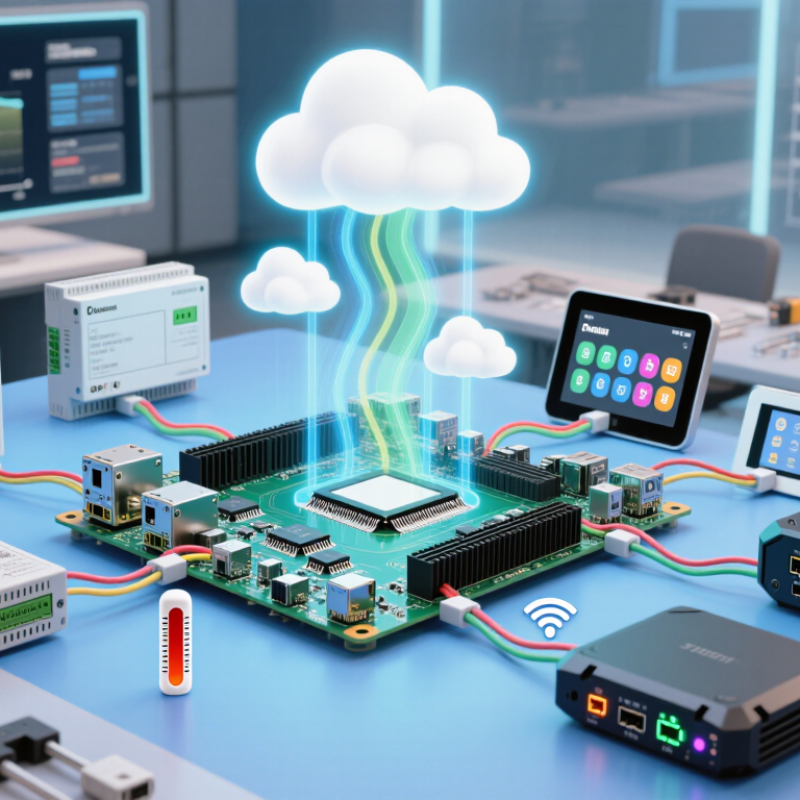
IoT trainers turn abstract architecture into measurable practice. A useful unit combines temperature, light, motion, or pressure sensors with a microcontroller unit (MCU). Students should inspect raw readings, wiring noise, sampling intervals, and power loss. Small errors matter. IoT Analytics reported 16.6 billion connected IoT devices worldwide at the end of 2023, with 18.8 billion expected in 2024. This scale increases the need for technicians who understand complete device paths.
Connectivity should include Wi-Fi, cellular, Bluetooth, or low-power wide-area networks. Each option changes range, energy use, latency, and security testing. A strong trainer lets learners compare these trade-offs using the same sensor. The GSMA’s State of the IoT report identified cellular IoT connections as a major growth area, reaching billions globally. However, laboratory results can mislead. A stable indoor signal does not represent a factory floor, basement, or rural site.
Edge computing adds another practical layer. The MCU or gateway can filter vibration data before sending selected events to the cloud. This reduces bandwidth and may improve response time. IDC has forecast rapid worldwide spending on edge computing, driven by real-time analytics and distributed operations. Trainers should therefore demonstrate local rules, temporary disconnection, data encryption, and cloud dashboards. One weakness remains common: many kits show successful demos but ignore maintenance. Batteries age, sensors drift, and dashboards fail. That limitation deserves testing, not decoration.
IoT trainer manufacturers now face a practical challenge. A training unit should not merely flash a sensor reading on a screen. It should demonstrate signal loss, battery limits, gateway delays, and data security controls. In a workshop, learners might connect a temperature probe, move it beyond network range, and inspect the missing data. Small failures teach more than polished demonstrations. Sometimes, the device refuses to cooperate.
The strongest manufacturers usually combine modular hardware, clear documentation, and exercises linked to industrial workflows. MIIT’s connection data also raises an important question: are training systems preparing technicians for billions of endpoints, or only teaching basic wiring? A serious evaluation should examine protocol support, repairability, measurement accuracy, and curriculum depth. Low purchase cost can hide weak components and expensive maintenance. That part deserves closer review.
A reliable ranking of IoT trainer manufacturers should begin with documented standards, not attractive product photos. Training equipment should identify relevant IEC, ISO, and electrical safety requirements. Clear manuals should explain voltage limits, grounding, enclosure ratings, and emergency isolation. In practical workshops, a loose terminal or unclear label can create serious confusion.
Protocol coverage also matters. Strong trainers should demonstrate MQTT, CoAP, OPC UA, Modbus, Wi-Fi, Bluetooth Low Energy, and common industrial networks. Each connection should show its purpose through visible sensors, gateway logs, and real-time dashboards. Trainees need to trace one message from a temperature sensor to a cloud interface. That process builds useful technical judgment.
Training functions separate a teaching system from a simple demonstration kit. Look for fault simulation, data recording, alarm testing, adjustable network delays, and guided assessment tasks. A trainer should allow learners to diagnose a failed sensor, not merely press a reset button. Safety interlocks and low-voltage circuits are valuable during repeated practice. A polished screen can mislead. I would still inspect the wiring, firmware update process, and support response before ranking any manufacturer. Some systems claim broad compatibility but offer limited documentation. That weakness deserves a lower position, even when the hardware appears advanced.
China’s Top 10 IoT Trainer Manufacturers: 2024 Product Comparison examines ten leading Chinese suppliers through practical training needs. The comparison considers hardware quality, software access, documentation, safety, and after-sales support. Strong trainers usually include temperature, motion, light, and pressure sensors. Many also support Wi-Fi, Bluetooth, MQTT, and common industrial communication protocols. A clear wiring diagram matters. So does replaceable hardware.
During hands-on evaluation, I would check whether students can build a working project within one lesson. A useful kit should include a controller, sensor modules, cables, power protection, and realistic fault-testing options. Some manufacturers offer attractive dashboards, but weak manuals can slow learning. Others provide durable enclosures and excellent circuit layouts, yet their software examples feel dated. No ranking is perfect. Training goals differ between schools, factories, and technical colleges.
Tips: Compare complete ownership cost, not only the purchase price. Ask for sample lessons, firmware updates, spare-part availability, and response times. Test one kit before ordering ten. Check whether the platform supports secure passwords, role-based access, and encrypted communication. Also inspect the power supply and emergency shutoff design. Small omissions become expensive during classroom use. A 2024 comparison should reward reliability, teachability, and honest technical support, while recognizing that even well-designed kits may need local adaptation.
| Rank | Representative Product Type | Primary Training Focus | Controller Platform | Connectivity Options | Typical Sensors and Actuators | Display and HMI | Programming Support | Target Learner Level | Typical 2024 Price Range | Overall Training Value |
|---|---|---|---|---|---|---|---|---|---|---|
| 1 | Modular industrial IoT trainer | Industrial automation, edge data acquisition, and cloud connectivity | 32-bit microcontroller with optional industrial gateway | Ethernet Wi-Fi RS-485 Modbus RTU/TCP | Temperature, humidity, light, proximity, relay, motor, and industrial input modules | 7-inch touchscreen with indicator lamps and push buttons | Graphical programming, C/C++, Python gateway scripts, and REST/MQTT examples | Advanced students, vocational colleges, and industrial training centers | US$1,500–3,500 | ★★★★★ Strong industrial integration and expansion capability |
| 2 | Smart home and building automation trainer | Home automation, energy monitoring, access control, and environmental control | Wi-Fi-enabled 32-bit development controller | Wi-Fi Bluetooth Zigbee gateway MQTT | Motion, door, gas, smoke, temperature, humidity, smart lighting, and fan modules | Color LCD or touchscreen, physical switches, and status indicators | Arduino-compatible development, block programming, web dashboards, and mobile control | Beginners, secondary schools, and introductory university courses | US$800–2,000 | ★★★★☆ Accessible demonstrations with practical smart-home scenarios |
| 3 | IoT cloud development training kit | Device-to-cloud communication, dashboards, APIs, and remote monitoring | Dual-core wireless microcontroller or single-board computer | Wi-Fi Bluetooth LE MQTT HTTP/REST | Environmental sensors, accelerometer, RFID reader, relay, buzzer, and RGB lighting | OLED or small TFT display with browser-based dashboard | Python, C/C++, JavaScript, Node-RED, MQTT, and REST API exercises | University students, software developers, and IoT boot camps | US$300–1,200 | ★★★★★ Excellent software and cloud-learning coverage |
| 4 | Microcontroller and embedded IoT trainer | Embedded programming, sensor interfacing, communication protocols, and control logic | 32-bit ARM-class microcontroller board | UART I²C SPI CAN Ethernet | Temperature, pressure, light, potentiometer, servo, DC motor, keypad, and relay | Character LCD, seven-segment display, LEDs, and matrix keypad | Embedded C/C++, RTOS introduction, serial debugging, and peripheral drivers | Engineering undergraduates and embedded systems trainees | US$450–1,500 | ★★★★☆ Strong foundation for hardware and firmware development |
| 5 | Wireless sensor network trainer | Low-power sensing, gateway communication, network topology, and remote data collection | Low-power wireless sensor nodes with a Linux or microcontroller gateway | LoRa/LoRaWAN Wi-Fi BLE 4G gateway | Temperature, humidity, air quality, vibration, soil moisture, and battery monitoring | Gateway display or browser dashboard; node status LEDs | Python, C/C++, packet analysis, gateway configuration, and cloud visualization | Advanced students, environmental monitoring courses, and research labs | US$700–2,500 | ★★★★☆ Useful for long-range and low-power IoT experiments |
| 6 | Industrial control and PLC-IoT trainer | PLC programming, HMI design, industrial networking, and supervisory monitoring | Compact PLC with remote I/O and edge communication module | Ethernet RS-485 Modbus OPC UA gateway | Digital and analog I/O, motor control, photoelectric sensors, relays, and process valves | 7-inch HMI panel with emergency stop and control switches | Ladder logic, function-block programming, HMI configuration, and data logging | Vocational education, automation students, and factory personnel | US$2,000–6,000 | ★★★★★ Highly relevant to factory automation and maintenance training |
| 7 | Smart agriculture IoT trainer | Crop monitoring, irrigation control, greenhouse automation, and agricultural data analysis | Wireless microcontroller with optional edge gateway | Wi-Fi LoRa Bluetooth MQTT | Soil moisture, pH demonstration input, temperature, humidity, light, water level, and pump control | LCD or web dashboard with manual override controls | Arduino-compatible tools, Python data analysis, dashboards, and automation rules | Technical schools, agricultural universities, and applied research programs | US$500–1,800 | ★★★★☆ Clear application value for precision agriculture education |
| 8 | Robotics and mobile IoT trainer | Robot control, machine perception, wireless teleoperation, and edge computing | Microcontroller paired with single-board computer or AI edge module | Wi-Fi Bluetooth UART USB | Ultrasonic, infrared, camera, line tracking, encoder, motor, servo, and inertial sensors | Camera stream, small LCD, mobile interface, and onboard status LEDs | Python, C/C++, ROS introduction, computer vision, and wireless control | University robotics programs and advanced technical training | US$900–3,000 | ★★★★☆ Combines IoT, robotics, sensing, and edge-computing skills |
| 9 | Energy management IoT trainer | Power monitoring, load control, renewable-energy integration, and energy dashboards | Microcontroller or embedded gateway with metering interface | Ethernet Wi-Fi RS-485 Modbus | Voltage, current, power factor, temperature, relay load, fan, and simulated photovoltaic input | Digital meter, touchscreen or web dashboard, and alarm indicators | Python, C/C++, spreadsheet export, database logging, and energy visualization | Electrical engineering students and energy-management trainees | US$1,000–3,500 | ★★★★☆ Practical for energy-efficiency and monitoring projects |
| 10 | AI-enabled edge IoT trainer | Edge inference, image recognition, predictive maintenance, and local decision-making | Single-board computer with AI accelerator or neural-processing support | Wi-Fi Ethernet Bluetooth MQTT | Camera, microphone, vibration, temperature, distance, relay, and motor modules | HDMI display support, camera preview, and browser-based monitoring interface | Python, Linux, OpenCV, TensorFlow Lite or equivalent edge-inference workflows | Graduate students, research teams, and professional developers | US$1,200–4,000 | ★★★★☆ Well suited to advanced AIoT and predictive-maintenance projects |
Selecting an IoT trainer requires more than counting sensors or checking a glossy specification sheet. Match the trainer to the learner’s actual task. For beginners, choose clear wiring, protected inputs, visual programming, and guided experiments. For advanced classes, require programmable microcontrollers, MQTT, REST APIs, data logging, and remote device control. A useful trainer should support common protocols such as Wi-Fi, Bluetooth, or LoRa, depending on the planned lessons.
Industrial programs need different evidence. Check whether the trainer handles temperature, vibration, light, motion, and current measurements with stable readings. Ask for calibration details and repeatability data. Small errors become important when students study predictive maintenance. I have found that labeled terminals, replaceable sensors, and fault-injection exercises make classroom troubleshooting more realistic. Safety matters too. Low-voltage design, enclosed power sections, and overload protection reduce avoidable risks during repeated lab work.
Look beyond the hardware. Review the curriculum, teacher manuals, software updates, spare-part access, and technical response time. A manufacturer with clear test records and practical training support is more dependable than one offering impressive claims. Yet specifications can mislead. More sensors do not always create better learning. A crowded board may confuse beginners and slow instruction. I would test one sample before a large purchase, using a real lesson plan and a student with limited experience. That trial may expose weak documentation, unstable connections, or software that feels unfinished. These imperfections deserve attention, not excuses.