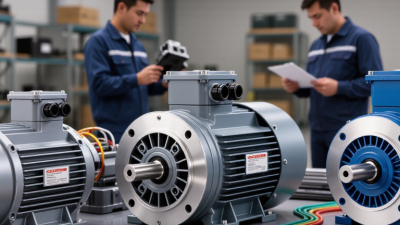
China’s mechanical electrical sector serves projects ranging from factory upgrades to commercial building systems. Its suppliers offer products such as motors, pumps, switchgear, control panels, and HVAC components. The range is broad. So is the difference between vendors with similar catalogs.
This guide introduces ten suppliers for buyers who need a practical starting point, not a universal ranking. It considers product focus, manufacturing capabilities, quality documentation, project experience, export support, and access to replacement parts. A detailed catalog matters, but so does a clear answer about lead times or customization. Imagine a pump arriving on schedule while a compatible control component remains unavailable. Small details can shape the whole project.
Supplier information can change, and public claims do not always reveal factory capacity or service quality. No list is perfect. The selection may favor companies with clearer product information, which can overlook capable firms with less polished websites. Treat each profile as a lead to verify. Ask for current technical data, relevant test reports, model-specific certificates, and references for comparable applications. Confirm that specifications match your voltage, operating environment, installation space, and maintenance plan. These checks are useful, not glamorous. They can prevent costly mismatches. The right partner is rarely just the lowest quote; it is the supplier whose products, documentation, and communication fit your actual requirements.
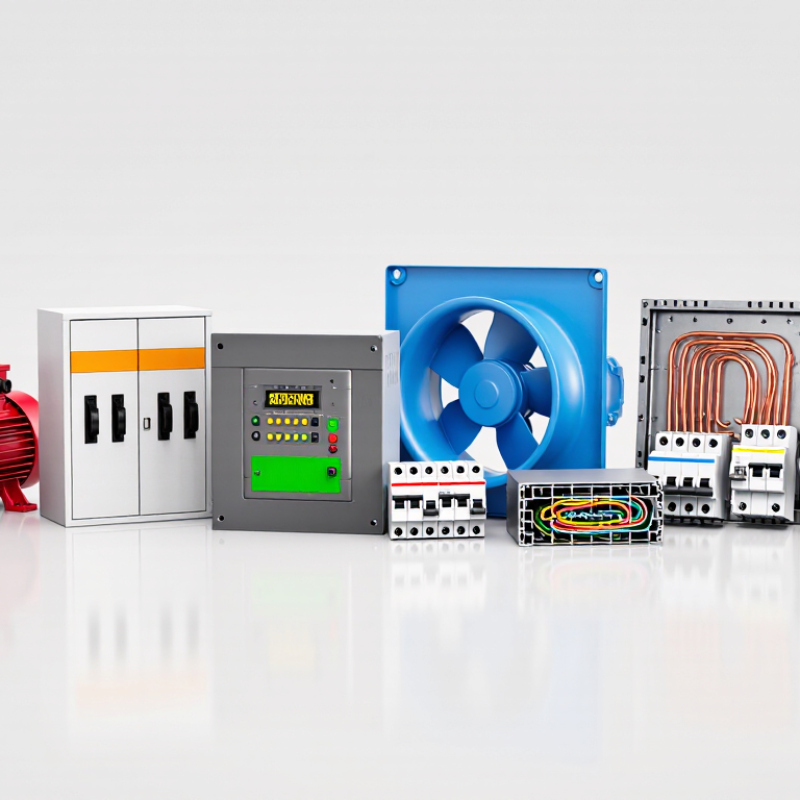
In China, a mechanical and electrical supplier may be a manufacturer, distributor, or engineering integrator. The category covers items such as pumps, valves, motors, cables, control cabinets, and factory automation components. Some suppliers make products in their own workshops. Others coordinate production across several facilities. The label can be fuzzy.
A capable supplier should explain what it makes, what it sources, and how it checks each order. Buyers can ask for drawings, material specifications, test records, and clear delivery terms. For example, a motor’s voltage, mounting dimensions, and duty cycle should match the application, not just the quotation. Small details matter. That matters. But paperwork alone cannot prove consistent production quality. Ask how inspection works, who handles nonconforming parts, and what support is available after delivery. A factory visit or sample review can reveal practical details, such as labeling, packaging, and how staff record measurements. These checks take time, and they are not perfect. Still, they help distinguish a dependable partner from a seller with a broad catalog and limited technical knowledge.
Identifying a leading mechanical electrical supplier starts with evidence, not a polished catalog. Check whether its products match your drawings, operating conditions, and required tolerances. Ask for material specifications, inspection records, and test reports linked to the exact part number. A certificate alone is not enough.
Production capability matters just as much. Review equipment, process controls, maintenance records, and procedures for handling defective parts. If possible, inspect a sample or visit the factory. Look closely at connector fit, surface finish, labeling, and packaging. No scorecard is perfect. A small trial order can reveal gaps that a presentation hides.
Assess delivery and communication through practical scenarios. Request recent on-time delivery data, typical lead times, and a clear escalation contact. For custom assemblies, confirm engineering response times and change-control procedures before ordering in volume. Compare total cost, including inspection, freight, tooling, and warranty support, rather than unit price alone. Some details remain uncertain. Record assumptions, verify them, and review the decision after the first shipment.
China Top 10 Mechanical Electrical Suppliers
Profiles of Ten Major Chinese Suppliers
These ten profiles represent common supplier strengths across China’s mechanical and electrical sector. Profile one focuses on industrial motors, with attention to rated power, insulation class, and operating temperature. Profile two specializes in pumps and can provide performance curves for different flow rates. Profile three supplies low-voltage electrical components, where clear test records matter. Profile four serves automation projects with sensors and control equipment. Profile five produces cables, with conductor material and jacket thickness worth checking. Details matter.
Profile six offers bearings and transmission parts for production lines. Profile seven handles air compressors and related equipment, where noise and energy use affect daily operation. Profile eight supplies valves and fluid-control components. Profile nine builds power distribution equipment, often configured to project specifications. Profile ten combines mechanical assemblies with electrical controls for integrated systems. These are practical profiles, not a verified ranking; supplier capabilities can overlap, and this grouping is imperfect.
Tips: Request current technical data sheets, sample inspection records, and a written scope of supply. Compare delivery terms and spare-parts support, not just unit prices. A polished catalog helps, but it cannot replace a detailed conversation about your operating conditions. Ask one more question than feels necessary.
Anonymized, sector-based profiles. Product and application descriptions are indicative; entries are not ranked and do not identify specific companies or brands.
| Profile | Main Product Scope | Typical Applications | Supply & Engineering Focus | Common Procurement Checks | Relevant Standards / Requirements |
|---|---|---|---|---|---|
| Supplier 01 | Low- and medium-voltage switchgear, circuit breakers, distribution panels and protection devices. | Commercial buildings, factories, utility distribution and infrastructure projects. | Equipment selection, panel configuration, protection coordination and project-based delivery. | Rated voltage and current, short-circuit ratings, enclosure protection, drawings and test reports. | IEC 60947 and IEC 61439 are commonly referenced for low-voltage equipment and assemblies; confirm the applicable edition and local requirements. |
| Supplier 02 | Electric motors, generators, drives and related motor-control equipment. | Pumps, fans, compressors, conveyors and general industrial machinery. | Motor sizing, efficiency options, mounting configurations and integration with variable-speed drives. | Output, voltage, frequency, speed, duty, insulation class, efficiency and mounting dimensions. | IEC 60034 covers rotating electrical machines; efficiency classifications and test requirements depend on the market and product. |
| Supplier 03 | Industrial automation hardware, including programmable controllers, drives, sensors and control components. | Production lines, material handling, process control and machine building. | Control-system integration, communications compatibility and configuration support. | Protocol compatibility, I/O requirements, operating environment, software version and lifecycle support. | IEC 61131-3 is relevant to programmable controller programming; machinery and electrical safety requirements vary by installation and destination market. |
| Supplier 04 | Industrial pumps, valves and fluid-handling equipment. | Water supply, wastewater treatment, building services, irrigation and industrial processes. | Selection by flow, head, fluid properties, materials and operating conditions. | Performance curves, seal and material compatibility, operating range, efficiency and acceptance testing. | ISO 9906 is used for hydraulic performance acceptance testing of rotodynamic pumps; confirm its applicability to the specified pump. |
| Supplier 05 | Heating, ventilation and air-conditioning equipment, including chillers, air handlers and heat-pump systems. | Commercial buildings, industrial facilities and district or central plant applications. | System capacity selection, controls integration, commissioning and service planning. | Cooling or heating capacity, energy performance, refrigerant, noise, ambient range and service access. | Applicable performance, refrigerant and safety rules depend on equipment type and destination market; verify local energy and environmental regulations. |
| Supplier 06 | Power transformers, distribution equipment and associated substation components. | Utility networks, industrial power systems, renewable-energy connections and commercial sites. | Equipment designed to specified voltage levels, capacity, connection and site conditions. | Impedance, losses, temperature rise, insulation level, cooling method, routine tests and delivery documentation. | IEC 60076 is a widely used transformer standards series; network-owner specifications may add requirements. |
| Supplier 07 | Solar photovoltaic modules, inverters and balance-of-system electrical equipment. | Utility-scale solar farms, commercial rooftops and distributed generation. | Equipment supply for grid-connected systems, with configuration based on project design. | Electrical ratings, environmental performance, product traceability, warranty terms and project certification. | IEC 61215 and IEC 61730 address PV module design qualification and safety; grid-connection rules are market-specific. |
| Supplier 08 | Elevators, escalators and related motion, control and safety systems. | Residential towers, offices, hotels, transit facilities and public buildings. | System design around building height, traffic demand, shaft dimensions and accessibility needs. | Rated load and speed, door configuration, safety features, installation plan and maintenance coverage. | EN 81 and ISO 8100 series standards are relevant in many markets; applicable codes depend on jurisdiction and equipment type. |
| Supplier 09 | Air compressors, compressed-air treatment equipment and storage components. | Manufacturing plants, workshops, packaging lines and process industries. | System matching to pressure, flow demand, air quality and operating profile. | Delivered air flow, working pressure, specific power, noise, maintenance intervals and dryer performance. | ISO 1217 is commonly used for compressor acceptance tests; pressure-vessel and air-quality rules vary by market. |
| Supplier 10 | Diesel or gas generator sets, alternators, control panels and auxiliary equipment. | Backup power, construction sites, industrial facilities and remote or temporary power applications. | System configuration for standby, prime or continuous-duty requirements and site conditions. | Rated duty, fuel consumption, emissions, transient response, noise, controls and load-bank test results. | ISO 8528 covers reciprocating-engine-driven AC generating sets; emissions and installation rules depend on location and use. |
China Top 10 Mechanical Electrical Suppliers
Products and Services Across Key Industries
Mechanical and electrical suppliers support production, infrastructure, and building operations with equipment and technical services. Their offerings may include motors, pumps, control panels, sensors, wiring components, and power distribution equipment. A packaging line, for example, can depend on a motor, a correctly sized drive, and controls that communicate reliably. Small details matter.
Industry needs differ. Food processing sites often require equipment suited to washdown areas, while water facilities may need pumps and monitoring systems built for continuous operation. Construction projects call for lighting, electrical distribution, and installation support. Energy operations may require switchgear, transformers, and maintenance planning. Suppliers can also help with product selection, system integration, commissioning, and troubleshooting, though service depth varies.
Buyers should check technical documentation, delivery lead times, spare-parts availability, and service response before comparing prices. Ask how a proposed component fits existing equipment, not only whether it meets a listed specification. In practice, site conditions can expose gaps that a catalog cannot show. That deserves attention. Clear answers and realistic limits are useful signs of a dependable supplier; no single supplier will suit every industry or project.
When comparing China’s top mechanical and electrical suppliers, begin with the project conditions, not catalog size. A pump for continuous factory operation needs different evidence than a motor used intermittently. Share the required voltage, load, operating hours, installation environment, and expected service life. Ask suppliers to confirm these details in writing. Small differences matter.
Review the technical offer line by line. Check rated output, efficiency, protection rating, materials, and compatible control equipment against your specification. Request dimensioned drawings and test records for the proposed configuration, not just a standard product sheet. For custom assemblies, clarify inspection steps, packaging, delivery dates, and spare-part availability. A sample inspection or factory acceptance test may reveal issues before shipment. It takes time.
Compare quotations on the same scope. A low price may exclude wiring, commissioning support, or suitable protective components. Ask who handles technical questions and how quickly revisions are returned. Also check how the supplier manages changes after approval; this is where projects can become messy. A neat presentation is reassuring, but it is not proof of consistent production. Keep a written comparison, note unanswered questions, and allow time to verify claims with project references or independent inspection where appropriate.
Example project-specific weighting for comparing suppliers. These criteria are commonly used in procurement; the percentages are illustrative and should be adjusted to match project priorities.
Use the same criteria and evidence requirements for every supplier. Verify technical compliance against project specifications, and assess delivery, quality, lifecycle cost, service support, and required documentation.