What Are China Top 10 Mechanical Manufacturing Companies?

China’s mechanical manufacturing sector supports automotive, energy, construction, aerospace, and industrial equipment markets worldwide. This guide examines ten leading companies and explains why they matter.

The ranking considers production scale, engineering depth, product quality, export capability, and financial stability. It also reviews CNC machining, casting, forging, automation, and assembly capacity. Official company reports, certification records, product catalogs, and credible industry sources provide the evidence. Customer applications also matter. A factory’s equipment list cannot fully reveal its reliability.

Look closely.

The strongest manufacturers usually show consistent tolerances, documented inspections, and traceable materials. Their facilities may include robotic welding cells, coordinate measuring machines, and climate-controlled testing rooms. These details help distinguish real capability from attractive marketing language. Compliance with standards such as ISO 9001 can support confidence, but certification alone proves little. Supplier audits, delivery records, and after-sales support deserve equal attention.

This overview uses “top” as a practical comparison, not an absolute verdict. Public information is uneven, and some private companies disclose very little. A smaller specialist may outperform a larger group in one demanding application. That limitation deserves recognition. Readers should verify current capacity, certifications, lead times, and ownership details before making procurement decisions.

The selected companies represent different strengths within mechanical manufacturing. Some lead in heavy machinery, while others focus on precision components or complete production systems. Their differences reveal how China’s industrial base continues to evolve, compete, and occasionally overpromise.
What Are China Top 10 Mechanical Manufacturing Companies?

Definition and Scope of Mechanical Manufacturing in China

Mechanical manufacturing in China covers the design, processing, assembly, and testing of physical equipment. It includes machine tools, industrial machinery, precision components, automation systems, and heavy equipment. The field connects engineering drawings with real production lines. Materials may include steel, aluminum, polymers, and advanced composites. Quality depends on tolerances, process control, worker skill, and inspection records.

The scope is broader than factory production. It also includes research, prototyping, tooling, maintenance, supply-chain management, and after-sales engineering support. A review of China’s top ten mechanical manufacturing companies should examine these capabilities carefully. Revenue alone cannot prove technical leadership. Production scale, certification, delivery reliability, safety procedures, and documented project experience matter too. The boundary is not perfectly clean. Some companies combine mechanical work with electronics or software, which can make comparisons difficult. That issue deserves more reflection.

Tips: Check factory capacity, material traceability, inspection equipment, and engineering credentials. Ask for sample drawings, test reports, and realistic delivery terms. Visit the workshop when possible. Look for clean work areas, labeled parts, calibrated instruments, and workers who can explain the process. A polished website is useful, but it is not strong evidence by itself. Small details often reveal more.

Criteria for Ranking China’s Top Mechanical Manufacturing Companies

Ranking China’s top mechanical manufacturing companies requires more than checking annual revenue. A reliable assessment starts with production experience, engineering depth, and consistent delivery records. We examine how long each company has served industrial customers and whether its facilities support complex, repeatable production. Factory visits can reveal details that websites often hide, such as worn equipment, unclear workflow, or weak inspection controls.

Quality performance carries significant weight. Ranking criteria should include defect rates, testing procedures, traceability, material verification, and compliance with recognized international standards.

Skilled engineers matter too. Their ability to improve tolerances, reduce material waste, and solve unexpected production problems reflects genuine technical expertise.

Customer references and independent audit results add authority, especially when claims appear unusually strong. Numbers can mislead.

Operational reliability also separates leading manufacturers from average suppliers. We assess delivery stability, maintenance planning, workforce training, and communication during design changes. Financial resilience matters because unstable suppliers may delay tooling, materials, or after-sales support. Environmental controls and workplace safety should be reviewed through documented practices, not polished promises.

A high ranking should also consider research investment, customization ability, and transparent pricing. However, no scoring model is perfect. Smaller factories may lack impressive paperwork yet deliver excellent craftsmanship, while large facilities may look efficient but struggle with individual projects. This limitation deserves careful review.

China’s Top 10 Mechanical Manufacturing Companies

China’s Top 10 Mechanical Manufacturing Companies

China’s mechanical manufacturing leaders operate across machinery, industrial equipment, robotics, components, and precision systems. A reliable top-ten assessment should examine revenue, export reach, patents, production quality, and after-sales capability. Company size alone is not enough. The China National Bureau of Statistics reported that manufacturing value added exceeded 31 trillion yuan in 2023, showing the sector’s enormous industrial depth.

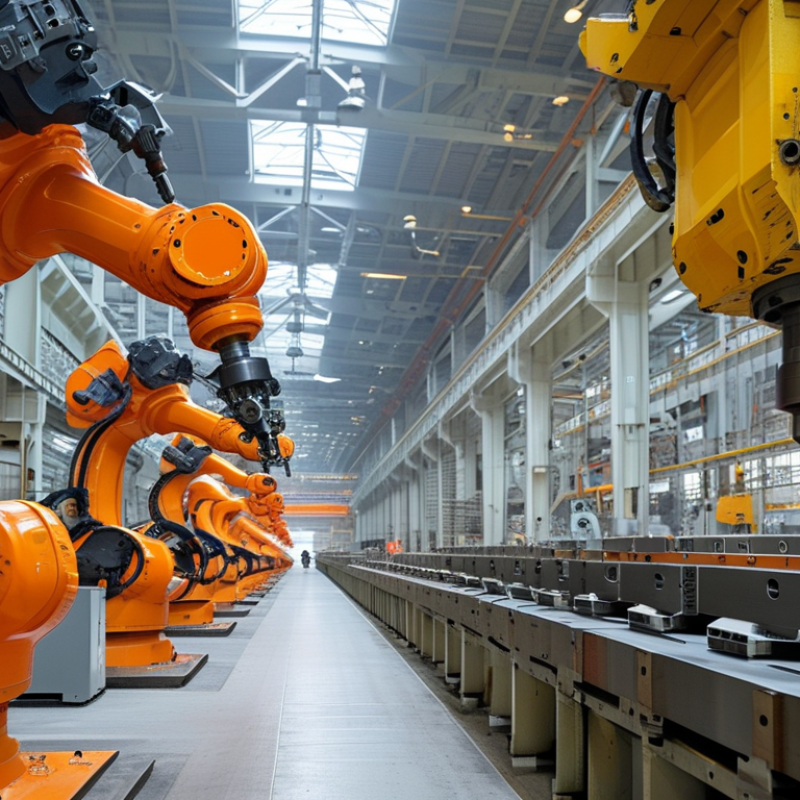
Automation is reshaping this competitive group. The International Federation of Robotics recorded 276,288 industrial robot installations in China during 2023. That represented more than half of global installations. Leading manufacturers now combine CNC machining, digital monitoring, and automated inspection. In factory visits, small details matter: stable machine vibration, clean coolant lines, and traceable inspection records often reveal more than impressive brochures.

Energy efficiency is also becoming measurable. The International Energy Agency identifies industry as a major source of global energy demand, increasing pressure on equipment producers to reduce electricity use. The Ministry of Industry and Information Technology continues promoting green factories and intelligent manufacturing standards. Still, rankings can mislead. Public financial data may be incomplete, while private firms may show strong engineering performance without wide international visibility. A better review should compare verified certificates, delivery records, defect rates, and customer support over several years. This approach is slower, but probably more dependable.

Key Products, Technologies, and Industries Served

What Are China’s Top 10 Mechanical Manufacturing Companies?

China’s leading mechanical manufacturers cover a wide range of products and industrial needs. Their portfolios commonly include CNC machine tools, industrial robots, hydraulic presses, compressors, construction equipment, agricultural machinery, and precision components. Many factories now combine five-axis machining with automated inspection, improving repeatability for complex metal parts. Servo systems and intelligent controllers also help reduce energy waste during long production cycles.

These manufacturers serve automotive, aerospace, electronics, shipbuilding, construction, mining, energy, and agricultural industries. In automotive plants, robotic welding cells support steady body assembly. In energy projects, large pumps, turbines, and pressure equipment must withstand heat, vibration, and continuous operation. Agricultural machinery uses satellite positioning and sensor-based control to improve planting accuracy. Digital twins and predictive maintenance are becoming more practical, although implementation quality still varies between facilities.

The ranking of the top ten is not absolute. Different sources measure revenue, export volume, patents, production capacity, or after-sales service. A factory may have advanced equipment but weak technical support in overseas markets. Buyers should inspect material certificates, testing records, machine tolerances, software compatibility, and spare-parts availability. Site audits remain valuable. A polished brochure cannot replace production evidence, and even reliable suppliers may need closer process supervision for highly customized equipment.

What Are China’s Top 10 Mechanical Manufacturing Companies?

Key product, technology, and industry coverage across leading Chinese mechanical manufacturers

The chart summarizes the main capability areas commonly represented among China’s leading mechanical manufacturers. Product categories include industrial equipment and components, while technology areas reflect automation, precision machining, digital manufacturing, and energy-efficiency capabilities. The industry figures represent the breadth of sectors typically served, including automotive, construction, energy, logistics, and general industrial production.

Comparison of Market Position, Innovation, and Global Reach

China’s top ten mechanical manufacturing companies should be compared through more than annual revenue. Market position also depends on industrial coverage, export strength, installed equipment, and customer diversity. The International Federation of Robotics reported 276,288 industrial robot installations in China during 2023, representing 51% of global installations. This shows the market’s scale, but not every large company converts scale into lasting advantage.

Innovation creates a sharper divide. Deloitte’s 2024 Smart Manufacturing and Operations Survey found that 86% of manufacturing leaders expect smart manufacturing to become a major competitiveness driver within five years. Leading Chinese manufacturers are therefore investing in robotics, digital twins, precision control, and lower-energy production lines. WIPO’s Global Innovation Index 2024 ranked China 11th worldwide, reflecting stronger research output and industrial technology capacity. Still, patents alone can mislead. Factory reliability matters more on a rainy Monday morning.

Global reach should be measured by overseas plants, service engineers, certification coverage, and replacement-part speed. Export volume is useful, but it can hide weak after-sales support. A fair comparison should combine market share, R&D intensity, international revenue, operating uptime, and verified customer evidence. Some rankings remain imperfect because private-company data is limited.

Tips: Check three years of financial reports, not one impressive quarter. Compare patent quality, not only patent counts. Ask whether overseas customers receive local technical support.

What Are China Top 10 Mechanical Manufacturing Companies? – Comparison of Market Position, Innovation, and Global Reach
Rank Anonymous Company Core Manufacturing Focus 2023 Revenue Band Market Position Estimated R&D Intensity Innovation Evidence International Revenue Exposure Global Reach Key Competitive Strength Overall Assessment
1 Company A Industrial machinery and heavy equipment RMB 100–300 billion Very High 4%–6% Advanced automation, digital factories, and large patent portfolios 35%–50% Operations and distribution across 100+ markets Scale, integrated supply chain, and strong engineering resources Global leader
2 Company B Construction equipment and power systems RMB 50–100 billion Very High 3%–5% Electric equipment, intelligent controls, and connected fleet systems 40%–55% Dealer and service networks in 100+ countries Strong export capability and broad product coverage Global leader
3 Company C Electrical equipment and industrial automation RMB 30–100 billion Very High 5%–8% Industrial software, smart-grid technology, and automation platforms 25%–40% Projects, subsidiaries, or partners in 80+ markets Technology depth and high-value industrial solutions Technology leader
4 Company D Machine tools and precision manufacturing RMB 10–30 billion High 4%–7% High-speed machining, precision control, and process monitoring 30%–45% Sales and technical support in 60+ markets Precision engineering and specialized production systems Global specialist
5 Company E Rail transportation equipment RMB 30–100 billion Very High 4%–6% High-speed rail systems, traction technology, and lifecycle services 20%–35% Major projects or service activities in 50+ markets Large-scale project execution and systems integration Strategic global player
6 Company F Mining, drilling, and material-handling machinery RMB 10–30 billion High 3%–5% Energy-efficient equipment, remote diagnostics, and autonomous operation 35%–50% Product distribution in 70+ markets Durability, cost competitiveness, and aftermarket support Export-oriented leader
7 Company G Hydraulic systems and industrial components RMB 5–15 billion High 3%–6% High-pressure systems, customized engineering, and component integration 25%–40% Distributors and OEM customers in 50+ markets Specialized components and flexible customization Strong niche competitor
8 Company H Compressors, pumps, and fluid equipment RMB 5–15 billion High 3%–5% Energy-saving designs, industrial IoT monitoring, and process optimization 30%–45% Sales, service, or production presence in 40+ markets Energy efficiency and application-specific engineering Competitive global supplier
9 Company I Robotics and factory automation RMB 5–15 billion High 6%–10% Industrial robots, machine vision, motion control, and smart manufacturing software 15%–30% Export sales and partnerships in 40+ markets Fast product development and automation specialization Innovation-driven challenger
10 Company J Specialized vehicles and agricultural machinery RMB 5–15 billion High 2%–4% Low-emission engines, precision agriculture, and intelligent vehicle controls 25%–40% Dealers or distributors across 50+ markets Cost-effective products and application-focused design Growing international player

Note: Companies are anonymized as requested. Revenue, R&D intensity, international exposure, and market coverage are presented as rounded public-disclosure bands for comparative analysis. Innovation and global-reach assessments combine reported technology investment, product development, overseas operations, export activity, and service-network coverage for the 2023–2024 period.