
How to Choose Steel Fabrication Equipment in 2026?
Choosing Steel Fabrication Equipment in 2026 requires more than comparing purchase prices. A reliable decision connects production volume, material thickness, labor skills, energy use, and long-term maintenance. A laser cutter may deliver exceptional accuracy, yet it can become an expensive bottleneck when compressed air, extraction, or programming support is inadequate. Real workshops expose these weaknesses quickly.
Industry data supports a cautious approach. The World Steel Association’s October 2024 Short Range Outlook projected global steel demand growth of 1.2% in 2025, following 1.7% growth in 2024. Moderate growth increases pressure on fabricators to improve productivity without overinvesting in unused capacity. Meanwhile, the International Federation of Robotics reported 541,302 industrial robots installed worldwide in 2023, with more than 4.2 million robots operating globally. Automation is expanding, but it does not automatically solve poor workflow design.
Energy performance also deserves attention. The International Energy Agency identifies the steel sector as responsible for roughly 7% to 9% of global energy-related carbon emissions. Efficient drives, regenerative systems, and accurate nesting can therefore affect both operating costs and environmental reporting. These figures are useful, not perfect.
Every factory has different constraints.
This guide evaluates cutting, forming, welding, drilling, and material-handling systems through practical criteria. It considers output consistency, operator experience, service access, software compatibility, safety controls, and total cost of ownership. Buyers should test representative steel grades, inspect finished edges, and request documented cycle times. Supplier claims need verification. A polished demonstration can hide inconvenient limitations. The best equipment is not always the fastest machine; it is the system that remains dependable on an ordinary Tuesday.
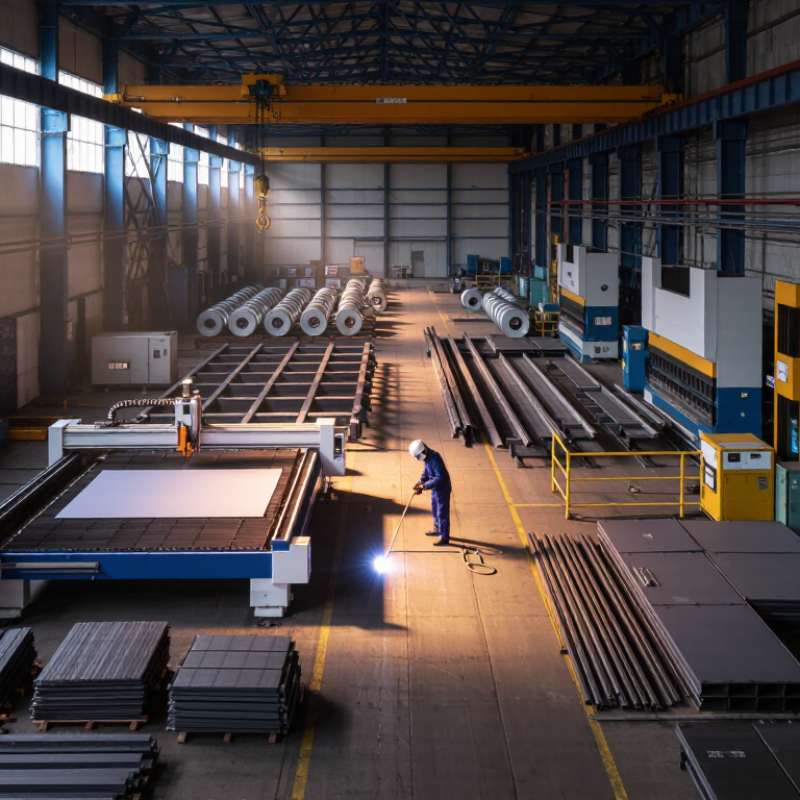
What Is Steel Fabrication Equipment and Why Does It Matter in 2026?
Steel fabrication equipment includes machines that cut, bend, drill, weld, and finish metal components. In 2026, this equipment matters because steelwork demands tighter tolerances, faster production, and clearer quality records. A poorly selected machine can create uneven holes, excessive heat marks, or costly material waste.
Measure the actual work first. Review steel thickness, section size, daily output, and available floor space. A fiber cutting system may suit precise sheet work, while a heavy-duty saw may handle structural sections better. Check motor efficiency, extraction needs, guarding, and operator access. Small details matter.
Safety comes first.
Modern equipment may include sensors, automated settings, and production data tracking. These features can reduce setup mistakes, but they do not replace skilled inspection. Confirm accuracy through test cuts, sample bends, and weld trials before purchase. Ask for maintenance records, training arrangements, spare-part availability, and realistic service response times. Independent test reports and recognized safety documentation add confidence.
I once judged a machine mainly by speed. That was too optimistic. Cleanup time and operator learning later changed the calculation. A cheaper purchase may also demand more downtime, energy, or supervision. Compare total ownership cost over several years, not just the invoice. In 2026, the best choice should support reliable workmanship, measurable quality, and safer daily operation without forcing every project into the same production method.
| Equipment Type | Primary Function | Typical Material or Thickness Range | Typical Accuracy or Capability | Productivity Strength | Important 2026 Selection Factors | Best-Fit Applications |
|---|---|---|---|---|---|---|
| CNC Fiber Laser Cutter | High-speed profiling of sheet, plate, tube, and structural sections using a focused laser beam. | Carbon steel, stainless steel, and aluminum; commonly about 0.5–25 mm for sheet and plate, depending on laser power, assist gas, and process settings. | Typical positioning accuracy is approximately ±0.03–0.10 mm on well-maintained industrial systems. | Very high for thin and medium-gauge parts; supports nesting and rapid changeovers. | Laser power Bed size Tube-processing options Assist-gas consumption Automatic nozzle and focus control | Enclosures, brackets, machinery components, architectural parts, and high-mix sheet-metal work. |
| CNC Plasma Cutting System | Thermal cutting of conductive metals by using a high-temperature plasma arc. | Carbon steel, stainless steel, and aluminum; commonly about 1–50 mm, with heavier cutting possible using industrial high-current systems. | Typical cut quality is suitable for structural and general fabrication; precision depends on amperage, torch height control, and table condition. | High for medium and thick plate; generally faster and less costly than oxy-fuel on many steel plate jobs. | Amperage Torch height control Fume extraction Piercing capacity Consumable life | Structural frames, base plates, industrial platforms, brackets, and medium-to-heavy plate fabrication. |
| Oxy-Fuel Cutting Machine | Uses fuel gas and oxygen to cut ferrous plate through combustion and oxidation. | Primarily carbon steel; commonly about 6–300 mm, subject to torch design, gas setup, and preheating requirements. | Suitable for robust plate cutting; kerf width and heat-affected zone are generally greater than with laser or plasma. | Economical for very thick carbon-steel plate and large straight cuts, but slower for intricate profiles. | Gas infrastructure Plate thickness Preheat time Heat distortion control Flame-safety systems | Heavy structural steel, bridges, pressure-related components, shipbuilding, and thick plate preparation. |
| CNC Press Brake | Bends sheet and plate by applying controlled force between a punch and die. | Thin sheet to heavy plate; common capacities range from about 40 to 3,000 tonnes, with working lengths from roughly 1 to 8 m. | Modern CNC systems can commonly achieve repeatability around ±0.01–0.05 mm under suitable operating conditions. | High for repeat production; automated backgauges and angle measurement reduce setup and correction time. | Bending force Working length Axis configuration Tooling system Automatic angle correction | Panels, cabinets, channels, frames, brackets, HVAC parts, and precision formed components. |
| Mechanical or Hydraulic Plate Shear | Produces straight cuts by shearing sheet or plate between upper and lower blades. | Thin sheet to approximately 25 mm plate, depending on machine capacity, blade geometry, and material strength. | Provides straight, repeatable cuts with minimal programming for rectangular blanks. | Very high for repetitive straight cuts; usually more efficient than thermal cutting for simple blanks. | Maximum thickness Cutting length Backgauge accuracy Blade adjustment Safe material handling | Rectangular blanks, simple strips, ductwork, panels, and preparation before bending or welding. |
| CNC Tube and Section Cutting Machine | Cuts round, square, rectangular, and structural tube with programmed hole and contour features. | Tube and profile sizes vary widely; common systems process approximately 20–350 mm outside dimensions. | Supports repeatable hole placement and compound cuts; accuracy depends on tube clamping, rotation control, and calibration. | Reduces secondary drilling, marking, and manual fitting operations. | Tube diameter Profile geometry Rotary axis Automatic loading Part identification | Frames, handrails, furniture structures, automotive components, and modular steel assemblies. |
| Plate or Section Rolling Machine | Forms cylindrical, conical, or curved components by passing material through adjustable rolls. | Sheet and plate from light gauge to more than 100 mm on heavy-duty systems, depending on machine configuration. | Forming accuracy depends on minimum diameter, roll geometry, material yield strength, and springback compensation. | Efficient for repeated curved parts; setup time can be significant for low-volume work. | Maximum plate width Rolling thickness Minimum diameter Pre-bending capability Cone-forming function | Tanks, ducts, pressure-related fabrications, columns, rings, and curved architectural structures. |
| MIG/MAG Welding System | Joins steel using a continuously fed wire electrode and shielding gas. | Carbon steel, stainless steel, and some aluminum alloys; suitable for thin sheet through heavy structural sections with appropriate wire and current. | High deposition rates with good operator productivity; joint quality depends on fit-up, shielding, settings, and welder skill. | Generally the most versatile high-productivity welding process for steel fabrication. | Duty cycle Wire diameter Gas consumption Pulse capability Fume extraction | Frames, machinery, general fabrication, structural assemblies, and repetitive weldments. |
| TIG Welding System | Produces controlled arc welds using a non-consumable tungsten electrode and separate filler metal when required. | Thin stainless steel, aluminum, carbon steel, and specialty alloys; commonly selected for precise work from about 0.5–6 mm. | Excellent control and clean weld appearance, but typically lower deposition rate than MIG/MAG or submerged arc welding. | Best for quality-critical, thin-wall, visible, or difficult-to-weld joints rather than bulk production. | AC/DC output High-frequency start Pulse control Gas purity Operator qualification | Food-processing equipment, thin stainless assemblies, precision components, and visible architectural welds. |
| Submerged Arc Welding System | Uses a continuously fed wire beneath a granular flux blanket for deep-penetration welding. | Medium and heavy carbon-steel plates, commonly for thicknesses above approximately 6 mm. | Consistent weld profiles and high deposition rates when the joint is long, accessible, and properly aligned. | Very high for long straight seams and repetitive heavy fabrication. | Travel speed Flux recovery Joint accessibility Wire configuration Heat input control | Beams, columns, pressure-related components, large vessels, and long structural seams. |
| Robotic Welding Cell | Automates repeatable welding operations using a robot, positioner, power source, sensors, and safety enclosure. | Suitable for repeatable assemblies with consistent joint access, fit-up, and part presentation. | High repeatability; actual weld quality still depends on joint preparation, fixturing, programming, and process control. | Strong for medium-to-high volumes and stable product families; less suitable for constantly changing one-off parts. | Annual part volume Fixture repeatability Offline programming Seam tracking Cell safety | Repeated frames, brackets, chassis, supports, and standardized structural assemblies. |
| Shot-Blasting or Abrasive-Blasting System | Removes mill scale, rust, paint, and contaminants while preparing steel for coating or further processing. | Flat plate, beams, tubes, fabricated assemblies, and irregular steelwork, depending on chamber or conveyor design. | Surface cleanliness is commonly specified using recognized preparation grades such as Sa 2, Sa 2½, or Sa 3. | Continuous systems provide high throughput for standardized profiles and plate. | Abrasive recovery Dust collection Surface profile Conveyor capacity Environmental controls | Pre-paint preparation, corrosion protection, structural steel, tanks, and fabricated assemblies. |
| CNC Drilling and Beam Line | Marks, drills, slots, copes, and processes structural sections with programmed positioning. | Angles, channels, beams, hollow sections, and heavy structural profiles; capacity depends on machine throat and spindle design. | Improves hole-location consistency and reduces manual layout and secondary drilling. | High for repeated structural members and connection patterns. | Profile range Spindle power Automatic tool change Marking capability Material handling | Building frames, bridges, platforms, towers, warehouses, and heavy structural steel. |
| Automated Material-Handling System | Stores, moves, loads, unloads, and tracks raw materials and completed parts. | Sheet, plate, tube, profiles, pallets, and fabricated components, depending on storage design and load rating. | Reduces manual handling and improves traceability when connected to production-control software. | Improves machine utilization by reducing loading, searching, and internal transport delays. | Load capacity Storage density Barcode or RFID tracking Machine integration Floor-space needs | High-mix production, lights-out preparation, centralized stock control, and facilities with limited floor space. |
| Digital Production-Control and Quality System | Connects quotations, nesting, work orders, machine data, inspection records, and material traceability. | Applicable across cutting, forming, welding, finishing, inventory, and inspection processes. | Performance is measured through real-time production status, revision control, nonconformance tracking, and recorded inspection data. | Supports better scheduling, fewer data-entry errors, and faster response to engineering changes. | CAD/CAM integration Machine connectivity Cybersecurity Traceability Operator usability | Multi-process fabrication shops requiring repeatability, compliance documentation, and production visibility. |