How to Choose the Best Clamp On Water Meter From China?
Choosing the best Clamp On Water Meter from China requires more than comparing prices or display screens. The World Health Organization and UNICEF reported that 2.2 billion people lacked safely managed drinking water services in 2022. This pressure makes accurate distribution monitoring increasingly important. The United Nations World Water Development Report 2024 also highlights rising water demand and infrastructure stress. A suitable meter can reveal hidden leaks, unusual night flow, and declining pipeline performance.
Selection should begin with the pipe itself. Confirm its outside diameter, wall thickness, material, lining, and operating temperature. Steel, ductile iron, PVC, and concrete pipes may transmit ultrasonic signals differently. That detail matters. Check the expected flow range, water quality, pressure, and available straight-pipe distance. Clamp-on installation avoids cutting the pipe, but it does not remove measurement risks. Poor sensor spacing, rust, thick coatings, or air bubbles can weaken the signal.
Reliable Chinese suppliers should provide test records, calibration information, installation drawings, and compliance evidence related to ISO 4064, OIML R49, or applicable Chinese standards such as GB/T 778. Ask for verification under realistic flow conditions, not only laboratory claims. Field experience suggests that Modbus output, IP-rated enclosures, battery life, and remote diagnostics often matter more than a bright screen. Yet specifications can be incomplete. I would still request reference projects, inspect the software interface, and test one unit before wider deployment. The cheapest option may become expensive when readings drift, alarms fail, or support disappears. Accuracy deserves evidence.
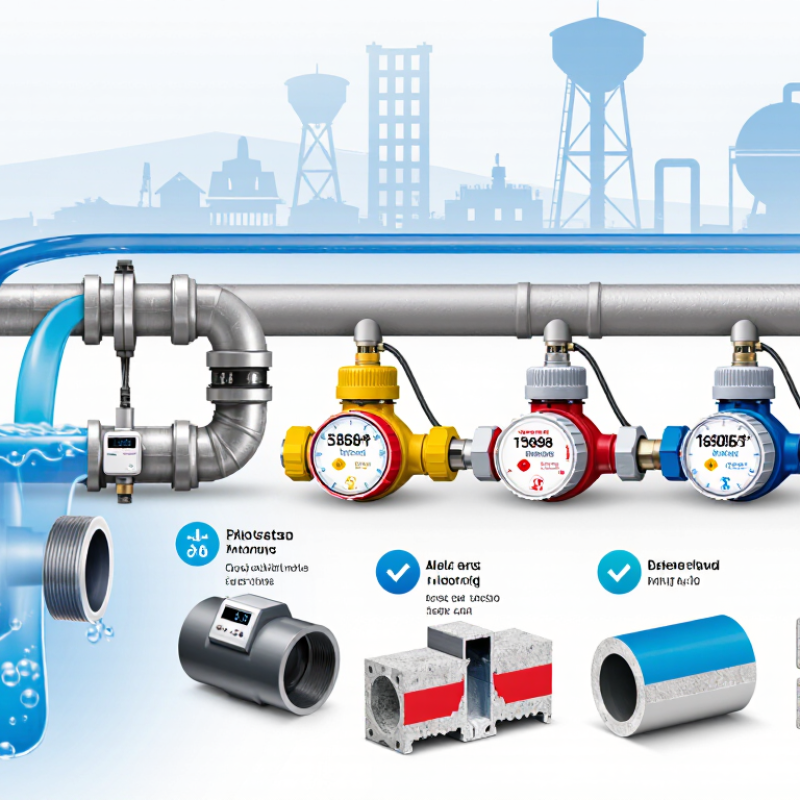
Understanding Clamp-On Water Meter Technology and Measurement Principles
How to Choose the Best Clamp On Water Meter From China?
Choosing the best clamp-on water meter from China starts with understanding its measurement principle. Most models use ultrasonic transit time: two transducers alternately send signals through the pipe. The meter compares upstream and downstream travel times, then calculates flow velocity and volume. A Doppler design instead reads frequency shifts from suspended particles or bubbles. Transit time suits cleaner water. Doppler needs particles. This distinction matters in cooling loops, municipal mains, and process lines.
Installation experience often exposes the real weakness: pipe data is incomplete. Measure outer diameter, wall thickness, liner, material, and fluid temperature before selecting sensors. Rust, scale, air pockets, and poor coupling can distort readings. A straight, full pipe section is preferable, although field conditions are rarely perfect. I have seen a technically excellent meter fail because sensor spacing was entered incorrectly. That mistake is easy to miss. Ask the Chinese supplier for calibration records, uncertainty data, IP rating, and operating limits. ISO/IEC 17025 accreditation for the calibration laboratory adds useful confidence, but it does not replace site verification.
Professional reports show why measurement quality deserves attention. The UN World Water Development Report 2024 states agriculture represents about 70% of global freshwater withdrawals. The US EPA WaterSense program reports household leaks can waste nearly one trillion gallons annually in the United States. These figures do not prove every clamp-on meter will save water. They show why dependable flow data supports maintenance decisions. Compare repeatability, claimed accuracy, battery life, data logging, and technical support. Request a witnessed test on your actual pipe if uncertainty remains. Field evidence beats a polished brochure.
How to Choose the Best Clamp-On Water Meter From China?
Understanding Clamp-On Water Meter Technology and Measurement Principles
This chart illustrates the calculated ultrasonic transit-time difference for a 100 mm water pipe using a 45° acoustic path. In a transit-time clamp-on meter, the measured time difference increases with water velocity. When selecting a meter, check its supported pipe diameter range, liquid compatibility, minimum and maximum flow velocity, transducer frequency, installation requirements, and stated accuracy under actual site conditions.
Identifying Your Pipe, Water, and Installation Requirements
Choosing a clamp-on water meter from China starts with the pipe, not the catalogue. Measure the outside diameter with calipers. Do not rely on nominal size alone. Record pipe material, wall thickness, liner, and surface condition. Steel, copper, PVC, and ductile iron transmit ultrasound differently. Rust, paint, and scale can weaken the signal. In field checks, a clean mounting patch often matters more than higher advertised accuracy.
Identify the water before selecting the sensor mode. Clean potable water usually suits transit-time measurement. Air bubbles, suspended solids, or wastewater may require Doppler technology. Note temperature, conductivity, pressure, and flow range. The U.S. EPA WaterSense program reports that household leaks can waste nearly 10,000 gallons annually. It also reports that 10% of homes have leaks wasting 90 gallons or more daily. These figures make stable, repeatable readings important for loss detection. Yet a meter cannot repair poor hydraulics.
Map the installation site carefully. Keep transducers away from pumps, elbows, partially open valves, and sudden diameter changes. Follow the supplier’s straight-run guidance, then verify signal strength after coupling. Leave space for insulation and future inspection. Ask the Chinese manufacturer for calibration records, sensor spacing instructions, IP testing, material declarations, and a sample report. Request readings from your actual pipe size if possible. A factory test on smooth steel may not represent an old lined pipe. That gap is easy to overlook. It deserves a second check.
Comparing Accuracy, Sensor Types, and China-Based Manufacturing Options
How to Choose the Best Clamp On Water Meter From China?
Accuracy begins with the installation, not the product brochure. A clamp-on meter can measure without cutting the pipe, but pipe condition still matters. Check the pipe material, wall thickness, lining, and internal deposits before ordering. Straight pipe distance also affects stable readings. Do not trust one number. Request calibration results, repeatability data, flow-range performance, and stated measurement uncertainty. In practical testing, low-flow accuracy often reveals more than an impressive maximum-flow figure.
Sensor type must match the water. Transit-time ultrasonic sensors usually suit cleaner water with fewer suspended particles. Doppler sensors need particles or bubbles to reflect the signal. Hybrid designs may handle changing conditions, but they can cost more and require careful setup. Air pockets, vibration, and poor coupling gel may create unstable readings. Small details matter. I once focused too heavily on advertised accuracy and underestimated installation time. That assumption was wrong.
China-based manufacturing offers many options, but price should not lead the evaluation. Review the factory’s calibration equipment, production traceability, inspection records, and sensor matching process. Ask for a sample unit and test it against a trusted reference meter under several flow rates. Confirm enclosure protection, operating temperature, cable quality, manuals, and software support. Clear communication is essential when technical details cross languages. A low quotation can hide weaker documentation or limited after-sales assistance. The best supplier is not always the largest one. It is the one that can explain its test results plainly and repeat them consistently.
Checking Product Quality, Certifications, Software, and Technical Support
When choosing a clamp-on water meter from China, inspect the product before comparing prices. A reliable unit should have a solid enclosure, clear sensor markings, and cables that resist moisture. Check the transducer surface for scratches or uneven finishing. Small defects can affect installation accuracy.
Ask the supplier for test records from actual production batches, not only promotional samples. Review calibration data, flow-range limits, temperature ratings, and enclosure protection details. Certifications should match the meter’s intended market and application. Verify the certificate number, issuing body, validity period, and covered model. A document alone proves little. I once treated a familiar-looking certificate as sufficient, but its scope did not include the supplied configuration.
Software deserves equal attention. Confirm whether the meter supports data logging, flow alarms, unit changes, and export to common file formats. Test the interface with your own laptop before ordering in volume. Menus should be understandable, and firmware updates should have clear procedures. Ask whether software access requires a recurring fee.
Technical support often reveals the supplier’s real competence. Request installation drawings, sensor-spacing guidance, troubleshooting steps, and response-time commitments. Ask for a live demonstration using pipe dimensions similar to yours. Support should explain signal quality, air bubbles, lining materials, and grounding, rather than blaming installation immediately. Keep written records of answers. They may expose gaps that a polished sales call hides.