
How to Choose the Best WPC Hollow Decking?

Choosing WPC Hollow Decking means balancing appearance, durability, safety, and installation needs. A board that looks convincing in a product photo may feel different underfoot or perform differently in changing weather. Compare samples in natural light, and check the surface texture, color consistency, and edge finish.

The hollow profile can reduce board weight, but its shape and wall thickness matter. Review the manufacturer’s technical data for load guidance, span limits, slip performance, and temperature recommendations. These details help you judge whether a product suits a garden path, balcony, or busy family patio. Looks can mislead.

Ask how the boards should be supported, spaced, and fixed. Confirm that the installation instructions address drainage and ventilation, since trapped moisture and poor airflow can cause problems. Also check which clips and trims are compatible; mixing components can affect fit and appearance. Small details matter.

A reliable comparison considers more than the lowest price. Look for clear specifications, a defined warranty, and responsive technical support. If information is missing, treat that as a reason to ask questions, not as proof of poor quality. WPC Hollow Decking varies by formulation and design, so no single board is best for every site. The right choice is the one whose documented performance, maintenance needs, and finish match your space. Even careful research has limits: local conditions and installation quality can change the result.
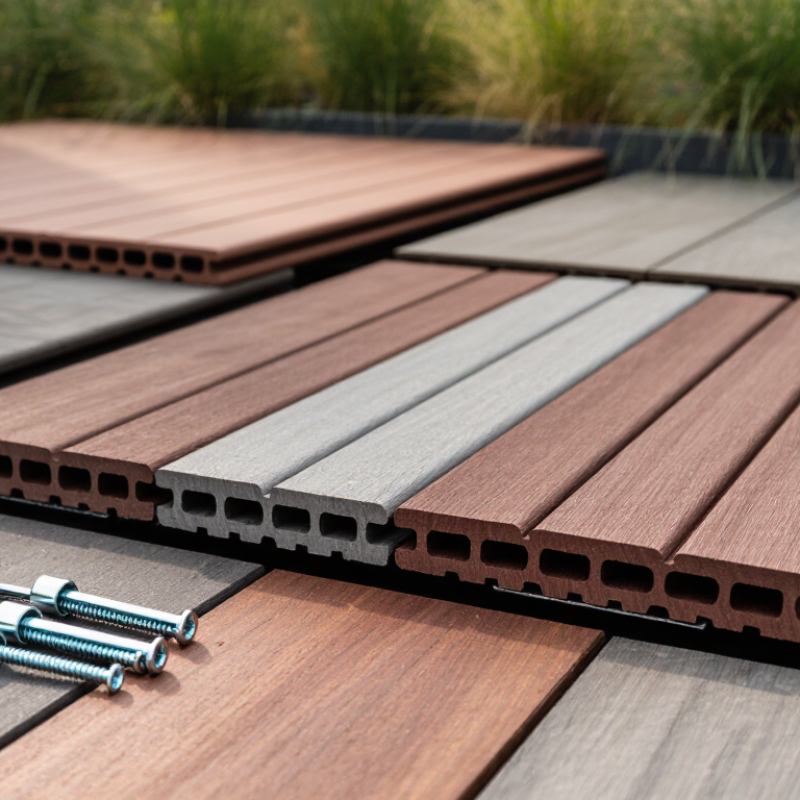
How to Choose the Best WPC Hollow Decking?

Understand the Structure and Properties of WPC Hollow Decking

Hollow WPC decking uses an outer shell and internal chambers instead of a solid profile. Those chambers reduce material use and board weight, making long lengths easier to carry and position. They also change how loads travel through the board. A narrow support gap or a heavy point load may stress the shell more than expected. Lighter does not always mean stronger.

ASTM International’s D7032 standard evaluates deck-board performance, including bending, creep, and water absorption. Ask whether test results apply to the exact profile and span you plan to install; hollow designs can vary considerably. Grand View Research valued the global wood-plastic composites market at about USD 7.4 billion in 2023 and projected an 11.0% compound annual growth rate through 2030. That market estimate signals broad adoption, but it cannot confirm any particular board’s strength or durability.

In practice, inspect a cut end: note the wall thickness, number of chambers, and whether the webs appear even. Check the stated joist spacing and fixing method against the product’s test data. Hollow cavities can collect water if end details are poorly managed, so drainage and ventilation deserve attention. I would not judge a board by its cross-section alone. Installation details matter. Allow for temperature-related movement as directed by the technical documentation, and avoid assuming every hollow profile accepts the same fasteners.

Define Your Project’s Size, Location, and Use Requirements

Begin with a scaled sketch of the proposed deck. Measure the usable area, then mark doors, steps, drains, and fixed obstacles. Allow room for chairs to slide back and for people to pass safely. A narrow path can feel cramped once a table is in place. Use matters. A quiet balcony, family dining area, and busy poolside deck have different traffic and furniture needs. Note where afternoon sun, standing water, snow, or coastal air may affect the surface. These details help you compare suitable WPC hollow boards, finishes, and maintenance needs.

For a budget reference, the 2024 Cost vs. Value Report from the Journal of Light Construction and Zonda estimated a national average cost of $24,206 for a midrange composite deck addition, with $16,498 in resale value. It is a broad benchmark, not a quote for hollow WPC decking or your location. Check local labor and delivery costs. Then compare board span and support requirements in the product’s technical guide; hollow profiles may need closer joist spacing than you expect. Confirm those details with a qualified installer and local building requirements. One detail is easy to miss: the cheapest board may not suit a hot, exposed site. Recheck the plan before ordering.

Compare Material Composition, Profiles, and Surface Finishes

Choosing WPC hollow decking means comparing more than color. Check the wood-fiber and polymer balance, along with stabilizers and pigments. A consistent mix can help boards resist moisture changes and surface fading, but formulas vary. Ask for clear technical data rather than relying on phrases such as “high strength.” Look for even color through a cut edge, with no loose fibers or brittle corners. Small details matter.

Profile shape affects stiffness and installation. Round chambers reduce material weight, while rectangular chambers may provide broader internal walls for fastening, depending on the design. Compare wall thickness, rib spacing, and the manufacturer’s recommended joist spans. Hollow boards are lighter to carry. They are not automatically suitable for every deck layout. A close look at the underside can reveal uneven ribs or thin edges that a top view misses.

Surface finishes range from fine embossing to deeper wood-grain patterns. Textured surfaces may offer better grip underfoot, yet dirt can settle into deep grooves and take longer to remove. Brushed finishes can feel more subtle, though they may show scuffs differently. Request a sample and inspect it in daylight, then test it with wet shoes if practical. One sample has limits: full boards may look different across changing light and installation angles. A slightly imperfect color match may be less noticeable than a slippery or difficult-to-clean surface.

How to Choose the Best WPC Hollow Decking? - Compare Material Composition, Profiles, and Surface Finishes

Decking Type Typical Material Composition Hollow Profile Common Surface Finish Benefits Points to Check Often Suited To
Uncapped hollow WPC Wood flour or fibers blended with a thermoplastic polymer and processing additives. Proportions vary by product and are not always disclosed. Usually has lengthwise chambers with round, rectangular, or divided cavities. Chamber shape alone does not establish load capacity. Brushed, embossed, or wood-grain texture; the composite material is exposed at the surface. Typically lighter than a solid board of similar dimensions; often offers a lower-cost entry point. May be more susceptible to staining and moisture uptake than capped boards. Follow installation guidance for drainage, ventilation, and end cuts. Projects where budget matters and the deck can be installed with suitable drainage and routine cleaning.
Capped (co-extruded) hollow WPC A wood–polymer composite core with a polymer-rich outer cap. Cap and core formulations differ among products. Commonly uses multi-chamber hollow construction; wall thickness, chamber layout, and board dimensions vary. Often embossed or brushed, with a protective polymer cap around the exposed faces. The cap generally improves resistance to surface staining and moisture compared with an uncapped surface. A cap does not make the whole board waterproof, especially at cut ends or damaged areas. Check the cap coverage and care instructions. Frequently used for exposed residential decks where easier surface maintenance is a priority.
Deeply embossed or wood-grain hollow WPC May be uncapped or capped; composition depends on the underlying board rather than the embossed pattern. Available in different hollow chamber designs. Compare the product’s tested span and installation requirements rather than judging by appearance. Textured grain or embossed patterns, sometimes with varied color tones. Provides a more pronounced wood-like appearance and can help disguise minor surface marks. Texture does not by itself confirm slip resistance. Ask for applicable wet-slip test data for the exact board and finish. Decks where appearance and surface texture are key selection factors.
Fine-brushed or lightly textured hollow WPC May use the same core and cap options as other WPC boards; the finish is a surface treatment, not a separate material composition. Hollow profiles can reduce board weight, but allowable joist spacing depends on the specific product’s test results and installation instructions. Subtle brushing or a relatively smooth molded texture. Offers a more understated appearance and may be easier to wipe clean than a very deep texture. A smoother finish is not automatically safer when wet. Compare tested slip performance and consider the intended location. Contemporary designs and areas where a restrained surface appearance is preferred.

Selection note: WPC formulations, hollow profiles, and performance vary by product. Before choosing, compare published load or span guidance, applicable slip-test results, warranty terms, installation details, and care instructions for the exact board.

Assess Durability, Safety, Warranty, and Installation Needs

Durability starts with evidence, not a “low maintenance” claim. ASTM D7032 evaluates composite deck boards for properties including flexural performance, weathering, and load capacity. Ask for an independent evaluation report showing the tested product, approved joist spans, and installation limits. The 2021 International Residential Code lists a 40-pound-per-square-foot live load for residential decks. That is a useful design reference, not a substitute for a board’s span rating.

Safety depends on the whole deck. Check wet-surface slip data, stair details, guardrail connections, and whether the boards become uncomfortably hot in direct sun. ICC-ES AC174 evaluation reports can help verify product performance and installation conditions. Still, a test result cannot reproduce every rainy step or bare foot. I find that easy to overlook.

Read warranty exclusions closely. Look for separate terms covering fading, stains, structural defects, and required maintenance; keep the dated receipt and care instructions. Small print matters. During installation, follow the tested joist spacing, use specified fasteners, and leave the stated gaps for drainage and expansion. A neat, tight-looking fit may age poorly if the boards have no room to move. Check the report and installation guide for the exact product, not just a similar-looking sample.

How to Choose the Best WPC Hollow Decking

Suggested decision weights for comparing products. These are practical priorities, not laboratory test results; verify each product’s test data and installation guide.

How to use this: Prioritize durability and safety evidence, then check that the warranty covers your intended use and that the required substructure, spacing, and fixing method suit your site. Follow the product-specific installation instructions.

Match Product Specifications to Your Budget and Maintenance Plan

When comparing hollow WPC decking, match the specification to how you will use the space. Check board thickness, joist spacing, tested load capacity, and required expansion gaps. Ask for test results, not just a “heavy-duty” label. ASTM D7032 provides performance criteria for wood-plastic composite decking, including structural performance and durability. That matters. A lower-priced board may need closer joist spacing, increasing the cost of the substructure and installation.

Budget for the full deck, not only the boards: include clips, fascia, framing, delivery, and offcuts. Grand View Research estimated the global wood-plastic composites market at about US$7.9 billion in 2023, with projected growth through 2030. That market figure signals wider adoption, but it does not prove any one hollow board will last. Compare warranty terms, UV and moisture test data, and whether the surface has a protective cap. For low-maintenance use, confirm the maker’s cleaning instructions and whether routine washing is enough. No sanding sounds appealing. Still, dirt can collect inside hollow profiles if their ends are left exposed. I would check end caps and drainage details before paying extra for a wood-grain finish. One easy detail to overlook.