Top Engineering Solutions to Watch for in 2025
As we approach 2025, the landscape of engineering solutions is set to transform dramatically, driven by rapid technological advancements and a growing emphasis on sustainability. This period promises to witness the emergence of innovative methodologies that focus on efficiency, resilience, and longevity in engineering practices. With the challenges posed by climate change, urbanization, and resource constraints, engineering solutions will play a crucial role in addressing these pressing issues while enhancing productivity and performance across various sectors.
From groundbreaking materials to intelligent infrastructure, the next few years will be pivotal in redefining how we approach engineering projects. Emerging trends, such as the integration of artificial intelligence and machine learning, will further revolutionize traditional engineering processes, enabling professionals to deliver solutions that are more precisely tailored to meet the demands of an ever-evolving world. Moreover, as collaboration between disciplines becomes more prevalent, the development of interdisciplinary engineering solutions will foster creativity and innovation, paving the way for a more sustainable future.
In summary, the year 2025 is poised to unveil a host of engineering solutions that will not only redefine industry standards but also enhance our ability to tackle global challenges. By embracing these advancements, engineers can ensure that their contributions lead to a more sustainable and resilient world, showcasing the vital role of engineering in shaping our future.

Innovative Materials Transforming Engineering Practices by 2025
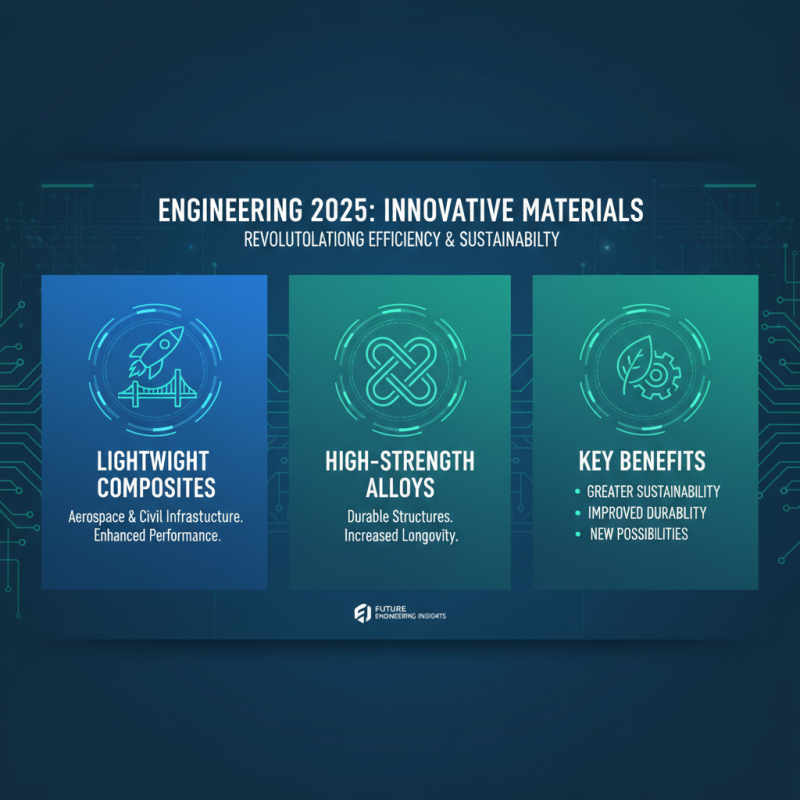
As we look towards 2025, the field of engineering is poised for remarkable transformations, primarily driven by innovative materials. These advanced materials are not only redefining existing practices but also enabling new possibilities across various engineering sectors. For instance, the integration of lightweight composites and high-strength alloys is enhancing the efficiency and performance of structures, from aerospace components to civil infrastructure, allowing for greater sustainability and durability.
Another exciting development is the rise of smart materials that respond dynamically to environmental changes. These materials can adapt to stress, temperature fluctuations, and even self-repair, offering engineers the tools to create resilient architectures and systems. In the realm of civil engineering, the application of self-healing concrete is particularly promising, potentially extending the lifespan of structures while reducing maintenance costs. As these innovations emerge, they are expected to streamline construction processes and enhance the overall functionality of engineering projects.
Furthermore, the advancement of bio-inspired materials is set to revolutionize how engineers approach design challenges. By mimicking properties found in nature, such as the water-repellency of lotus leaves or the lightweight structures of bird bones, engineers can develop materials that exhibit exceptional performance qualities. This paradigm-shifting approach not only fosters sustainability but also encourages a more holistic understanding of materials science, paving the way for a new era of engineering practices by 2025.
Sustainable Construction Technologies: Reducing Carbon Footprint in the Industry
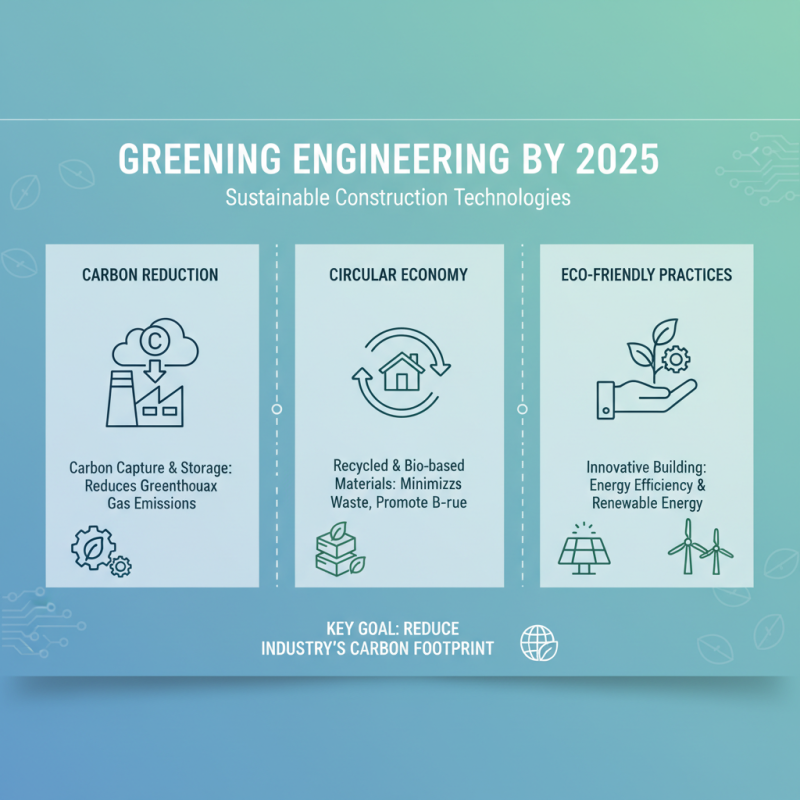
Sustainable construction technologies are poised to play a pivotal role in reducing the carbon footprint of the engineering industry by 2025. As climate change continues to be a pressing global issue, the integration of eco-friendly materials and innovative building practices is essential for creating a more sustainable built environment. Emerging technologies such as carbon capture and storage systems, which can significantly reduce greenhouse gas emissions from construction processes, are gaining momentum. Likewise, the use of recycled and bio-based materials in construction projects not only minimizes waste but also promotes a circular economy within the industry.
Furthermore, advancements in energy-efficient design and renewable energy integration are crucial components of sustainable construction. The incorporation of smart building technologies, which optimize energy consumption through automation and real-time data analytics, contributes to lowering energy use throughout a building's lifecycle. Moreover, practices such as modular construction and 3D printing reduce material waste and energy consumption while allowing for more precise and sustainable building approaches. As these technologies evolve, they will undoubtedly transform the engineering landscape, showcasing how sustainability can drive innovation and efficiency within the construction sector.
AI and Machine Learning: Enhancing Project Management and Design Efficiency
In the rapidly evolving landscape of engineering,
artificial intelligence (AI) and
machine learning (ML) are becoming integral
in enhancing project management and design efficiency. These technologies are
streamlining workflows by automating repetitive tasks and enabling predictive analytics.
Project managers are now equipped with tools that analyze historical data to forecast potential
risks, helping teams to proactively address challenges before they escalate. This
predictive capability ensures that resources are allocated more efficiently, ultimately leading to
cost savings and timely project completion.
Moreover, AI and ML significantly enhance the design process by enabling advanced simulations
and optimizations. Engineers can leverage algorithms that analyze multiple design parameters
simultaneously, offering innovative solutions that might not have been conceived through
traditional methods. This not only accelerates the design phase but also improves the overall
quality of the engineering output. By incorporating machine learning algorithms that learn from
previous projects, teams can continuously refine their approaches, fostering a culture of
innovation and iterative improvement within the
engineering field.
These advancements signal a pivotal shift in how projects are managed and executed, positioning
AI and ML as key players in the
future of engineering excellence.
Automation and Robotics: The Future of Labor in Engineering Projects
Automation and robotics are poised to play a pivotal role in shaping the labor landscape within engineering projects by 2025. According to recent industry reports, the market for robotics in engineering is expected to reach over $50 billion, reflecting a compound annual growth rate (CAGR) of approximately 15% from 2021 to 2026. This surge is driven by advancements in artificial intelligence, machine learning, and sensor technology, which are transforming traditional engineering workflows. As projects grow increasingly complex, the integration of automated systems will enhance efficiency, reduce human error, and optimize project timelines.
The integration of robotics into engineering tasks is not just about replacing human labor; it also enhances collaboration between human workers and machines. A report from the International Federation of Robotics indicates that by 2025, it is anticipated that collaborative robots, or cobots, will account for a significant portion of all new industrial robot installations. These systems are designed to assist engineers by taking on repetitive or dangerous tasks, allowing human resources to focus on higher-level decision-making and creative problem-solving. This shift towards a hybrid workforce of humans and robots will not only increase productivity but also lead to new opportunities for innovation within engineering sectors.
Top Engineering Solutions to Watch for in 2025
Automation and Robotics: The Future of Labor in Engineering Projects
Smart Infrastructure Development: Integrating IoT for Real-Time Monitoring
The integration of the Internet of Things (IoT) into smart infrastructure is paving the way for a revolution in real-time monitoring and management of urban environments. As cities continue to grow, the need for effective infrastructure solutions becomes increasingly critical. IoT devices, such as sensors and smart meters, can collect data on various parameters like traffic flow, energy consumption, and environmental conditions, providing city planners and officials with insights necessary for informed decision-making.
Implementing IoT technology can significantly enhance the efficiency of public services and resources. For instance, real-time monitoring of water supply systems can prevent leaks and wastage, while smart traffic management systems can optimize vehicle flow, reducing congestion. Such advancements not only improve the quality of life for residents but also contribute to sustainability efforts by minimizing resource consumption.
Tips for leveraging IoT in smart infrastructure: Start small by focusing on one area, like transportation or waste management, and gradually expand IoT applications as you gain insights. Engaging stakeholders early can ensure that the implemented solutions align with community needs and encourage greater public participation. Additionally, investing in cybersecurity measures will be paramount to safeguarding the data collected and maintaining the trust of the public in these technologies.
Top Engineering Solutions to Watch for in 2025 - Smart Infrastructure Development: Integrating IoT for Real-Time Monitoring
| Solution |
Description |
Key Features |
Expected Impact |
Implementation Timeline |
| Smart Sensors |
Devices that collect real-time data for monitoring infrastructure health. |
Real-time monitoring, predictive maintenance, data analytics. |
Enhances infrastructure longevity, reduces maintenance costs. |
2025-2026 |
| IoT Platforms |
Integrated systems for data collection, analysis, and visualization. |
Cloud-based storage, data visualization tools, API integration. |
Facilitates better decision-making, improves responsiveness. |
2024-2025 |
| AI Analytics |
Using artificial intelligence to analyze data from smart infrastructure. |
Machine learning, anomaly detection, forecasting. |
Improves operational efficiency, predicts failures. |
2024-2026 |
| Blockchain for Security |
Applying blockchain to secure data transactions and enhance trust. |
Immutable records, decentralized access, verification protocols. |
Increases data security, reduces fraud risks. |
2025-2027 |
| Digital Twins |
Virtual models of physical assets for real-time analysis and simulation. |
Simulation, performance optimization, lifecycle management. |
Optimizes resource allocation, improves planning and design. |
2025 and beyond |