
A Paper Box Glue Spraying Machine applies adhesive to selected areas of paperboard during carton production. It may use spray nozzles, a conveyor, sensors, and adjustable controls to place glue where folds or panels must bond. Designs vary by box style and production volume. In a typical workflow, flat blanks move beneath the application head, receive adhesive lines or patterns, and continue to folding or pressing equipment. The aim is a consistent bond with less manual application. Small details matter. Nozzle distance, glue viscosity, feed speed, and clean setup can all affect the result. Even a neat line may fail if the board is dusty or poorly aligned.
Understanding the machine means looking beyond its name. Buyers and operators need to consider compatible adhesives, board thickness, pattern flexibility, cleaning access, and changeover time. A demonstration using the intended carton can reveal issues a brochure may miss. Ask how operators monitor blockages, overspray, and uneven bonding, and confirm the routine maintenance requirements. No machine removes every production risk. A setting that works for one paper stock may need adjustment for another, so trial runs and recorded checks remain useful. That is easy to overlook. This guide explores the machine’s main parts, operating principles, benefits, limitations, and selection points. Reliable results depend on matching the equipment, material, and process—not simply increasing speed.
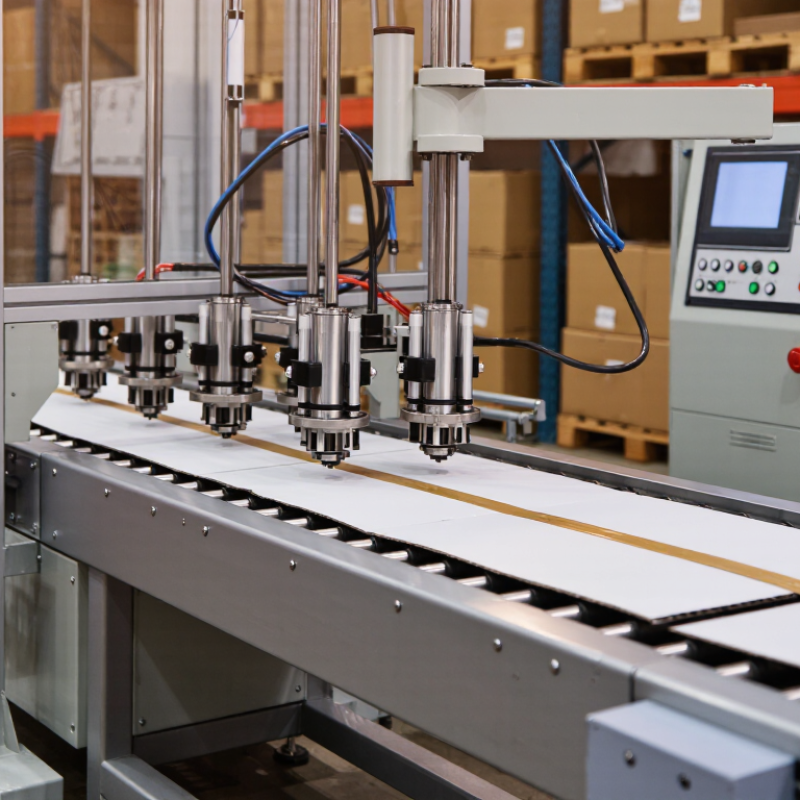
A paper box glue spraying machine applies adhesive to selected areas of paperboard blanks during carton production. Nozzles or other applicators place glue along seams, tabs, or panels that will later be folded and pressed together. Its core function is controlled deposition: delivering the right amount of adhesive in the right position at production speed. The aim is simple. Depending on the line, the machine may handle water-based or hot-melt adhesives, with settings adjusted for board type, glue viscosity, and conveyor speed.
FEFCO’s 2022 European Database Report records about 55.5 billion square metres of corrugated board production in Europe. This figure describes industry output, not glue-machine performance, but it shows the scale of box converting.
In practice, sensors and timing controls help keep each glue pattern aligned with the moving blank. Operators also check nozzle cleanliness, adhesive temperature, and spray width; a small buildup can leave a thin, uneven bead.
Small misses matter. Too little glue can weaken a seam, while excess glue may cause squeeze-out or slow handling. Even a well-tuned setup needs regular checks, since board dust and changing material conditions can affect application.
What Is a Paper Box Glue Spraying Machine?
Main Components and Their Roles
A paper box glue spraying machine applies adhesive in controlled lines or patterns before box parts are folded or joined. Its feeder moves sheets or blanks into position, while adjustable guides help keep each piece aligned. If a blank shifts, glue can land too close to an edge or miss a flap.
The glue tank stores the adhesive, and a pump delivers it to the spray head. Nozzles shape the spray pattern; their size, spacing, and distance from the paper affect coverage. A controller lets an operator set timing and, on some machines, spray intervals. Sensors may detect passing blanks and trigger the spray. Small parts matter. A clogged nozzle can leave a dry streak, while excessive glue may soften thin paper. Operators should check the pattern on sample stock and follow the machine’s setup instructions.
Tips: Keep paper flat and remove dust before feeding. Test on a spare blank after changing glue or settings. Clean nozzles as directed, and inspect the first few pieces during a run. One setting rarely suits every paper weight.
Typical workflow: The feeder or conveyor positions the paperboard. Adhesive is held in the tank, moved by the pump through hoses, and applied by the spray nozzles. The controller coordinates settings and timing; sensors may provide feedback where fitted. The chart numbers show typical workflow order, not measured performance.
What Is a Paper Box Glue Spraying Machine?
How the Glue Spraying Process Works
A paper box glue spraying machine applies adhesive to selected panels as carton blanks move through a feed system. Guides align each blank, while sensors or mechanical triggers coordinate its position with the spray head. Nozzle distance, spray width, and glue flow are adjusted for the board and fold design. The aim is an even, narrow film, not a wet surface. Small changes matter.
During production, a pump sends glue through hoses to one or more nozzles. A timed burst coats the panel areas that will meet during folding. Some machines move the spray head; others keep the nozzles fixed while blanks pass beneath them. Operators inspect early pieces for missed edges, droplets, and glue strings. The boxes are then folded and held under light pressure while the adhesive develops its bond. Let it set.
Good results depend on more than machine speed. Adhesive thickness, room temperature, board dust, and nozzle cleanliness can all affect the spray pattern. Settings are not perfectly universal; a recipe that worked yesterday may need adjustment today. A neat-looking stripe can still be misplaced, so inspect folded samples and test the bond before increasing output. This check takes time, but skipping it can waste a full stack.
| Process Stage | Machine Component | What Happens | Key Operating Consideration | Quality Check |
|---|---|---|---|---|
| 1. Sheet feeding | Feeder and transport belts | Paperboard blanks or sheets are guided into the machine and moved toward the spraying area. | Keep sheets aligned and feed them consistently to help prevent misplaced adhesive. | Check sheet position, feeding consistency, and surface condition. |
| 2. Registration | Guides, sensors, or registration stops | The blank is positioned so adhesive can be applied to the intended panel or bonding area. | Adjust guides for the blank size and confirm that the spray pattern matches the glue area. | Look for consistent placement from sheet to sheet. |
| 3. Adhesive supply | Reservoir, pump, filter, and fluid lines | Adhesive is delivered from its supply container through the system to the spray head. | Use an adhesive compatible with the paperboard and application; follow its handling and cleaning instructions. | Check for leaks, contamination, blockages, or interrupted flow. |
| 4. Glue spraying | Spray nozzle or applicator head | The applicator deposits adhesive as a controlled pattern on selected areas of the sheet or blank. | Pattern, adhesive amount, nozzle condition, and machine speed affect coverage. Settings depend on the adhesive and substrate. | Check for even coverage without missed areas, excessive overspray, or unwanted glue marks. |
| 5. Folding and bonding | Folding guides, rollers, or compression section | Where the job requires it, coated panels are folded or brought into contact so the adhesive can bond the surfaces. | Maintain correct panel alignment and follow the adhesive’s required setting or drying conditions. | Check bond continuity, panel alignment, and whether the joint stays closed. |
| 6. Inspection and cleaning | Operator inspection points and cleaning tools | Finished pieces are checked, while nozzles and adhesive-contact parts are cleaned as specified for the adhesive. | Regular cleaning helps reduce buildup and nozzle blockage; use appropriate workplace safety procedures. | Record recurring defects and verify that the spray pattern remains consistent. |
Note: A glue-spraying machine applies adhesive to selected areas of paper or paperboard. The exact adhesive, spray pattern, and machine configuration vary by job; some carton-gluing operations use other application methods, such as beads or wheels.
A paper box glue spraying machine applies controlled adhesive to paperboard before folding, laminating, or forming a box. Common types range from manual spray stations to semi-automatic feeders and fully automatic inline systems. Manual units suit short runs and frequent design changes; an operator positions each sheet beneath the spray head. Semi-automatic machines feed or align sheets while leaving some handling to staff. Fully automatic lines connect spraying with folding or box-forming equipment for steady production.
The right choice depends on box size, paper weight, adhesive, and daily output. Small details matter.
A rigid gift box may need broad, even coverage across a large panel, while a folding carton often needs narrow glue lines along its tabs. Corrugated packaging can require settings that account for its uneven surface. Operators should test spray width and drying time on the actual stock, since excess glue may wrinkle paper or mark the finished surface.
These machines serve packaging, retail, food, and gift-box production, but one setup rarely fits every job. It is worth reviewing changeover time, cleaning access, and spray consistency before choosing a machine. Automation helps, though it cannot correct poor material alignment.
A paper box glue spraying machine applies controlled adhesive lines to carton blanks before folding and forming. Its spray pattern must match the box design. A narrow line can leave weak seams, while excess glue may cause smears or slow setting. Check adhesive compatibility, nozzle size, and working width before judging output. Small details matter.
During operation, keep the nozzle clean and inspect the spray on a sample blank. Set pressure and nozzle distance according to the adhesive supplier’s guidance. Then adjust conveyor speed so each panel receives an even coat. Watch corners and fold lines closely. They often reveal uneven coverage first. Record settings for repeat jobs, but treat them as a starting point; paper weight, humidity, and adhesive temperature can change results.
When selecting a machine, compare its usable width and adjustment range with your actual box sizes. Consider changeover time, cleaning access, feed consistency, and whether operators can reach routine service points safely. Ask for a trial using your own carton stock and adhesive. A machine with higher rated speed may still perform poorly on delicate stock or frequent short runs. There is no perfect setting for every job, and that can be frustrating. A careful test is more useful than relying on catalog speed alone.