What Is a Scooter Sport Bike and How Does It Work?

A Scooter Sport Bike combines scooter convenience with the sharper response of a performance-focused motorcycle. It usually has automatic transmission, step-through access, practical storage, and a compact engine. Yet its design often includes firmer suspension, stronger brakes, larger wheels, and more aggressive bodywork.

The machine works through a continuously variable transmission, commonly called a CVT. As engine speed rises, the CVT changes its pulley ratio automatically. This keeps acceleration smooth without requiring a manual clutch. Twist the throttle, and the engine sends power through the CVT, final drive, and rear wheel. The front fork, rear shock, and tire profile then influence how confidently the bike turns.

It feels familiar.

During a test ride, the difference appears in corners and quick stops. A sport-oriented scooter may hold a line more steadily than a basic commuter model. Its riding position can also feel more active, with firmer support and a narrower waist. However, performance depends on engine size, weight, tire quality, and suspension setup. Styling alone proves very little.

The term “Scooter Sport Bike” is not perfectly standardized. Some manufacturers use it for sporty automatic scooters, while others describe larger maxi-scooters with motorcycle-like equipment. That ambiguity can confuse buyers. A reliable evaluation should examine specifications, braking systems, maintenance records, and real riding conditions. Factory claims help, but they do not replace careful inspection. A tidy explanation still has limits. Rider skill, road surface, weather, and proper protective equipment remain equally important. Understanding these details makes the category easier to judge with confidence.
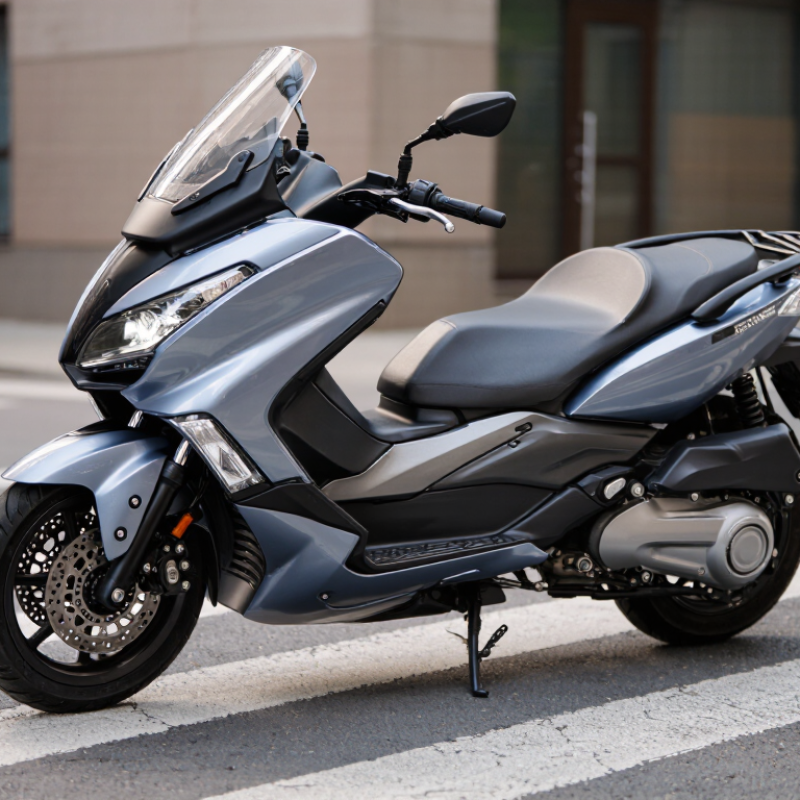
What Is a Scooter Sport Bike and How Does It Work?

What Defines a Scooter Sport Bike?

A scooter sport bike blends scooter convenience with the sharper handling of a lightweight motorcycle. Its defining feature is usually an automatic transmission, often a continuously variable transmission, which removes the need for manual gear changes. Riders can twist the throttle and move smoothly through traffic. The frame may include a step-through section, a flat floor area, or under-seat storage. However, these features vary widely. The category has no single technical standard.

Sport-focused design changes the riding feel. Larger wheels, firmer suspension, stronger brakes, and a more forward seating position can improve cornering stability. A responsive engine helps during acceleration, while a compact body makes low-speed control easier.

Some models use motorcycle-style controls and sharper bodywork. Others still feel like practical urban scooters. That difference matters. A sporty appearance alone does not guarantee sport-bike performance. Check the engine size, vehicle weight, wheel dimensions, braking system, and suspension adjustment before judging one.

Tips: Sit on the scooter before riding. Your feet should reach the ground comfortably, and the handlebars should not strain your wrists. Test the throttle response in a quiet, legal area. Keep your inputs smooth, especially on wet pavement. Read the owner’s manual and follow its maintenance schedule. Inspect tire pressure and brake feel regularly. I sometimes find the “sport” label confusing, because comfort, storage, and agility can conflict. A well-balanced scooter sport bike should feel controlled, not merely fast.

How Its Frame, Engine, and Transmission Work

A scooter sport bike blends scooter convenience with motorcycle-inspired handling. The label is fuzzy. It usually has a step-through frame, compact bodywork, and a riding position that keeps the feet forward. A steel or aluminum frame carries the engine, battery, suspension, and rider. Its low center of gravity helps in traffic, while a longer wheelbase can improve stability at higher speed. However, sporty styling does not automatically mean sharper handling.

The engine is commonly a single-cylinder, four-stroke unit between 125 and 400 cc. It draws air through an intake system, mixes fuel, and burns that mixture inside the cylinder. The crankshaft converts combustion into rotation. Liquid cooling controls temperature when the engine works hard. Some electric versions replace this system with a motor, inverter, and battery pack.

The IEA’s Global EV Outlook 2024 identifies two- and three-wheelers as the most electrified road-transport segment.

Most petrol scooter sport bikes use a continuously variable transmission, or CVT. A variator changes pulley diameter as engine speed rises. A drive belt then transfers power to the rear wheel through a clutch and final reduction gear. Acceleration feels smooth, but belt wear can change response. That detail is often overlooked.

ACEM’s 2024 Motorcycle Industry in Europe report recorded 1,155,640 motorcycle registrations across five major European markets in 2023, showing the scale of this transport category. Still, registration data does not prove every scooter offers the same frame strength, cooling performance, or transmission durability.

How the Controls Turn Power into Movement

A scooter sport bike turns a small wrist movement into controlled forward motion through several linked systems.
The rider twists the throttle, opening an electronic or mechanical signal. The engine responds with torque, while a continuously variable transmission adjusts the ratio without manual gear changes. Centrifugal clutch weights then engage progressively, so the rear wheel receives power smoothly rather than suddenly. It feels simple. It is not.

The control path continues through the final drive, tire, and road surface. A wider throttle angle requests more acceleration, but the engine control unit may reduce output when traction drops. The left lever usually operates the rear brake, while the right lever controls the front brake, depending on local design conventions. Anti-lock braking is important here. An Insurance Institute for Highway Safety analysis found that motorcycle ABS was associated with a 22% lower fatal crash rate. NHTSA’s Traffic Safety Facts reported 6,084 motorcyclist deaths in 2022, showing why precise inputs matter. The rider should squeeze, not grab, the brake levers. Small details count.

Steering also needs explanation. The handlebars turn the front wheel, but lean angle actually guides the scooter through a bend. Countersteering begins that lean at speed. This can feel backward during early practice. It is easy to overcorrect. Suspension keeps the tires connected over uneven pavement, although setup errors can make the scooter feel nervous. A road test should include throttle response, brake feedback, belt noise, and low-speed balance. Manufacturer claims are useful, but hands-on inspection remains more trustworthy.

How Acceleration, Braking, and Cornering Work

What Is a Scooter Sport Bike and How Does It Work?

A scooter sport bike combines automatic transmission convenience with a motorcycle-style riding position. Acceleration begins at the twist throttle. On gasoline models, a continuously variable transmission adjusts the drive ratio without manual gear changes. Electric versions deliver motor torque through an electronic controller. The rear wheel responds quickly.

Smooth inputs matter. During a controlled practice ride, I found that a small throttle movement can change balance at low speed. A common mistake is opening the throttle too sharply before the bike is stable.

Braking depends on weight transfer. When the rider squeezes the front brake, the front suspension compresses and more load reaches the front tire. That tire can provide stronger stopping force. The rear brake helps stabilize the chassis, but excessive pressure may cause a skid.

Many modern scooter sport bikes use linked braking or an anti-lock system. These systems assist the rider, but they cannot overcome worn tires or loose gravel.

I prefer progressive pressure rather than grabbing the lever suddenly. It feels slower, yet it usually produces better control.

Cornering starts before the turn. Reduce speed while the bike is upright, then look toward the exit. Light countersteering initiates the lean, while relaxed arms let the chassis follow its path. Keep the throttle steady through the middle of the corner. Rolling on gently near the exit can settle the suspension.

Wet paint, metal covers, and uneven pavement still demand caution.

My technique is not perfect; I sometimes enter too slowly and disturb the line. That is useful feedback, because smoothness improves through deliberate practice.

How Scooter Sport Bikes Differ from Other Two-Wheelers

What Is a Scooter Sport Bike and How Does It Work?

How Scooter Sport Bikes Differ from Other Two-Wheelers

A scooter sport bike blends scooter convenience with sharper handling. Its step-through frame usually supports relaxed mounting and under-seat storage. Most models use an automatic continuously variable transmission, or CVT. The rider twists the throttle, and the system manages engine speed without a hand-operated clutch. Sport-oriented suspension, stronger brakes, and firmer tires improve cornering confidence. The category is not perfectly defined.

Compared with a conventional sport motorcycle, a scooter sport bike has no fuel tank between the rider’s knees. It often uses smaller wheels and a lower seat. These features help urban maneuvering but can reduce stability over rough roads. A manual sport bike normally offers greater engine control and higher sustained-speed ability. A basic commuter scooter prioritizes comfort, economy, and simple suspension settings. A sport scooter adds responsiveness, but sometimes sacrifices softness.

Industry data gives useful context. The Association of European Motorcycle Manufacturers reported more than 1.1 million powered two-wheelers registered across Europe’s five largest markets in 2024. That broad demand includes practical scooters and performance-focused designs. Safety still depends heavily on rider behavior and equipment. The U.S. National Highway Traffic Safety Administration states that helmets reduce motorcycle operator fatality risk by 37 percent. Numbers matter.

Electric versions work differently. A battery sends power through an electronic controller to a hub or mid-mounted motor. Regenerative braking may return limited energy during deceleration. In real traffic, weight, tire grip, and braking feel can matter more than peak output. The “sport” label can therefore mislead buyers. Test the riding position, not just the specification sheet.