Top Automotive Mechanical Engineering Companies Worldwide

Automotive mechanical engineering turns design requirements into vehicles that can perform reliably on real roads. It covers powertrains, chassis systems, thermal management, materials, and manufacturing processes. Small decisions matter. A redesigned suspension joint, for example, can affect ride comfort, durability, and assembly time. Engineers must balance performance with safety, cost, efficiency, and serviceability.

Worldwide, companies approach these challenges in different ways. Some specialize in complete vehicles; others develop components, engineering services, or production technologies for multiple manufacturers. Their work may include computer simulations, prototype testing, factory automation, and improvements to electric-vehicle platforms. Strong engineering depends not only on advanced equipment, but also on experienced teams and careful validation. Claims about innovation should be assessed against evidence, not brand reputation alone.

This overview explores notable automotive mechanical engineering companies worldwide and the capabilities that distinguish them. It considers areas such as technical expertise, global operations, research and development, product range, and industry partnerships. No single ranking can capture every strength. A company’s public information may also leave gaps, and regional needs differ. That makes comparison imperfect. Still, examining these factors offers a practical starting point for understanding the companies shaping vehicle design and production—and for asking which capabilities matter most for a particular project.
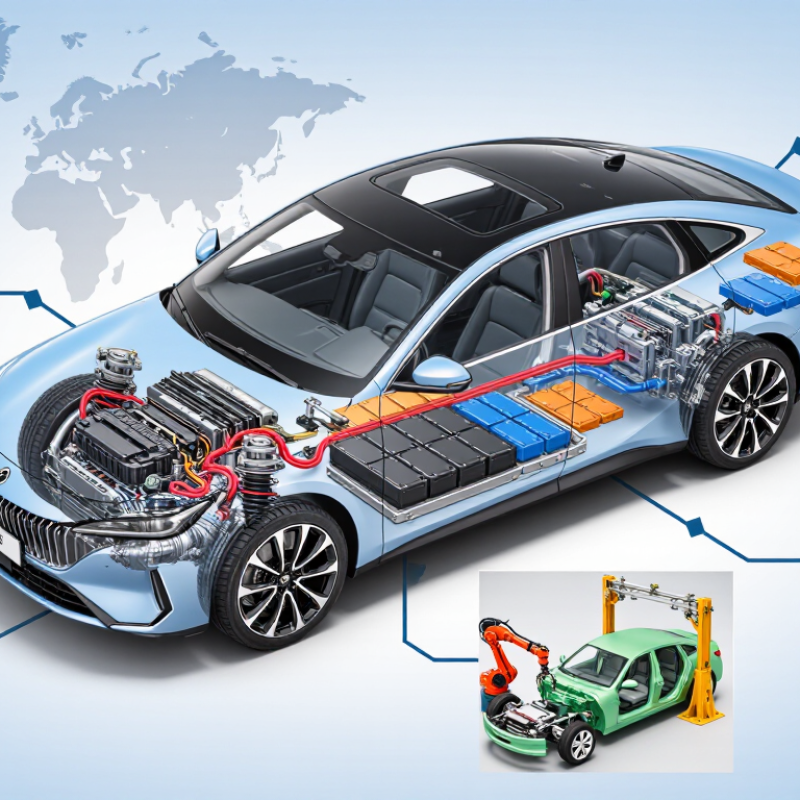
Top Automotive Mechanical Engineering Companies Worldwide

Scope of Automotive Mechanical Engineering

Automotive mechanical engineering covers far more than engines and gearboxes. It includes vehicle structures, suspension, steering, braking, aerodynamics, thermal management, and manufacturing processes. Engineers may test a control arm under repeated loads, measure brake temperatures, or trace airflow around a prototype body. Small changes matter: a poorly managed battery temperature can affect performance, service life, and charging behavior. The work is hands-on.

Electrification is widening this scope. The International Energy Agency’s Global EV Outlook 2024 reported nearly 14 million electric car sales in 2023, about 18% of global car sales, and projected more than 17 million for 2024. That shift makes battery enclosures, cooling circuits, lightweight structures, and crash protection central mechanical challenges. It also demands close coordination with electrical and software teams. The boundaries are not always neat.

A credible engineering assessment should look beyond a vehicle’s headline specifications. It should examine durability testing, repair access, material choices, energy use, and manufacturing quality. Yet public comparisons rarely reveal every trade-off, and early test results may not reflect years of road use. That is worth questioning. Mechanical design still has to work in rain, heat, vibration, and the occasional rough road.

Core Services and Engineering Specialties

Automotive mechanical engineering companies help convert vehicle requirements into components that can be manufactured, tested, and maintained. Their core services often include concept development, mechanical design, packaging studies, and production support. Engineers use computer-aided design to model parts such as suspension links, housings, brackets, and thermal systems. They also check loads, vibration, fatigue, and heat transfer before physical prototypes are built. Small details matter. A few millimeters of clearance can affect assembly time or service access.

Specialties may include chassis engineering, powertrain integration, lightweight structures, fluid systems, and vehicle thermal management. Teams combine simulation with physical testing, such as strain measurements on a test rig or temperature checks around a battery enclosure. They review materials, tolerances, and joining methods with manufacturing specialists, since a sound design must work on the factory floor. Simulation is useful, but it cannot capture every real-world condition. Road use differs. Engineers may need to revise a part after tests reveal unexpected wear or noise. That iteration is not failure; it is part of making the design dependable.

How Leading Firms Serve the Global Automotive Industry

Leading automotive mechanical engineering firms serve global manufacturers by turning vehicle requirements into tested hardware and production-ready designs. Their teams work on chassis, braking systems, thermal management, and lightweight structures. A design may pass through computer simulation, prototype builds, and physical testing before it reaches a factory. On a test rig, engineers can track vibration, heat, and component wear under repeatable conditions.

Electrification has expanded this work. The International Energy Agency’s Global EV Outlook 2024 reports that electric car sales approached 14 million in 2023, about 18% of all car sales. The report also notes that electric-vehicle battery demand rose roughly 40% that year, reaching about 750 GWh. These figures help explain why engineering providers now support battery enclosures, cooling systems, and structural integration alongside conventional mechanical work.

Global projects also require adaptation. Firms help adjust components for different climates, road surfaces, manufacturing capabilities, and service conditions. A seal tested in a laboratory may still behave differently after months of dust, rain, and temperature swings. Simulation saves time, but it does not capture every rattle or assembly issue. That gap can be frustrating—and worth acknowledging. Teams still need physical tests, supplier feedback, and careful review before designs are released.

Top Automotive Mechanical Engineering Companies Worldwide

How leading firms serve the global automotive industry

Regional electric-car demand helps illustrate the scale and geographic reach of the automotive industry served by engineering firms. Figures include battery-electric and plug-in hybrid cars and are rounded. Source: International Energy Agency, Global EV Outlook 2024.

Notable Automotive Mechanical Engineering Companies Worldwide

Top Automotive Mechanical Engineering Companies Worldwide

Notable Automotive Mechanical Engineering Companies Worldwide

Notable automotive mechanical engineering companies are distinguished by their ability to turn design requirements into safe, efficient, manufacturable vehicles. Their work can include powertrain development, thermal management, chassis design, simulation, and prototype testing. Some firms build complete engineering programs; others specialize in a single system. This is not a simple ranking. Capabilities vary by region and project.

Demand is changing the work. The International Energy Agency’s Global EV Outlook 2024 reported nearly 14 million electric cars sold worldwide in 2023, about 18% of total car sales. That shift increases the need for expertise in battery cooling, lightweight structures, and electric drivetrain integration. Strong engineering partners support these areas with validated simulations and physical tests, such as checking component temperatures on a test rig. A polished computer model alone is not enough. Project schedules and cost limits can also expose gaps, and comparisons between firms are rarely perfectly consistent.

Tips: Ask for relevant test results, not just presentation slides. Check who owns design changes and how prototypes are validated. Small details matter.

Comparing Company Capabilities and Industry Trends

Top automotive mechanical engineering companies differ less by size than by how well they connect design, testing, and production. Some excel at lightweight structures and thermal management. Others are stronger in powertrain integration, virtual simulation, or high-volume manufacturing. The distinction becomes visible on the factory floor: a lighter component matters only if it survives durability tests and can be produced consistently. The gap matters.

Industry demand is shifting those priorities. The International Energy Agency’s Global EV Outlook 2024 reports nearly 14 million electric-car sales in 2023, about 18% of global car sales. That growth raises the value of battery enclosures, cooling systems, and efficient electric-drive components. Meanwhile, OICA recorded about 93.5 million motor vehicles produced worldwide in 2023, underscoring the continuing need for dependable production engineering across vehicle types.

A useful comparison should therefore examine measurable capabilities, not just research claims: prototype lead time, component weight, energy use, failure rates, and manufacturing yield. Engineering teams with strong simulation tools can identify stress and heat problems earlier, but test data still matters. Not always. Reported performance may come from different vehicle classes or test conditions, making direct comparisons imperfect. Buyers should ask how results were measured and whether they reflect real production volumes.

Top Automotive Mechanical Engineering Companies Worldwide - Comparing Company Capabilities and Industry Trends

The table compares common automotive engineering-provider profiles rather than named companies. Capability descriptions are qualitative and reflect typical areas of work; they are not company-specific ratings or rankings.

Provider profile Core mechanical capabilities Typical engineering outputs Typical scope Relevant industry trend
Full-vehicle engineering integrators Vehicle architecture, package integration, body and chassis engineering, thermal management, and coordination across vehicle systems. Concept and package studies, integrated CAD models, system interfaces, prototype builds, and vehicle-level validation plans. Broad; can coordinate multiple vehicle engineering disciplines from early design through validation. Electrification increases the need to integrate battery packaging, crash structures, cooling, and vehicle mass targets.
Powertrain and electrification specialists Electric drive units, gear systems, battery enclosures, thermal systems, mechanical interfaces, and legacy combustion powertrain engineering. Component designs, packaging studies, structural and thermal analyses, prototype assemblies, and durability test plans. Deep in propulsion systems; often works with a vehicle integrator or manufacturer for whole-vehicle integration. The International Energy Agency reported nearly 14 million electric cars sold worldwide in 2023, about 18% of new car sales.
Chassis and vehicle-dynamics specialists Suspension, steering, braking, ride and handling, structural mounts, and vehicle-dynamics modelling. Chassis layouts, component specifications, simulation results, vehicle setup recommendations, and handling or braking test reports. Focused; develops and validates chassis systems, with scope depending on the project and available test facilities. Battery mass and revised weight distribution make load management, braking performance, and ride tuning important development considerations.
Manufacturing and industrialization engineers Production-process design, assembly sequencing, tooling, automation integration, quality planning, and manufacturability reviews. Process layouts, tooling concepts, assembly work plans, production-readiness assessments, and manufacturing validation results. Strong in translating product designs into repeatable production processes; typically complements product-design teams. Electrified vehicle production requires coordination of battery-related assembly processes, safety procedures, and quality controls.
Lightweighting and materials specialists Material selection, structural design, joining methods, crash performance, and weight reduction across metal and composite structures. Material and joint specifications, structural simulations, component prototypes, and test-supported design recommendations. Deep in materials and structural performance; production feasibility and repair needs must also be considered. Reducing vehicle mass can help manage energy use and offset some of the mass associated with electrified powertrains.
Testing, simulation, and validation specialists Finite-element analysis, computational fluid dynamics, durability engineering, thermal testing, rig testing, and physical vehicle validation. Simulation models, test procedures, measured performance data, failure analyses, and compliance evidence. Strong in evidence and verification; effectiveness depends on model quality, test access, and clearly defined requirements. Regulatory and durability requirements increase the need for traceable simulation, testing, and validation throughout development.
Industry evidence: The electric-car sales figure is from the International Energy Agency’s Global EV Outlook 2024. Euro 7 requirements are set out in Regulation (EU) 2024/1257; the regulation includes provisions covering brake particle emissions and battery durability.