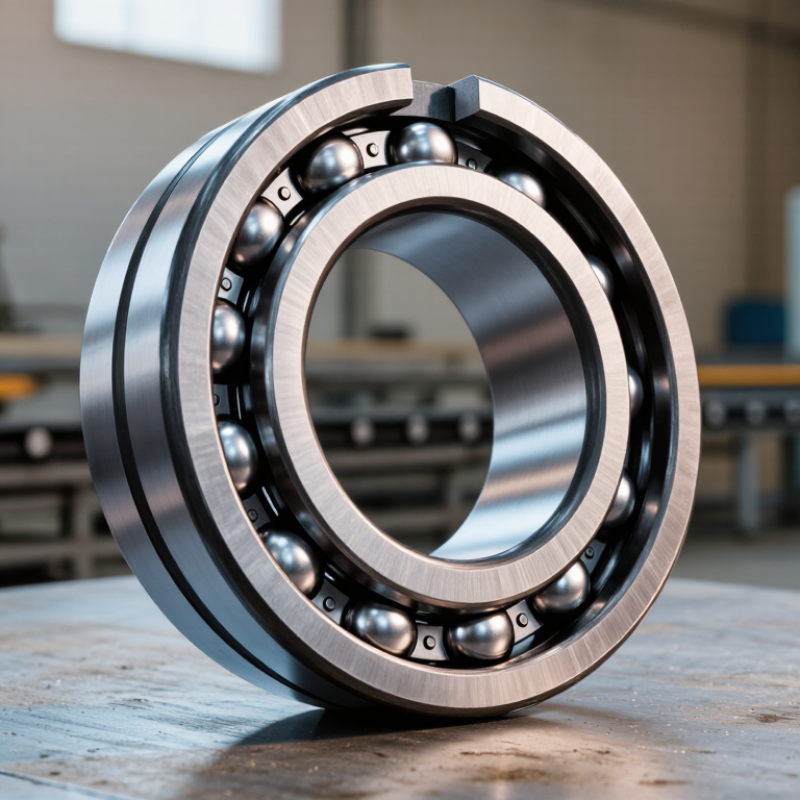
Global sourcing decisions often begin with price, but bearing performance determines whether that saving survives real service conditions. A Tapered Bearing supports combined radial and axial loads, making it valuable in wheel hubs, gearboxes, conveyors, and industrial equipment. Its cone-and-cup design distributes contact forces across rolling elements, helping manage alignment under demanding loads. This matters when equipment faces vibration, shock, dust, or repeated temperature changes. Small details matter.
Experienced sourcing teams evaluate more than catalog dimensions. They review load ratings, operating speed, hardness, material quality, lubrication needs, and expected service life. Supplier documentation should include inspection records, dimensional tolerances, production dates, and lot traceability. ISO-based quality systems can support confidence, but certification alone cannot prove every shipment is suitable. Sample testing and independent inspection remain practical safeguards. Clear packaging labels also reduce mistakes during international transport and warehouse receiving.
Yet sourcing is not perfectly predictable. A lower quotation may hide longer transit times, inconsistent steel quality, or limited technical support. Even a reputable supplier can recommend an unsuitable bearing when application data remains incomplete. That weakness deserves attention. Buyers should share shaft dimensions, housing conditions, actual loads, temperature ranges, and installation methods before comparing offers. They should also confirm replacement availability and communication standards across regions. Choosing a Tapered Bearing becomes more reliable when cost, engineering evidence, supplier experience, and inspection discipline are considered together. The best decision is rarely the cheapest one. Sometimes, it is the option that prevents one avoidable shutdown.
A tapered bearing uses conical rollers between a matching inner race and outer race. Its rolling surfaces angle toward a common point on the shaft axis. This geometry lets the bearing carry radial loads and axial loads at the same time.
When a shaft rotates, the rollers travel around the raceway instead of sliding across it. The cage keeps each roller evenly spaced and prevents contact between neighboring rollers. The tapered shape also creates a controlled thrust reaction. Tightening the bearing arrangement can reduce internal clearance and improve running accuracy. Too much preload, however, creates heat and may shorten service life.
During field inspection, technicians often check temperature, noise, and end play. A small change in end play can reveal incorrect adjustment or uneven wear. The ideal setting is not always obvious. Housing distortion, shaft deflection, lubrication, and operating speed can change the result.
For global sourcing, buyers should request clear drawings, load ratings, tolerance data, and inspection records. They should also confirm the intended mounting position and adjustment method. A bearing that fits the dimensions may still perform poorly under real loads. Ask how the supplier controls roller profile, raceway hardness, and cleanliness during assembly. Material certificates and test reports add useful evidence, but they do not replace practical validation. A short trial run under actual load can expose vibration or heat problems before full production.
Why Choose Tapered Bearing for Global Sourcing?
How Tapered Bearings Handle Combined Radial and Axial Loads
Tapered bearings use angled rollers and matching raceways. This geometry lets one bearing carry radial force and axial force together. Radial force presses downward through the rolling elements. Axial force travels along the bearing axis and meets the contact angle. A larger angle usually improves axial capacity, but it can increase friction and heat. Pairing two bearings can support axial loads in opposite directions. Correct adjustment remains essential.
In practical inspections, uneven roller marks often reveal poor alignment or excessive preload. Lubrication also changes performance. Too little lubricant raises wear, while too much can create heat. For global sourcing, request load ratings, dimensional drawings, material details, and inspection records. Confirm the required clearance and tolerance class before comparing prices. Cheaper is not always safer. I have seen specifications look identical while service life differed sharply.
Tips: Match the contact angle with the real load direction. Check shaft and housing rigidity. Measure temperature during trial operation. Review traceability documents, not only certificates. Leave room for correction. Operating conditions may differ from the original calculation.
| Data Dimension | Tapered Bearing Characteristic | How It Handles Combined Loads | Global Sourcing Relevance | Engineering or Purchasing Consideration |
|---|---|---|---|---|
| Load Direction | Designed to support radial loads together with axial loads in one direction. | The tapered raceways create an axial force component when radial load passes through the roller set. | A single-row arrangement can provide a compact solution where the axial load direction is known. | Use an opposed pair or another suitable arrangement when axial loads act in both directions. |
| Roller and Raceway Geometry | Rolling elements and raceways are conical, with their projected surfaces converging toward a common apex. | The geometry promotes rolling contact while carrying radial load and transmitting axial load through the contact angle. | Standardized geometry supports sourcing from multiple qualified manufacturing regions when dimensions and tolerances match. | Verify bore, outside diameter, width, contact angle, and component interchangeability before purchasing. |
| Axial Load Capacity | Axial capacity generally increases with a larger effective contact angle, provided speed, lubrication, and stress limits remain acceptable. | Axial load is carried through the inclined roller-raceway contact surfaces and the bearing ribs. | Contact-angle options allow the design to be matched to different radial-to-axial load requirements. | Do not compare axial capacity using dimensions alone; review the manufacturer’s dynamic and static load ratings. |
| Radial Load Capacity | Multiple rollers distribute the radial load over a substantial contact area. | The line-contact arrangement provides high radial load capacity and helps control shaft deflection under load. | Suitable for demanding industrial equipment where load ratings and service life are important sourcing criteria. | Check equivalent dynamic load, equivalent static load, fatigue life, and the required reliability level. |
| Load Calculation | Combined loading is evaluated using an equivalent dynamic bearing load rather than radial load alone. | The calculation normally combines radial load and axial load using factors determined by bearing geometry and load conditions. | Using standardized calculation methods makes technical comparisons between suppliers more consistent. | For a specific design, use the applicable bearing catalog method and confirm the correct factors for the selected bearing series. |
| Axial Direction | A single-row tapered bearing normally carries axial load in one direction. | Two bearings installed in an opposed arrangement can support axial loads in both directions and provide axial location. | Paired arrangements can simplify sourcing for wheel hubs, gearboxes, reducers, and other rotating assemblies. | Specify the arrangement clearly, including orientation, spacing, internal clearance, and preload or endplay requirements. |
| Stiffness and Deflection Control | Properly adjusted tapered bearings can provide high axial and radial stiffness. | Controlled clearance or preload limits relative movement between the shaft and housing. | Stiffness can improve gear alignment, shaft support, and repeatability in heavy-duty machinery. | Excessive preload raises friction and operating temperature; excessive clearance can reduce accuracy and load distribution. |
| Speed Capability | Speed capability is generally lower than that of many comparable deep-groove ball bearings of similar size. | Roller sliding, rib contact, heat generation, lubrication, and preload influence allowable speed. | Supplier comparisons should include limiting speed, reference speed, lubrication method, and cooling conditions. | For high-speed applications, confirm thermal balance, lubricant compatibility, cage design, and operating temperature. |
| Component Design | Most tapered roller bearing designs have separable inner-ring and outer-ring assemblies. | The separable construction allows the components to be mounted and adjusted independently. | It can reduce handling difficulty and support flexible assembly in international supply chains. | Keep matched components together where required and protect raceways from contamination during storage and assembly. |
| Adjustment Method | Paired tapered bearings commonly require an adjustment that establishes the specified endplay or preload. | Adjustment controls the axial position of the bearing pair and therefore affects load sharing and stiffness. | Clear adjustment specifications help maintain consistent performance across different production locations. | Define the measurement method, temperature condition, torque procedure, and acceptance limits in the purchasing specification. |
| Typical Applications | Commonly used in vehicle wheel ends, axle systems, gearboxes, reducers, conveyors, machine tools, and heavy industrial equipment. | These applications often experience radial load combined with thrust from gears, wheels, belts, or external mechanisms. | The broad application range supports multi-source procurement and standardized replacement planning. | Match the bearing arrangement to shock load, misalignment, contamination, speed, temperature, and maintenance conditions. |
| Material and Heat Treatment | Rolling elements and rings are typically produced from hardened bearing steel suitable for rolling-contact fatigue resistance. | Hard, precision-finished contact surfaces resist wear and support repeated rolling contact under load. | Material certificates and heat-treatment records help qualify suppliers without relying on brand identity. | Request hardness range, metallurgical quality, dimensional inspection records, and traceability documentation. |
| Standards and Interchangeability | Common tapered bearing dimensions and boundary dimensions are covered by international bearing standards, including ISO 355 for tapered roller bearings. | Standardized dimensions help maintain fit and interchangeability when the selected series is equivalent. | Standards-based specifications make cross-border RFQs clearer and reduce dependence on proprietary terminology. | Confirm the complete designation, dimensional tolerance class, internal design, cage material, and quality requirements. |
| Lubrication | Grease or oil lubrication may be used depending on speed, temperature, load, sealing, and maintenance requirements. | Lubrication separates contacting surfaces, controls heat, and reduces wear at the roller-rib interface. | Lubricant availability and compatibility should be considered when sourcing for multiple countries or service locations. | Specify lubricant type, viscosity or consistency, relubrication interval, cleanliness level, and allowable operating temperature. |
| Contamination Protection | Open tapered roller bearings usually depend on the surrounding housing, seals, and lubricant for contamination protection. | Particles or moisture can damage raceways and accelerate fatigue, especially under combined loading. | Environmental requirements should be included in supplier qualification and packaging specifications. | Define sealing, filtration, cleanliness, corrosion protection, packaging, and storage-life requirements. |
| Purchasing Specification | A complete specification should include the bearing designation, dimensions, load ratings, tolerance, clearance or adjustment, and application conditions. | Complete technical data prevents an apparently identical bearing from being substituted with a different internal design. | It enables objective comparison of qualified suppliers without displaying or depending on company or brand data. | Request drawings, inspection plans, sample reports, batch traceability, packaging details, and conformity documentation. |

Why Choose Tapered Bearing for Global Sourcing?
Key Advantages of Tapered Bearings in Global Sourcing
Tapered bearings support both radial and axial loads in one compact assembly. This design can simplify equipment layouts and reduce the number of separate components. In global sourcing, that efficiency may lower handling, packaging, and inventory costs. It also helps buyers compare equivalent specifications across different production regions.
Their adjustable clearance is another practical advantage. Technicians can control preload during installation for smoother rotation and improved service life. However, the setting must match the application. Excessive preload can create heat, while loose adjustment may cause vibration. I have seen sourcing projects fail because specifications ignored operating temperature and shaft alignment.
Reliable international purchasing requires more than a low quotation. Buyers should request material certificates, dimensional inspection records, and batch traceability. Clear drawings should define cup, cone, seal, lubrication, and tolerance requirements. Protective packaging matters too, especially during long sea transport and repeated warehouse handling. Supplier audits can verify process control, measuring equipment, and inspection skills. Still, paperwork is not proof by itself. Sample testing remains necessary. A small inconsistency can affect assembly performance. Regional standards, import documentation, and delivery schedules also deserve careful review. Tapered bearings offer strong sourcing value, but only when technical accuracy supports the purchasing decision.
Key advantages include combined radial and axial load support, standardized metric sizing, and predictable service-life calculations across international supply chains.
The chart shows calculated basic rating life relative to the dynamic load ratio C/P, using the ISO 281 relationship L10 = (C/P)10/3 for roller bearings. C is the basic dynamic load rating and P is the equivalent dynamic bearing load. In tapered bearings, P can account for combined radial and axial loading, making standardized selection and cross-border technical comparison more consistent.
Selecting a tapered bearing supplier requires more than comparing unit prices. The supplier should explain load ratings, contact angles, steel quality, heat treatment, and lubrication choices in practical terms. ISO 281 defines rating life calculations, while ISO 76 addresses static load capacity. Ask for calculations based on your actual radial and axial loads, not generic catalogue values. Request material certificates, dimensional inspection records, and batch traceability. Traceability matters.
Production consistency is equally important. The U.S. Department of Energy reports that motor-driven systems consume more than half of industrial electricity in many facilities. Poor bearing alignment or premature wear can increase friction, downtime, and maintenance demand. A capable supplier should provide tolerance data, cleanliness controls, packaging details, and a documented corrective-action process. Ask how returned parts are analyzed. Photographs are not enough.
Global sourcing adds practical risks. Evaluate export experience, lead-time stability, technical communication, and contingency plans for steel or logistics disruptions. ISO 15243 offers a useful framework for classifying bearing damage and failure modes. Pilot orders can reveal more than polished presentations. In my experience, a supplier may pass every document review yet struggle with mixed production lots. That weakness deserves attention. A perfect scorecard is unrealistic. The strongest evaluation combines audited evidence, sample testing, and honest discussion of limits.
Why Choose Tapered Bearing for Global Sourcing?
How to Ensure Quality, Compatibility, and Cost Efficiency Worldwide
Tapered bearings support combined radial and axial loads. That makes them practical for gearboxes, wheel hubs, and conveyor systems. Global sourcing, however, demands more than a low quotation. The U.S. Department of Energy’s 2021 Industrial Motor-Driven Systems Market Assessment reports that motor systems use about 68% of industrial electricity. Small friction losses can therefore become visible operating costs. Correct bearing selection matters.
Quality begins with measurable specifications. Check bore, outside diameter, width, contact angle, and cup-cone pairing against the equipment drawing. ISO 492 defines dimensional and rotational accuracy classes. ISO 281 provides rating-life calculations using load, speed, and dynamic load rating. Ask suppliers for hardness results, cleanliness records, batch traceability, and dimensional inspection data. A polished certificate is not enough.
Compatibility also includes packaging and installation. A bearing that fits the shaft may still fail under incorrect preload. Confirm lubricant compatibility, operating temperature, sealing conditions, and replacement availability in the destination market. Compare total landed cost, including freight, duties, inspection, downtime, and rejected units. In practical sourcing work, the cheapest offer sometimes becomes the expensive one. This is easy to miss. A spreadsheet can look exact while hiding inconsistent test methods, unclear tolerances, or mixed production batches. Independent sampling and a controlled pilot order provide stronger evidence before wider purchasing.