Why Does National Development and Reform Commission Matter?
Why Does National Development and Reform Commission Matter?
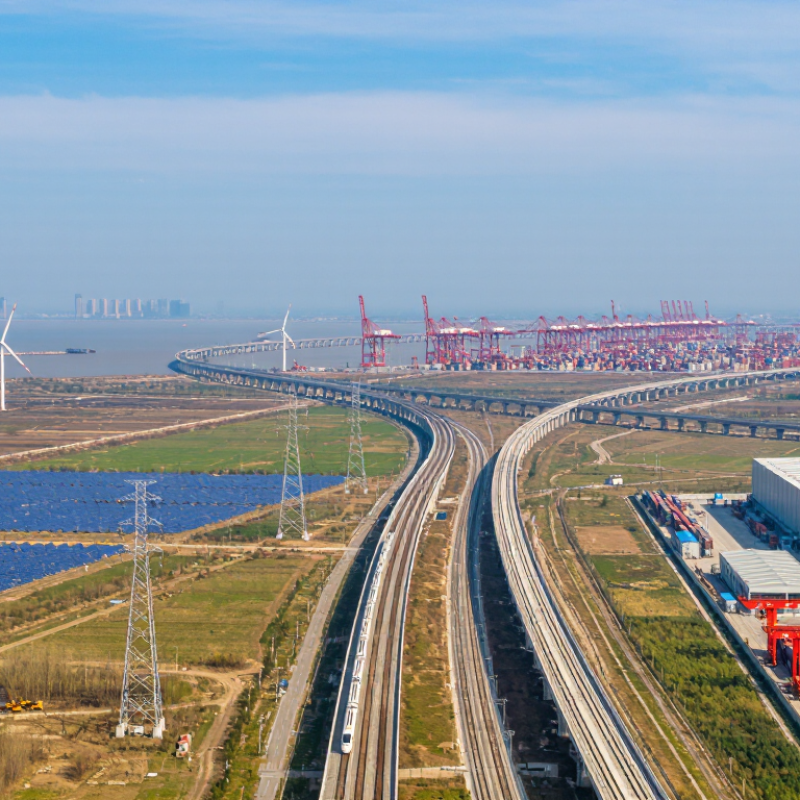
The National Development and Reform Commission matters because it connects China’s long-term strategy with practical economic decisions. It helps coordinate national planning, major infrastructure investment, regional development, energy policy, and selected price reforms. Its influence is visible in real places: railway corridors, industrial parks, power grids, and coastal ports.
The scale is substantial. The International Energy Agency’s Renewables 2024 report expects China to provide almost 60% of global renewable capacity additions from 2024 to 2030. That transition requires grid expansion, investment rules, land coordination, and stable financing. The National Development and Reform Commission operates within this wider policy system. It cannot deliver every result alone. Local governments, state-owned enterprises, private companies, and regulators also matter.
Macroeconomic pressure makes its role more important. The IMF’s 2024 China Article IV consultation projected slower growth after 2024, while highlighting weak property activity and domestic demand as continuing challenges. The World Bank’s China Economic Update also stresses productivity, household confidence, and structural adjustment. These findings show why planning must move beyond headline growth.
This is not a perfect process. Policy coordination can be uneven. Some projects may produce limited returns. Data can also arrive after conditions change. That weakness deserves attention.
Still, the commission provides a central platform for balancing growth, resilience, energy security, and environmental goals. Its importance lies less in one announcement than in how national priorities become measurable projects, funding signals, and implementation guidelines.
Defining the NDRC: China’s Macro-Planning Authority and Legal Mandate
Why Does National Development and Reform Commission Matter?
Defining the NDRC means understanding China’s macro-planning authority and legal mandate. It prepares national economic and social development strategies, medium- and long-term plans, and annual targets. Its authority also covers investment coordination, price reform, regional policy, and major infrastructure planning. The mandate is supported by the Price Law, Budget Law, and administrative rules for enterprise investment projects. It is more than a policy office.
The numbers show why this role matters. China’s official statistical report recorded 5.2% real GDP growth in 2023 and 5.0% in 2024. Meanwhile, the International Energy Agency’s Renewables 2024 report expects China to provide nearly 60% of global renewable capacity additions through 2030. Such large movements require coordination across energy, transport, land, finance, and local implementation. The NDRC often becomes the connecting mechanism.
That power matters.
In practice, macro-planning is not perfectly tidy. A national target may look precise on paper, while local conditions remain uneven. The World Bank’s China Economic Update projected slower growth after 2024, highlighting property weakness, cautious consumption, and demographic pressure. These findings expose a difficult question: can planning remain flexible when the economy changes faster than formal approval cycles? The NDRC’s importance therefore lies not only in issuing plans, but in adjusting priorities before regional gaps become structural problems.
The gap remains.
How NDRC Plans Shape a RMB126.06 Trillion Economy (2023 NBS)
Why Does National Development and Reform Commission Matter?
How NDRC Plans Shape a RMB126.06 Trillion Economy (2023 NBS)
China’s National Development and Reform Commission helps coordinate growth, investment, prices, energy, and regional development. Its influence reaches far beyond policy documents. A national plan can guide funding toward railways, water systems, advanced manufacturing, and cleaner power. These choices affect construction orders, factory capacity, household employment, and local government priorities.
The scale is immense. Official 2023 national statistics placed China’s economy at RMB126.06 trillion. That figure measures economic output, not government spending. This distinction matters when judging policy results. A project approval may create a pipeline, but it does not guarantee efficient delivery. Local officials still face land, financing, environmental, and demographic constraints. Plans are not outcomes.
From a practical viewpoint, businesses often watch planning signals before expanding equipment or hiring workers. A stronger policy focus on energy security may support grid upgrades and storage facilities. A regional development plan may improve logistics, yet benefits can arrive unevenly. Small firms may still struggle to access financing or skilled labor. That gap deserves scrutiny.
The commission also monitors prices and major economic risks. Its coordination role can reduce abrupt policy shifts, especially during weak demand. However, administrative guidance cannot replace productivity, consumer confidence, or sound corporate management. My reading is imperfect because national data can hide sharp differences between provinces and industries. Still, the planning process remains a useful map for understanding where resources may move next.
Guiding Infrastructure Investment Through 5.9% Growth in 2023 (NBS)
Why Does National Development and Reform Commission Matter?
Guiding Infrastructure Investment Through 5.9% Growth in 2023 (NBS)
The National Development and Reform Commission helps translate national targets into infrastructure priorities. In 2023, infrastructure investment increased 5.9%, according to China’s National Bureau of Statistics. The figure covered transport, utilities, and public facilities. It also supported demand during a slower property cycle. The World Bank reported China’s economy grew 5.2% in 2023. That gap matters. Infrastructure carried part of the growth burden.
NDRC coordination can connect funding, land use, energy planning, and regional development. A rail extension, water network, or renewable-power project needs more than construction capital. It requires timing, feasibility checks, and measurable public value. The Asian Development Bank has repeatedly highlighted infrastructure quality, climate resilience, and debt sustainability as investment priorities. Yet 5.9% growth alone does not prove efficiency. A bridge may open on schedule but serve fewer users than expected. The data can look strong while local returns remain uncertain.
Tips: Read the investment rate with project-level evidence. Check completion dates, passenger volumes, energy savings, and operating costs. Compare planned benefits with actual results after one year. Keep room for correction. That is where the policy becomes credible.
Advancing Carbon Policy Toward the 2030–2060 Climate Targets
Why Does National Development and Reform Commission Matter?
Advancing Carbon Policy Toward the 2030–2060 Climate Targets
The National Development and Reform Commission matters because climate targets need administrative force. China’s 2030 carbon peak and 2060 carbon neutrality goals require more than public announcements. They need investment rules, energy planning, industrial standards, and measurable provincial actions. The Commission helps connect these areas through national development strategies and policy coordination.
This work becomes visible in practical places. A cement plant may track fuel use every month. A city may replace coal boilers with cleaner heating systems. A power planner may compare grid demand with wind and solar output. These decisions affect emissions long before a national report appears. Carbon policy also needs reliable data, consistent accounting, and clear responsibilities across regions. Without them, progress can look better on paper than on the ground.
Policy experience shows that targets alone rarely change behavior. Prices, permits, technology access, and local enforcement also matter. Yet policy design is not flawless. Some industries may report emissions unevenly, while smaller cities may lack technical staff. I would not treat every statistic as equally precise. Stronger verification and public transparency could improve trust. The 2030 target is close enough to demand immediate action, while the 2060 goal requires patient investment, especially in grids, storage, efficiency, and low-carbon manufacturing. The difficult question is not whether targets exist, but whether annual decisions consistently move toward them.
Why Does the National Development and Reform Commission Matter?
Advancing China's carbon policy toward the 2030–2060 climate targets
China's national climate policy sets a target for carbon dioxide emissions to peak before 2030 and for carbon neutrality before 2060. The 2030 target package also includes reducing carbon intensity by more than 65% from the 2005 level, raising the share of non-fossil energy to around 25%, and expanding combined wind and solar power capacity beyond 1,200 GW. National planning and coordination are essential for translating these targets into energy, industrial, investment, and regional policies.
Source: China's Updated Nationally Determined Contribution, 2021; China's 2030 Carbon Peak and 2060 Carbon Neutrality commitments.