
What Are the Top Civil Engineering Solutions in 2026?
By 2026, civil engineering solutions must do more than deliver new projects. They must help communities maintain aging assets, reduce carbon, and withstand floods, heat, and heavier demand. The American Society of Civil Engineers’ 2021 Report Card graded U.S. infrastructure C− and estimated a $2.59 trillion investment gap through 2029. That benchmark is not a 2026 forecast, but it makes one issue clear: postponing maintenance carries real costs.
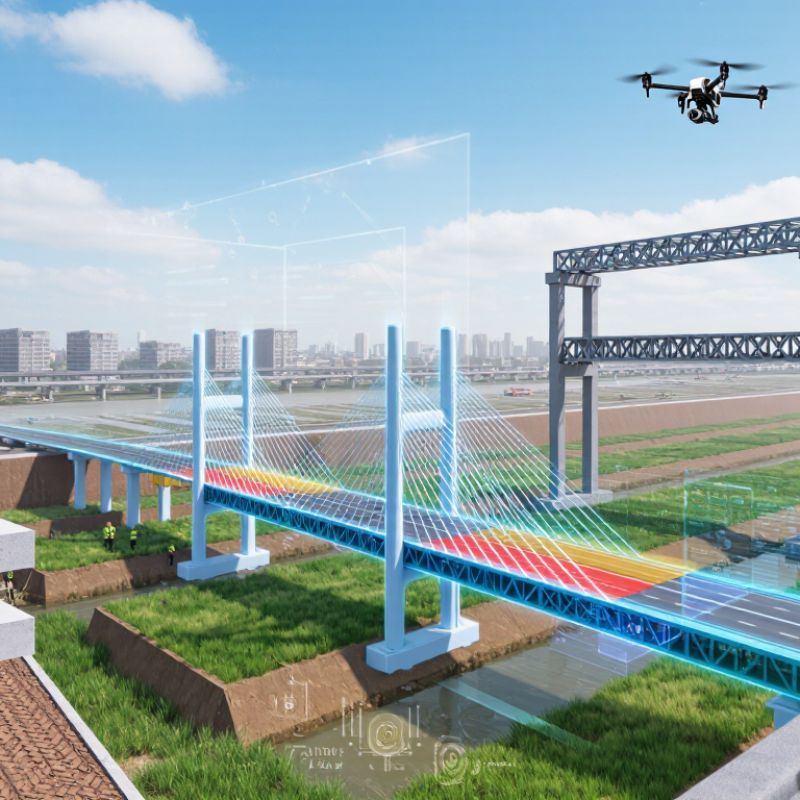
Civil engineers are responding with practical tools: digital twins that track asset condition, AI-supported inspections, lower-carbon concrete, modular construction, and nature-based flood defenses. Each has limits. A digital model cannot replace sound field data, and a low-carbon material is not automatically suitable for every site. Details matter. A bridge inspection, for example, must connect sensor readings with an engineer’s assessment and a repair plan.
Jean-Louis Briaud, ASCE president when the 2021 report appeared, summarized the challenge: “We still have a long way to go.” The next generation of civil engineering solutions will depend on choosing technologies that fit local risks, budgets, and maintenance capacity—not on novelty alone. Some projects will miss their targets. That deserves honest review, not a polished case study. This article examines the leading approaches, the evidence behind them, and the trade-offs decision-makers should weigh before investing.
Defining Civil Engineering Solutions in 2026
In 2026, a civil engineering solution is best understood as a coordinated way to make infrastructure safer, more useful, and easier to maintain. It may combine site investigation, structural design, construction planning, and long-term monitoring. The goal is not simply to build something new. Sometimes repair is wiser. A bridge inspection, for example, might reveal that targeted reinforcement can extend a structure’s service life with less disruption than replacement.
Good solutions start with the conditions on the ground. Engineers assess soil, water flows, traffic, nearby buildings, and the needs of the people who use a site. Digital models can help teams compare designs and spot conflicts before construction. Sensors may then track movement, vibration, or water levels over time. Useful tools, but not magic. Models depend on accurate inputs, and a sensor cannot explain every unusual reading.
Climate resilience and material efficiency are also shaping project decisions. A street redesign might pair permeable surfaces with shaded sidewalks and storage for heavy rainfall. A retrofit may reduce material use while improving seismic performance. These choices need local testing, realistic maintenance plans, and clear records of assumptions. There is no universal design that fits every site. Even a careful plan can miss something: an old drainage line, for instance, may not appear on available drawings.
What Are the Top Civil Engineering Solutions in 2026? - Defining Civil Engineering Solutions in 2026
| Civil Engineering Solution | Typical Applications | Useful Measures and Data | Key Design Considerations |
|---|---|---|---|
| Building Information Modeling (BIM) | Coordinating infrastructure and building design, construction sequencing, and asset handover. | Track model coordination issues, resolution status, information completeness, and delivery against agreed information requirements. | Set clear information responsibilities, exchange formats, and data requirements early; a model is only useful when teams maintain consistent information. |
| Lower-Carbon Concrete and Material Selection | Foundations, bridges, pavements, retaining structures, and other concrete works. | Compare whole-life greenhouse-gas emissions, cementitious material content, durability requirements, and product-specific environmental product declarations (EPDs). | Check local material availability, curing conditions, strength development, exposure class, and project specifications before changing a mix design. |
| Green Stormwater Infrastructure | Urban streets, parking areas, public spaces, and sites with runoff or water-quality concerns. | Measure runoff volume, peak flow, infiltration, pollutant removal where monitored, and maintenance condition. | Select suitable features—such as rain gardens, bioswales, or permeable surfaces—based on soil, groundwater, climate, utilities, and maintenance capacity. |
| Recycled and Reclaimed Water Systems | Non-potable uses such as landscape irrigation, industrial processes, and certain construction activities where permitted. | Track water supplied, potable-water demand offset, treatment performance, distribution losses, and compliance with applicable reuse criteria. | Use must match the required water quality; design treatment, storage, monitoring, and clearly separated distribution systems to meet local rules. |
| Structural Health Monitoring | Bridges, tunnels, dams, and other structures where condition data can support inspection and maintenance decisions. | Record relevant measurements such as strain, movement, vibration, temperature, or crack change, alongside inspection findings and alert history. | Choose sensors based on the structure’s risks and decisions to be supported; establish baselines, data-quality checks, and a response plan for alerts. |
| Prefabrication and Modular Construction | Bridge components, utility assemblies, building modules, and repetitive infrastructure elements. | Monitor off-site fabrication progress, dimensional tolerances, transport constraints, installation time, and inspection records. | Coordinate design, fabrication, lifting, transport, and site access; the approach depends on repeatability and early design coordination. |
| Climate-Resilient Infrastructure Design | Roads, drainage, coastal assets, utilities, and public infrastructure exposed to heat, flooding, drought, or other hazards. | Assess hazard exposure, design-event assumptions, service disruption, recovery time, and asset performance under alternative climate scenarios. | Use location-specific climate and risk information, document uncertainty, and evaluate adaptation options over the asset’s service life. |
| Lifecycle Asset Management | Transport networks, water and wastewater systems, public facilities, and portfolios of existing infrastructure. | Maintain an asset register and track condition, criticality, maintenance history, service performance, risk, and planned renewal costs. | Use consistent inspection methods and reliable asset data to prioritize interventions; align investment decisions with service objectives and available budgets. |
Measures are project-dependent indicators, not guaranteed performance outcomes. Applicable codes, water-quality requirements, and design criteria vary by location and asset type.
Related Posts
-

Innovative Civil Engineering Solutions Transforming Urban Landscapes for Sustainable Development
-

2026 Top Civil Engineering Solutions You Need to Know?
-

Top Civil Engineering Solutions for Global Buyers in China?
-

Why Choose CNC Precision Engineering for Your Manufacturing Needs?
-

Revolutionizing Mechanical Manufacturing: Innovations Driving Efficiency and Quality in Production
-

Ultimate Guide to Selecting the Best Motor Mechanical Engineering Solutions for Global Buyers